Summer arrives with a distinct energy that reshapes how we approach getting dressed each morning. The sun lingers longer, the air carries warmth, and suddenly the thought of layering heavy fabrics feels almost suffocating. This is the season when wardrobes undergo a transformation, and at the heart of that shift lies one of fashion’s most beloved staples: the summer dress. It represents ease without sacrificing elegance, offering a single-piece solution that carries you from a casual brunch to a seaside dinner without missing a beat.
Understanding what makes a summer dress work, how to choose the right one for your body and lifestyle, and how to care for these garments ensures that your warm-weather wardrobe serves you beautifully season after season. This guide walks through every dimension of summer dressing, from fabric science to styling psychology, so you can make informed choices that feel as good as they look.
Why Summer Dresses Hold a Permanent Place in Fashion
Fashion trends come and go with dizzying speed, yet the summer dress refuses to fade into obscurity. The reason is practical and emotional in equal measure. On a functional level, a single garment that covers the body elegantly eliminates the mental labor of coordinating separates. On an emotional level, dresses carry a sense of occasion, even when the occasion is simply a Tuesday afternoon. There is a psychological lift that comes from slipping into something that moves with you, breathes with you, and requires nothing more than a pair of sandals to complete the look.
From a historical perspective, the summer dress has evolved through countless iterations, from the flowing cotton gowns of the Victorian era to the crisp shirt dresses of the mid-twentieth century and the minimalist slip dresses that dominate modern runways. Each era reinterpreted the garment through the lens of its own values, whether that was modesty, liberation, or effortless chic. What remains constant is the dress’s ability to adapt. Designers such as Carolina Herrera and Zimmermann have built entire seasonal collections around the concept, proving that this category continues to inspire creativity at the highest levels of the industry.
Understanding Fabric Choices for Warm Weather Comfort
The fabric of a summer dress determines nearly everything about how it performs. Natural fibers like cotton, linen, silk, and rayon allow air to circulate and moisture to evaporate, which keeps the body cool even when temperatures climb. Cotton remains the most accessible option, offering breathability and durability at a reasonable price point. Linen, derived from the flax plant, provides exceptional airflow and a distinctive textured weave that grows softer with each wash, though it wrinkles easily and requires a relaxed attitude toward perfection.
Silk delivers a luxurious drape and natural temperature regulation but demands gentler care. Rayon and its relatives, including viscose and modal, mimic the feel of silk at a fraction of the cost while remaining highly breathable.
Synthetic fabrics present a more complicated picture. Polyester, nylon, and acrylic can be engineered to wick moisture and dry quickly, which makes them useful for athletic or travel-oriented designs. However, lower-quality synthetics trap heat and create a greenhouse effect against the skin, leading to discomfort during peak summer humidity. Blends often strike a balance, combining the breathability of cotton with the wrinkle resistance of polyester. When evaluating a garment, check the care label and consider how the fabric feels against your inner wrist, a sensitive area that reveals whether a material will feel clammy or comfortable after hours of wear.
Body Shape Considerations Without the Rigidity of Rules
The conversation around body shapes has matured considerably in recent years, moving away from prescriptive rules toward a philosophy of personal preference and proportional balance. That said, understanding how different silhouettes interact with different figures helps you shop with intention rather than frustration. An A-line dress, which narrows at the shoulders and flares gently toward the hem, creates a universally flattering line that skims rather than clings. A wrap dress, defined by its diagonal front closure and adjustable tie waist, allows for customized fit and draws attention to the natural waist while offering coverage across the bust and hips.
For those with a pear-shaped figure, dresses that emphasize the shoulders and flow over the hips, such as halter styles or fit-and-flare designs, create visual harmony. Apple-shaped figures often gravitate toward empire waists, where the seam sits just below the bust, allowing the fabric to glide over the midsection. Rectangle shapes can create curves through belted waists, ruching, or peplum details. Hourglass figures benefit from wrap styles and bodycon cuts that follow natural contours. The key insight is that these are starting points, not mandates. The best summer dress is the one that makes you feel confident, and confidence rarely follows a rulebook.
Occasions and Versatility: One Dress, Many Moments
One of the most compelling arguments for investing in quality summer dresses is their remarkable versatility. A well-chosen midi dress in a neutral shade can transition from a morning farmers market to an afternoon gallery visit to an evening dinner with nothing more than a change of accessories. Swap flat sandals for wedges, add a structured tote in place of a woven basket bag, and layer a lightweight denim jacket or cashmere wrap for cooler evenings. This adaptability reduces wardrobe decision fatigue and maximizes the cost-per-wear of each piece.
Consider the example of a linen shirt dress in a soft olive tone. Worn open over a swimsuit, it serves as a beach cover-up. Buttoned and belted with leather sandals, it becomes appropriate for a casual workplace. Paired with statement earrings and heeled mules, it holds its own at a summer wedding rehearsal dinner. This chameleon quality is why stylists frequently recommend building a capsule around dresses rather than separates. The fewer pieces you own that do more work, the more cohesive and functional your closet becomes.
The Role of Color and Print in Summer Style
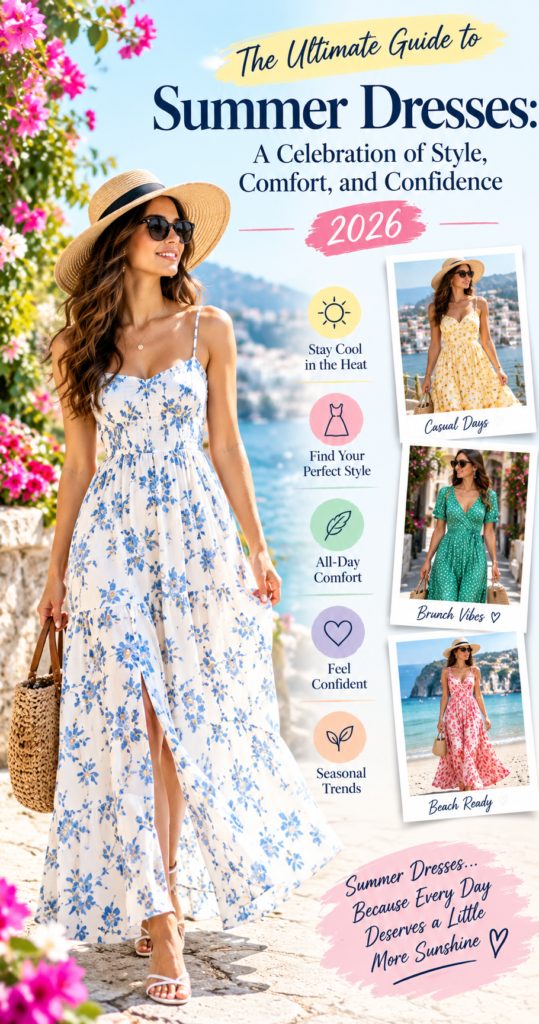
Color psychology plays a meaningful role in how clothing makes us feel and how others perceive us. Light colors reflect sunlight and absorb less heat, making them practical choices for hot days. Whites, creams, pastels, and soft blues create a visual cooling effect that aligns with the season’s aesthetic. Bright hues like coral, turquoise, and sunshine yellow inject energy and optimism, which explains their perennial popularity in resort collections. Earthy tones such as terracotta, sage, and sand offer a more grounded palette that transitions easily into early autumn.
Prints add personality and can camouflage minor fit imperfections. Florals remain the quintessential summer motif, ranging from delicate ditsy patterns to bold oversized blooms. Stripes, particularly vertical or diagonal varieties, create elongating effects. Geometric prints and abstract watercolor designs appeal to those who prefer a more modern or artistic expression. When mixing prints with accessories, a useful guideline is to keep one element bold and the others subtle, allowing the dress to remain the focal point. Understanding your personal color season, whether through professional analysis or simple experimentation, helps you select shades that harmonize with your skin tone and enhance your natural glow.
Navigating Sizing, Fit, and Online Shopping Challenges
Online shopping has expanded access to an enormous range of summer dresses, but it has also introduced challenges around sizing consistency. Vanity sizing, where numerical labels vary significantly between brands, means that a size medium in one label may correspond to a small or large in another. The solution lies in ignoring the number and focusing on measurements. Keep a current record of your bust, waist, and hip circumferences, and compare them against each brand’s specific size chart rather than relying on generic conversions.
Fit issues common to summer dresses include gaping at the bust, tightness across the shoulders, and hems that fall at unflattering lengths. Many of these problems can be resolved by a tailor for a modest fee, transforming an almost-right garment into a perfect one. When shopping online, read customer reviews that mention fit, look for user-generated photos, and check the return policy before committing. Brands that offer detailed fabric information, model measurements, and multiple angles of the garment tend to provide a more reliable shopping experience. Building a relationship with a few trusted retailers reduces the trial-and-error cycle over time.
Sustainable Fashion and Ethical Considerations
The environmental impact of fast fashion has become an increasingly important consideration for conscious consumers. The textile industry is responsible for significant water consumption, chemical pollution, and textile waste, with millions of tons of clothing ending up in landfills each year. Summer dresses, because they are often purchased seasonally and worn for a limited number of months, are particularly susceptible to the disposable mindset that drives this problem. Choosing garments made from organic cotton, Tencel lyocell, or deadstock fabric reduces the ecological footprint of your wardrobe.
Beyond materials, consider the labor practices behind the garments you buy. Brands that publish information about their factories, pay living wages, and maintain transparent supply chains offer greater assurance that your purchase supports ethical treatment of workers. Buying secondhand through platforms like Poshmark, Depop, or local consignment shops gives existing garments a second life and often yields unique vintage finds at accessible prices. Caring properly for the dresses you own, washing less frequently, air-drying, and making minor repairs, extends their lifespan and keeps them out of the waste stream for longer.
Building a Capsule Wardrobe of Summer Dresses
A capsule wardrobe approach encourages intentional purchasing and reduces clutter. For summer, a functional capsule might include five to seven dresses that cover the full spectrum of your needs. Start with a neutral base layer: a white cotton midi dress and a black or navy slip dress serve as foundational pieces that pair with almost anything. Add a printed or brightly colored dress for visual interest and social occasions. Include a maxi dress in a breathable fabric for beach days and travel. A shirt dress in a versatile tone handles casual professional settings and daytime errands. Finally, a statement dress, perhaps in silk or a bold silhouette, covers weddings, parties, and special events.
The benefit of this approach extends beyond organization. When every piece in your closet serves a purpose and coordinates with the others, getting dressed becomes faster and more enjoyable. You spend less money on impulse purchases that languish unworn, and you develop a clearer sense of your personal style. Over time, you can refine the capsule by replacing pieces that no longer serve you with higher-quality versions that better reflect your evolving taste.
Accessorizing Summer Dresses for Maximum Impact
Accessories transform a dress from simple to sensational, and summer offers a rich palette of options. Footwear sets the tone immediately: leather sandals suggest casual ease, espadrilles evoke Mediterranean charm, white sneakers signal sporty practicality, and strappy heels introduce evening glamour. Bags follow a similar logic. A woven straw tote complements beach and daytime looks, while a structured leather crossbody adds polish. Clutches work for evening events. Belts can redefine a dress’s silhouette, cinching a loose shift or adding definition to a flowy maxi.
Jewelry and layering pieces complete the picture. Delicate gold chains, shell pendants, and beaded bracelets feel appropriately seasonal without overwhelming the outfit. A wide-brimmed hat provides both sun protection and a stylish focal point. Sunglasses, whether classic aviators or trendy geometric frames, serve a practical purpose while adding personality. For cooler evenings or air-conditioned interiors, a lightweight cardigan, denim jacket, or linen blazer provides warmth without compromising the summer aesthetic. The art of accessorizing lies in restraint and cohesion; choose two or three elements that harmonize rather than competing for attention.
A Comparative Overview of Popular Summer Dress Styles
| Style | Typical Fabric | Best For | Fit Characteristics | Care Level |
|---|---|---|---|---|
| Wrap Dress | Jersey, silk, cotton | Versatile day-to-night | Adjustable tie waist, V-neckline | Moderate |
| A-Line Dress | Cotton, linen, blends | All body types | Fitted bodice, flared skirt | Easy |
| Maxi Dress | Rayon, cotton, chiffon | Beach, travel, evenings | Floor-length, flowing | Moderate |
| Shirt Dress | Cotton, linen, poplin | Casual work, errands | Button-front, collared | Easy |
| Slip Dress | Silk, satin, viscose | Evening, layering | Minimal seams, bias cut | Delicate |
| Fit-and-Flare | Stretch cotton, ponte | Social events, parties | Fitted top, full skirt | Moderate |
| Sundress | Cotton, seersucker | Casual daytime | Smocked or fitted bodice, straps | Easy |
This table illustrates how different styles align with specific needs and preferences. A sundress made from seersucker, for instance, offers a preppy, low-maintenance option ideal for hot afternoons, while a silk slip dress demands more careful handling but delivers unmatched elegance. Matching the style to the occasion and your willingness to care for the garment ensures satisfaction over the long term.
Caring for Your Summer Dresses to Extend Their Life
Proper care preserves the color, shape, and integrity of your garments. Always read the care label before washing, as recommendations vary widely. Cotton and linen generally tolerate machine washing on gentle cycles with cold water, while silk and delicate synthetics typically require hand washing or professional dry cleaning. Turn garments inside out before washing to protect surface fibers and prints. Use a mesh laundry bag for items with embellishments, straps, or delicate details. Avoid fabric softeners, which can coat fibers and reduce breathability, and opt for a gentle, pH-neutral detergent instead.
Drying methods matter as much as washing. Air-drying in the shade prevents fading from direct sunlight and reduces the mechanical stress of a tumble dryer. Hang dresses on padded hangers or lay them flat on a drying rack to maintain their shape. Linen benefits from being removed from the dryer or line while still slightly damp and pressed with a warm iron. Store clean, fully dry garments in a cool, dark place, and avoid overcrowding your closet, which can cause wrinkles and stretching. Fold heavy knits and delicate items rather than hanging them to prevent shoulder distortion.
The Psychology of Wearing Dresses in Summer
Clothing influences mood and self-perception in ways that science has begun to document. The concept of enclothed cognition suggests that what we wear affects our psychological states and cognitive performance. A summer dress, with its association with leisure, warmth, and freedom, can trigger feelings of relaxation and openness. Many people report feeling more confident and sociable when wearing a dress they love, which in turn influences how they carry themselves and interact with others.
There is also a practical liberation in wearing a dress during hot weather. Without the constriction of waistbands, the friction of layered fabrics, or the decision fatigue of matching tops and bottoms, the body moves more freely and the mind rests easier. This simplicity aligns with the broader cultural shift toward minimalism and intentional living. Choosing a dress becomes an act of self-care, a small daily decision that prioritizes comfort and joy over obligation.
Travel Tips for Packing Summer Dresses
When traveling to warm destinations, dresses offer an efficient packing strategy. They lie flat, roll compactly, and require minimal coordination with other items. Choose fabrics that resist wrinkling, such as jersey knits, modal blends, or technical fabrics designed for travel. Limit your color palette to two or three complementary shades so that shoes and accessories work with multiple outfits. A single versatile dress can serve as a beach cover-up, a sightseeing outfit, and a dinner ensemble, drastically reducing the volume of clothing you need to bring.
Consider the climate and cultural context of your destination. In conservative regions, modest silhouettes with higher necklines and longer hems show respect and help you blend in. In resort towns, bold prints and breezy cuts are entirely appropriate. Pack a lightweight steamer or wrinkle-release spray for touch-ups, and bring a foldable tote for laundry or beach excursions. Rolling garments rather than folding them saves space and reduces creases, and placing tissue paper between layers of delicate fabrics prevents snags during transit.
Common Problems and Practical Solutions
Even the most carefully chosen summer dress can present challenges. Straps that slip, zippers that catch, and static cling are among the most frequent frustrations. Double-sided fashion tape secures necklines and straps discreetly, while a small sewing kit handles emergency repairs. Anti-static spray or a light application of lotion to the legs reduces cling. For dresses that are slightly too large, a belt or a quick alteration can restore the intended fit.
Perspiration stains present another common issue. Dress shields or moisture-wicking undergarments provide a barrier between the skin and the fabric. Treat stains promptly by blotting with a mixture of water and white vinegar before laundering. For white dresses, oxygen-based bleach safely removes yellowing without the harshness of chlorine. Prevention also helps: choosing breathable natural fabrics, avoiding tight-fitting styles on the hottest days, and carrying a small fan can reduce perspiration and preserve the freshness of your garment throughout the day.
Cultural and Regional Variations in Summer Dress
Summer dress traditions vary beautifully across cultures and regions. In Mediterranean countries, flowing linen dresses in white and blue reflect both the climate and a long-standing aesthetic heritage. In South Asia, lightweight cotton kurtas and anarkali dresses provide breathable coverage that honors modesty while embracing color and embroidery. Japanese summer fashion often features yukata, a casual cotton kimono worn at festivals, which shares the same principles of airflow and elegance.
Western resort wear draws inspiration from these global traditions, blending silhouettes and techniques into a cosmopolitan style. The popularity of caftans traces to North African and Middle Eastern origins, while the wrap dress has roots in traditional Asian garments. Recognizing these influences deepens appreciation for the garments we wear and highlights the interconnectedness of fashion across borders. Choosing a summer dress can be a small celebration of cultural exchange and craftsmanship.
Seasonal Transitions: Making Summer Dresses Work Year-Round
With thoughtful layering, summer dresses can extend beyond the hottest months. A slip dress worn over a turtleneck and paired with ankle boots transitions into autumn. A cotton midi layered under an oversized sweater and tights becomes a winter staple. Cardigans, blazers, and denim jackets bridge the gap between seasons, while boots and closed-toe shoes replace sandals as temperatures drop.
Fabric choices influence how successfully a dress crosses seasons. Lighter colors and sheer fabrics feel out of place in cold weather, while deeper tones and heavier weaves adapt more naturally. Accessorizing with wool scarves, leather gloves, and opaque tights shifts the visual weight of an outfit toward fall or winter. By viewing summer dresses as year-round foundation pieces rather than seasonal exclusives, you maximize their value and reduce the need for separate cold-weather wardrobes.
Frequently Asked Questions
What makes a summer dress different from a regular dress?
A summer dress is designed specifically for warm weather, prioritizing breathability, lightweight construction, and comfort. It typically features natural fibers like cotton, linen, or rayon, which allow air circulation and moisture evaporation. Silhouettes tend to be looser or more relaxed, and colors lean toward lighter, brighter palettes that reflect sunlight. While any dress can be worn in summer, a true summer dress is engineered to perform under heat and humidity without causing discomfort.
How many summer dresses should I own?
The ideal number depends on your lifestyle, climate, and how frequently you do laundry. A practical starting point is five to seven dresses that cover different occasions: casual daytime, beach or pool, professional settings, and social events. Building a capsule of versatile pieces ensures you always have something appropriate to wear without owning an excessive number of garments. Focus on quality and fit rather than quantity, and replace items as they wear out.
Can I wear a summer dress to a formal event?
Yes, provided the dress is appropriate for the occasion’s dress code. A silk or satin maxi dress in a refined color, paired with elegant heels and statement jewelry, can work for cocktail parties and semi-formal weddings. For black-tie events, a formal gown is more suitable. The key is to assess the venue, time of day, and host’s expectations, then elevate the dress with accessories and styling that match the formality level.
How do I prevent a summer dress from clinging to my body?
Static cling and perspiration are the usual culprits. Choose breathable natural fabrics that allow airflow, and consider wearing a slip or moisture-wicking undergarment beneath the dress. Anti-static spray applied to the inside of the garment reduces cling, as does rubbing a dryer sheet lightly over the fabric. Avoiding overdrying and using a gentle detergent also helps maintain the fabric’s natural properties.
What shoes pair best with summer dresses?
The best footwear depends on the dress style and occasion. Flat leather sandals and espadrilles suit casual daytime looks, while wedges and block heels add height without sacrificing stability on uneven surfaces. White sneakers create a sporty, modern vibe. Strappy sandals or mules transition a dress into evening wear. Neutral tones like tan, white, and metallic coordinate with nearly any dress, while bold colors can serve as intentional accents.
Conclusion
The summer dress remains one of fashion’s most enduring and delightful inventions, a garment that solves the practical challenges of heat while delivering style, comfort, and confidence. From understanding fabric science and body shape considerations to mastering the art of accessorizing and caring for your garments, the knowledge shared here empowers you to build a warm-weather wardrobe that truly works for your life. Whether you favor the breezy simplicity of linen, the polished elegance of silk, or the everyday ease of cotton, the right summer dress awaits. Invest thoughtfully, care diligently, and embrace the season with a wardrobe that celebrates both beauty and practicality.
The takeaway is simple: when your clothing aligns with your comfort and your values, every sunny day becomes an opportunity to feel your best.