White dresses have long captured the imagination of fashion lovers, brides, celebrities, and everyday women who want to feel radiant and put-together. There’s something undeniably magnetic about a crisp white frock, whether it’s a breezy summer sundress or a structured gown fit for a gala. This guide dives deep into everything you need to know about white dresses, from history and fabric science to styling, body-type considerations, care rituals, and sustainable shopping. By the end, you’ll understand why this single garment remains one of the most powerful and versatile pieces in any wardrobe.
The enduring appeal of a white dress rests on its ability to communicate purity, confidence, and modernity all at once. Designers from Coco Chanel to Carolina Herrera have leaned on white as a canvas for architectural silhouettes, while pop culture moments, from Marilyn Monroe’s billowing skirt to Meghan Markle’s minimalist wedding gown, have cemented its iconic status. This article explores that legacy while giving you practical, expert-level insight you can actually use.
The History and Cultural Significance of White Dresses
White garments have carried symbolic weight for centuries, far before they became a staple of modern fashion. In ancient Greece and Rome, white linen and wool represented purity, civic virtue, and religious devotion. Priests, senators, and brides alike wore white to signal cleanliness of body and spirit. The association wasn’t about fashion trends but about ritual and status, and that deep cultural coding still lingers in how we perceive a white dress today.
The Western bridal white dress, as we know it, is often traced to Queen Victoria’s 1840 wedding to Prince Albert. Before that, brides simply wore their best dress, often colored and reusable. Victoria’s choice of a white satin gown with Honiton lace sparked a trend among the aristocracy and eventually the middle class. By the twentieth century, white dresses had migrated from the altar to the runway, the beach, and the boardroom, transformed by designers like Cristóbal Balenciaga and Gianni Versace into statements of bold minimalism.
Culturally, white dresses also carry layered meanings across the globe. In many South Asian and African traditions, white is worn for mourning or spiritual ceremonies, while in Western pop culture it signals celebration and new beginnings. Understanding this duality helps you appreciate why a white dress can feel both daring and demure depending on context. It’s never just fabric; it’s a message.
Why White Dresses Never Go Out of Style
Fashion trends cycle fast, but white dresses operate on a different rhythm. They’re what industry insiders call a “perennial” — a category that sells steadily regardless of season or micro-trend. The reason is partly psychological: white reflects light, which makes the wearer appear more luminous and approachable. It’s also partly practical. A well-cut white dress pairs with virtually any accessory, shoe, or jacket, making it a low-effort, high-reward wardrobe choice.
Retail data consistently backs this up. Spring and summer collections almost always feature white as a dominant color, and resort wear without white is practically unthinkable. Even in autumn and winter, white dresses appear in heavier fabrics like wool crepe and velvet, styled with boots and coats. The neutrality of white means it transcends the calendar, which is why stylists recommend it as a capsule wardrobe cornerstone alongside the little black dress.
There’s also an emotional dimension. People associate white with freshness, honesty, and optimism. Wearing a white dress can feel like hitting a reset button on your personal style. That emotional pull is why the garment keeps returning, season after season, in new silhouettes and fabrications, yet always recognizably itself.
Types of White Dresses for Every Occasion
The world of white dresses is far broader than the bridal aisle. A white cotton sundress with smocking works for a farmers’ market, while a white silk slip dress transitions from dinner to a rooftop party. Understanding the categories helps you shop intentionally rather than impulsively, and it ensures your purchase fits your actual life rather than a fantasy version of it.
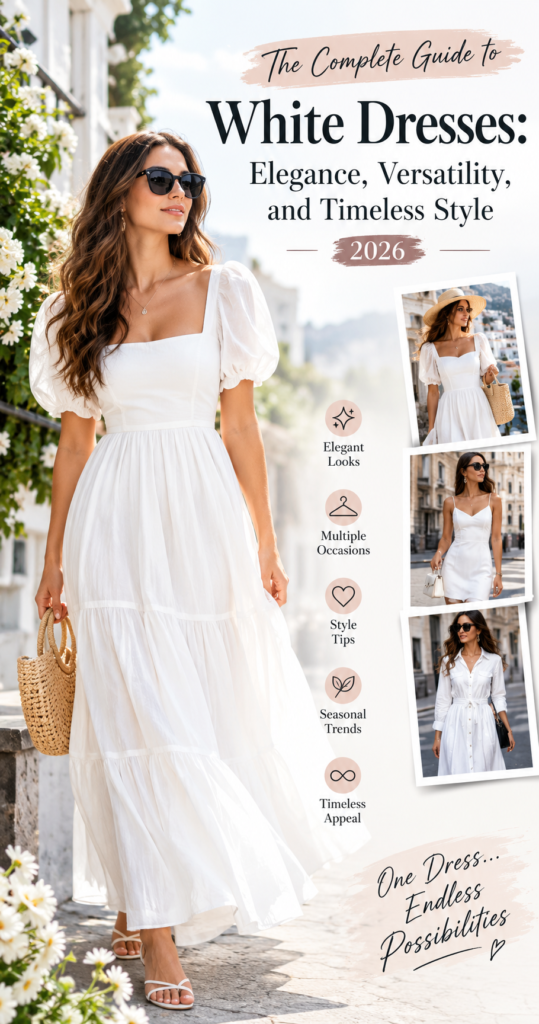
Consider the white shirt dress, a utilitarian icon that borrows from menswear. It’s structured, often belted, and ideal for office settings or brunch. Then there’s the white maxi dress, which leans bohemian or glamorous depending on fabric — think gauzy linen for beach vacations versus heavy satin for evening events. The white lace dress occupies a romantic register, frequently chosen for engagements, bridal showers, and garden parties.
For formal occasions, white ball gowns and column dresses dominate red carpets and weddings. Meanwhile, the white wrap dress, popularized by Diane von Furstenberg, offers a flattering V-neckline and tie waist that suits countless body types. Each category carries its own styling logic, fabric expectations, and care requirements, which we’ll unpack as we go.
| Dress Type | Best Occasion | Ideal Fabric | Styling Tip |
|---|---|---|---|
| Shirt dress | Office, brunch | Cotton poplin, linen | Add a leather belt and loafers |
| Slip dress | Evening, date night | Silk, satin | Layer under a blazer for balance |
| Maxi dress | Beach, resort, garden party | Linen, chiffon | Pair with woven accessories |
| Lace dress | Bridal shower, engagement | Guipure, Chantilly lace | Keep jewelry minimal |
| Ball gown | Gala, wedding | Duchesse satin, tulle | Statement earrings, sleek hair |
| Wrap dress | Work, casual events | Jersey, crepe | Neutral heels elongate the leg |
Choosing the Right Fabric for White Dresses
Fabric choice matters more with white than with almost any other color because white amplifies texture, weave, and quality. A cheap polyester can look shiny and thin, while a well-milled cotton or silk reads luxurious even in a simple cut. When shopping, always touch the fabric and hold it up to light to check for transparency and weave density.
Natural fibers like cotton, linen, and silk breathe well and photograph beautifully, but they wrinkle. Blends that include a small percentage of elastane or viscose can improve drape and comfort without sacrificing elegance. Linen, in particular, has become a hallmark of summer white dresses because its natural slub texture adds visual interest to an otherwise plain surface. The slight crumple is part of its charm, not a flaw.
Synthetic options like polyester and nylon have improved dramatically. High-quality technical fabrics can be wrinkle-resistant, quick-drying, and even UV-protective, making them ideal for travel. The key is to avoid fabrics that feel plasticky or trap heat. If you’re investing in a special-occasion white dress, prioritize silk crepe, duchesse satin, or wool crepe, which hold structure and drape elegantly.
How to Style White Dresses for Day and Night
Styling a white dress is a lesson in contrast and balance. For daytime, think relaxed and tactile: straw hats, tan sandals, woven bags, and light denim jackets. A white cotton midi dress with sneakers and a crossbody bag reads effortless and modern. Layering a chambray shirt or oversized cardigan over a white slip dress also works beautifully for transitional weather.
For evening, the same white dress can transform with a few strategic swaps. Replace sneakers with strappy heels, add a metallic clutch, and layer a tailored blazer or leather jacket. Jewelry should complement rather than compete — gold hoops, a delicate pendant, or a bold cuff depending on your neckline. A red lip is a classic pairing with white because the contrast feels intentional and striking.
Seasonal transitions offer even more creativity. In autumn, style a white knit dress with knee-high boots and a camel coat. In winter, a white turtleneck dress under a long wool overcoat looks chic and warm. The goal is to treat white as a neutral base, not a fragile garment reserved for one season.
White Dresses and Body Type: Flattering Every Silhouette
One of the most persistent myths about white dresses is that they only flatter certain body types. In reality, the right silhouette and fabric can flatter anyone. The key is understanding proportion, balance, and where you want to draw the eye. A pear-shaped figure might love an A-line white dress that skims the hips, while an apple shape may prefer an empire waist that defines the smallest part of the torso.
Petite frames benefit from shorter hemlines or column silhouettes that create an unbroken vertical line. Taller figures can carry voluminous maxi dresses and dramatic sleeves with ease. Hourglass shapes look stunning in wrap dresses and belted shirt dresses that highlight the waist. Inverted triangles can balance broader shoulders with A-line skirts or halter necklines.
Beyond body shape, consider skin tone. Pure white can be stark against very fair skin, so cream or ivory may feel softer. Warm undertones often glow in off-white and ecru, while cool undertones shine in optic white. There are no rules, only guidelines — the best white dress is the one that makes you feel confident when you catch your reflection.
The Role of White Dresses in Bridal Fashion
No discussion of white dresses is complete without addressing bridal wear, where white reigns supreme. The modern bride has more options than ever: minimalist column gowns, dramatic ballgowns, bohemian lace sheaths, and even white jumpsuits. Designers like Vera Wang and Oscar de la Renta have pushed the boundaries of what a wedding dress can be, proving that white is a starting point, not a limitation.
Interestingly, not all brides choose pure white. Ivory, champagne, blush, and oyster are popular alternatives that photograph warmly and suit a wider range of skin tones. Some brides opt for a white dress for the ceremony and change into a colored or sequined outfit for the reception. This shift reflects a broader cultural move toward personal expression over rigid tradition.
Bridal white dresses also carry significant emotional weight. They’re often preserved, passed down, or repurposed. Some brides have their mother’s gown restyled into a modern silhouette, while others donate their dress to organizations that provide gowns to brides in need. The garment becomes a vessel for memory, which is part of why it’s treated with such reverence.
Caring for White Dresses: Stain Prevention and Maintenance
Keeping a white dress pristine is equal parts prevention and prompt action. The first rule is to treat stains immediately, because white fabric shows discoloration faster than any other color. Blot, don’t rub, and avoid hot water on protein-based stains like blood or sweat, which can set the stain permanently.
Washing depends on fabric. Cotton and linen white dresses generally tolerate machine washing on a gentle cycle with a mild detergent and oxygen-based bleach. Silk, wool, and embellished dresses should be hand-washed or dry-cleaned. Always check the care label, and when in doubt, err on the side of caution. Storing white dresses in breathable cotton garment bags prevents yellowing caused by plastic and light exposure.
Yellowing is the nemesis of white clothing. It’s caused by oxidation, residual oils, and improper storage. To combat it, wash thoroughly before storing, avoid starch, and keep garments in a cool, dark, dry place. For vintage white dresses, professional textile conservation may be necessary. A little diligence goes a long way toward preserving your investment.
White Dresses in Pop Culture and Celebrity Style
Popular culture has repeatedly turned white dresses into defining moments. Marilyn Monroe’s white halter dress in “The Seven Year Itch” became a symbol of Hollywood glamour. Audrey Hepburn’s white Givenchy gown in “Sabrina” redefined elegant minimalism. More recently, Zendaya, Blake Lively, and Rihanna have worn white dresses on red carpets in ways that feel fresh and boundary-pushing.
Celebrity stylists often choose white for major appearances because it photographs cleanly and stands out against busy backgrounds. It also signals confidence — wearing head-to-toe white requires a certain poise, since there’s nowhere to hide. That’s precisely why it’s a favorite for premieres, award shows, and fashion week front rows.
Social media has amplified this effect. A striking white dress is highly shareable, whether it’s a resort look in Santorini or a street-style moment in Paris. Influencers and content creators gravitate toward white because it reflects light beautifully in photos and video, making it a reliable choice for visual platforms.
Sustainable and Ethical White Dresses
Sustainability is reshaping how consumers think about white dresses. Conventional cotton uses large amounts of water and pesticides, and white fabric often undergoes chlorine bleaching, which is harmful to workers and ecosystems. Fortunately, alternatives are gaining ground. Organic cotton, linen, Tencel lyocell, and recycled fibers offer lower-impact options without sacrificing quality.
Ethical brands are also embracing natural, unbleached whites and low-impact dyes. Some designers use closed-loop production systems that recycle water and chemicals. Certifications like GOTS, OEKO-TEX, and Fair Trade help shoppers identify garments made with responsible practices. Reading labels and asking questions is the first step toward a more conscious wardrobe.
Buying secondhand is another powerful route. Vintage white dresses often feature superior craftsmanship and unique detailing you won’t find in fast fashion. Platforms like The RealReal, Vestiaire Collective, and local consignment shops make it easier than ever to find pre-loved pieces. Repairing, altering, and restyling existing white dresses also extends their life and reduces waste.
Common Problems with White Dresses and How to Solve Them
Transparency is the most common complaint about white dresses. The fix is simple: choose fabrics with a denser weave, or wear nude seamless undergarments that match your skin tone rather than white, which can actually show through. Lining is your friend, and a good tailor can add one if needed.
Another issue is visible sweat marks, especially in summer. Breathable natural fabrics help, and dress shields or moisture-wicking slips can provide discreet protection. For deodorant stains, a diluted white vinegar solution or a specialized stain remover works well. Carrying a stain pen in your bag is a small habit that saves big embarrassment.
Wrinkling is a third challenge, particularly with linen and cotton. A travel steamer is more gentle than an iron and works wonders on delicate fabrics. Packing white dresses by rolling them rather than folding can reduce creases. If you’re traveling, hang the dress in the bathroom while you shower to let steam relax the fibers.
White Dresses for Different Seasons and Climates
In hot, humid climates, white dresses are practically a survival tool. Linen and cotton allow air circulation and reflect heat, while loose silhouettes prevent sticking. A white sundress with breathable sandals is the uniform of choice in Mediterranean summers and tropical resorts for good reason.
In cooler climates, white dresses adapt through layering and fabric weight. Wool crepe, heavy jersey, and double-knit fabrics provide warmth without bulk. Tights, boots, and tailored coats make white viable in autumn and winter. A white sweater dress with a long cardigan and ankle boots is a cozy yet polished look.
Transitional seasons call for mid-weight fabrics and strategic layering. A white shirt dress with a trench coat works for spring, while a white midi dress with a leather jacket suits early fall. The versatility of white means it can be styled up or down depending on the temperature and occasion, making it a true year-round staple.
How to Shop for White Dresses Online
Online shopping for white dresses requires extra attention because color accuracy varies across screens. Read reviews that mention fit, opacity, and fabric quality. Look for user-submitted photos, which often reveal how the dress looks on real bodies in natural light. Check the return policy before committing, since fit issues are common with any garment.
Measure yourself and compare against the brand’s size chart rather than assuming your usual size. Different designers cut differently, and white dresses with structured tailoring are less forgiving than stretchy fabrics. If you’re between sizes, consider sizing up and having the dress tailored for a perfect fit.
Pay attention to model height and size in product photos. A dress that hits mid-calf on a tall model may fall to the ankle on a shorter frame. Detailed descriptions, fabric composition, and care instructions are also valuable signals of quality. When possible, buy from brands with transparent sizing and generous exchange policies.
White Dresses as a Wardrobe Investment
A high-quality white dress is more than a seasonal purchase; it’s an investment in versatility. Because white pairs with everything, a single well-made dress can generate dozens of outfits across seasons and occasions. Cost-per-wear becomes remarkably low when you factor in how often you reach for it.
Choose timeless silhouettes over trend-driven cuts if you want longevity. A classic A-line, a tailored shirt dress, or a bias-cut slip in a substantial fabric will outlast passing fads. Neutral accessories extend the dress’s range, while statement pieces let you reinvent it for different events.
Care and maintenance protect that investment. Proper washing, storage, and occasional professional cleaning keep the fabric bright and the structure intact. Treat your white dress like the staple it is, and it will reward you for years, adapting to your life as trends come and go.
Expert Insights and Real-World Experiences
Fashion stylists often describe white dresses as a “confidence garment.” According to stylist and author Kendall Farr, “White is the ultimate test of a garment’s cut and quality, because there’s nowhere to hide.” That sentiment is echoed by tailors who note that white fabric reveals every seam and stitch, which is why construction matters so much.
Brides frequently share that choosing a white dress felt like stepping into a version of themselves they hadn’t met yet. One bride described her minimalist white gown as “the calmest decision in a chaotic planning process.” Another said wearing white made her feel “completely present” during the ceremony, as if the color stripped away distractions.
Everyday wearers report similar shifts. A teacher in Texas said her white shirt dress became her “Monday armor,” helping her feel organized and authoritative. A traveler in Portugal noted that packing two white dresses simplified her entire suitcase. These real-world experiences reveal that the garment’s power isn’t just aesthetic; it’s psychological and practical.
The Psychology of Wearing White
Color psychology suggests that white represents clarity, cleanliness, and new beginnings. Wearing white can create a mental shift toward feeling more composed and open. It’s no coincidence that white is used in medical and spiritual settings where trust and calm are essential.
There’s also a phenomenon known as the “white coat effect,” where wearing white can subtly increase a person’s sense of authority and focus. While most associated with medical professionals, the principle applies to fashion. A white dress can make the wearer feel more deliberate and poised, which influences how others perceive them.
From a social standpoint, white draws attention without being loud. It’s a statement of presence rather than flash. That balance makes it ideal for situations where you want to be noticed but not overpowering — a job interview, a first date, a graduation, or a milestone celebration.
Common Mistakes to Avoid with White Dresses
One common mistake is wearing the wrong undergarments. White bras and panties often show through white fabric, so nude tones are the safer choice. Seamless styles prevent visible lines, and for very sheer fabrics, a slip adds coverage and polish.
Another misstep is ignoring fabric quality in favor of a low price. Inexpensive white fabric often looks thin, pills quickly, and loses shape after a few washes. Investing in better materials pays off in appearance and longevity, especially for a garment you’ll wear often.
Over-accessorizing is a third trap. White dresses are naturally striking, so piling on jewelry, belts, and scarves can make the look busy. Editing is key. Choose one or two statement elements and let the dress breathe. Simplicity is what makes white feel modern.
The Future of White Dresses in Fashion
The future of white dresses lies at the intersection of technology, sustainability, and personalization. Fabric innovations are producing self-cleaning textiles, stain-resistant coatings, and biodegradable fibers that address white’s traditional drawbacks. These advances could make white more practical than ever.
Customization is also rising. Made-to-measure services and 3D knitting allow shoppers to order white dresses tailored to their exact measurements and preferences. This reduces returns and waste while delivering a better fit, particularly for non-standard body types.
Sustainability will continue to shape design. Expect more brands to adopt recycled fibers, low-impact bleaching, and transparent supply chains. As consumers demand accountability, white dresses will increasingly symbolize not just purity and elegance but also responsible craftsmanship. That evolution keeps the garment relevant for generations to come.
Frequently Asked Questions About White Dresses
What is the best fabric for a white dress in summer?
Linen and cotton are excellent choices for summer white dresses because they breathe, wick moisture, and reflect heat. Linen has a natural texture that adds visual interest, while cotton offers softness and durability. For a dressier summer option, silk crepe or lightweight viscose drapes elegantly and feels cool against the skin. Avoid heavy polyester blends in high heat, as they trap moisture and can feel uncomfortable.
Can you wear a white dress to a wedding if you’re not the bride?
In Western cultures, wearing white to a wedding is generally considered inappropriate because it can compete with the bride. However, exceptions exist for dress codes that specify white, such as a “white party” reception or a destination wedding with an all-white theme. When in doubt, choose a different color or ask the couple directly. Respect and awareness matter more than the garment itself.
How do you remove yellow stains from a white dress?
Yellow stains often come from oxidation, sweat, or improper storage. Soak the garment in a solution of oxygen-based bleach and cool water for several hours, then wash gently. For stubborn stains, a paste of baking soda and water can help. Avoid chlorine bleach, which can worsen yellowing over time. For vintage or delicate fabrics, consult a professional cleaner.
Are white dresses flattering on everyone?
Yes, when the silhouette, fabric, and fit suit the wearer. The key is choosing a cut that balances your proportions and a white tone that complements your skin. Pure white, ivory, cream, and ecru all read differently on different complexions. Tailoring makes a significant difference, so don’t hesitate to have a dress altered for a perfect fit.
How should I store white dresses to prevent discoloration?
Store white dresses in a cool, dark, dry place inside breathable cotton garment bags. Avoid plastic covers, which trap moisture and cause yellowing. Make sure the dress is completely clean before storing, since invisible oils and residues can oxidize over time. Cedar blocks or lavender sachets can deter pests without chemicals. Check stored garments periodically for any signs of discoloration.
What shoes pair best with white dresses?
The best shoes depend on the occasion and dress style. Nude heels elongate the leg and work for formal events. White sneakers create a casual, modern look for daytime. Tan or brown leather sandals suit beach and resort settings. Metallic heels add glamour for evening. The versatility of white means almost any shoe color works, so choose based on comfort and context.
Conclusion
White dresses occupy a rare space in fashion: they are both timeless and endlessly adaptable, capable of signaling purity, confidence, and modern elegance in a single garment. From ancient ritual wear to contemporary runways, from bridal aisles to beachside cafés, the white dress has remained a constant, evolving with fabrics, silhouettes, and cultural values while never losing its core identity.
Choosing the right white dress comes down to understanding fabric, fit, occasion, and personal style. Care and maintenance protect your investment, while thoughtful styling unlocks its full potential across seasons and settings. Whether you’re shopping for a wedding, a vacation, or a wardrobe staple, the white dress rewards careful consideration with lasting value.
The final takeaway is simple: a white dress is not just clothing. It’s a statement of clarity and confidence, a canvas for self-expression, and a piece that grows more meaningful with every wear. Invest wisely, care diligently, and wear it boldly.