The fashion world is never static. It breathes, shifts, and reinvents itself with every season, every runway show, and every cultural tremor that ripples through society. In 2026, the industry finds itself at a fascinating inflection point—caught between the pull of tradition and the push of radical self-expression, between the harsh realities of economic uncertainty and the escapist fantasy that clothing has always provided.
From the ateliers of Paris to the emerging runways of Central Asia, from the boardrooms of luxury conglomerates to the thrift stores where Gen Z hunts for individuality, the fashion world is undergoing a profound recalibration. Understanding this moment requires more than just skimming the latest trend reports. It demands a deep dive into the forces shaping design, retail, sustainability, and the very meaning of personal style in an era defined by algorithmic feeds and digital fatigue.
The overarching narrative of 2026 is one of paradox. On one hand, there is a pronounced return to conservative, almost aristocratic codes of dress—a response, experts suggest, to financial and political anxiety. On the other, there is a fierce pushback against conformity, a reclaiming of personal style that rejects the homogenizing influence of social media algorithms . This tension between wanting to blend in and wanting to stand out is not new, but its current expression feels particularly urgent.
People are navigating a world where the office is back in session, where the cost of living dominates headlines, and where the digital sphere offers both endless inspiration and relentless pressure to perform. The fashion world reflects these contradictions back at us, offering both armor and art, practicality and play.
The Conservative Turn and the Rejection of the Algorithm
The return of conservative dressing is one of the most discussed shifts in the fashion world for 2026. This is not the stuffy conservatism of decades past, but a refined, aspirational aesthetic rooted in what trend forecasters describe as “old money” inspiration. Preppy codes endure but are personalized rather than rigidly followed, and the influence of designers like Jonathan Anderson at Dior has pushed aristocratic and Ivy League references into the mainstream .
Emily Gordon-Smith, content director at trend-forecasting firm Stylus, links this movement directly to the broader macro sentiment, noting that it responds to the financial and political climate in a way that feels “quite aspirational, in a very traditional way” . The logic is straightforward: when the world feels unstable, people gravitate toward symbols of permanence and propriety.
Yet this conservative impulse coexists with something far more rebellious. The very pervasiveness of trends on platforms like TikTok and Instagram has triggered a backlash, a desire among consumers to dress for themselves rather than for an audience. Ashley Galang, a Toronto-based stylist, points to thrifting as a catalyst for this return to individualism, arguing that it is “easier to create looks that reflect personality” when you are not simply buying into a pre-packaged trend cycle .
Gordon-Smith frames this as getting one’s “personal style mojo back,” a deliberate move “against the algorithm” . The fashion world is thus splitting into two parallel currents: one that seeks safety in tradition, and another that seeks freedom in idiosyncrasy. Both are valid responses to the same underlying condition—a desire for agency in a world that often feels out of control.
The menswear arena offers a particularly vivid illustration of this push-pull. Nick Paget, senior menswear editor at WGSN, observes that the return-to-office mandate is fueling a desire for anonymity among some men who want to show up professionally without giving too much of their personality away . Simultaneously, adventurous men are rejecting the “penguin tuxedo” uniformity, opting for suiting in unconventional colors like blue, green, and dark red, and embracing lace, drapier wools, and fancier knits that challenge traditional masculine codes . The fashion world is no longer a monolith; it is a spectrum of responses, each one a negotiation between the self and society.
Character Dressing and the Escapist Impulse
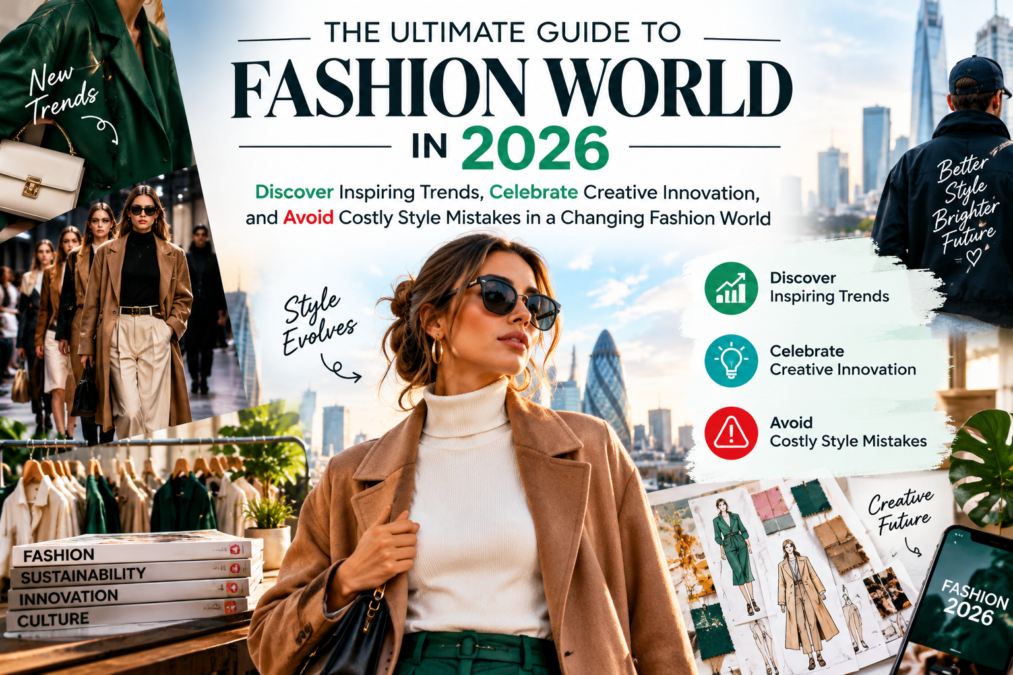
If conservative dressing is about stability, then the rise of “character dressing” is about escape. The Spring 2026 runways were filled with sculptural hats, frock coats, capes, and drop-waist dresses, drawing heavily from historical silhouettes and theatricality . This is fashion as costume, as a way to step outside the mundane and inhabit a different version of oneself. Gordon-Smith sees the renewed emphasis on the waist—corsets, crinolines, bustiers—as a form of escapism, a “costume-led playbook” that allows both designers and wearers to indulge in fantasy . In a climate where reality is often grim, the fashion world offers a portal to another time, another body, another life.
The escapist impulse extends beyond clothing into the broader experience of fashion. Fashion weeks, once staid industry affairs, have become cultural spectacles, with brands investing heavily in set design, celebrity guest lists, and immersive presentations that transport attendees to other worlds. This is partly a response to the fragmented attention economy, where a simple runway walk is no longer enough to capture the imagination. But it is also a recognition that people are hungry for moments of transcendence, for experiences that lift them out of the ordinary. The fashion world, at its best, provides those moments—brief flashes of beauty and possibility that remind us why we care about clothes in the first place.
The Business of Luxury and the Search for Value
This has led to a renewed focus on craft, heritage, and tangible value. Hermès, with its emphasis on leather goods and its carefully managed scarcity, continues to outperform more trend-driven competitors, posting solid growth in its key categories . Consumers, particularly those with the means to be selective, are gravitating toward pieces that feel enduring, that carry a story, that justify their cost through quality rather than hype.
The “It Bag” phenomenon, once the holy grail of luxury marketing, is losing its potency; as one industry executive noted, the influence of a single cultural object is weakening, and demand is becoming more dispersed and personal . The fashion world is learning that it cannot rely on manufactured desire alone. It must offer something real.
The retail landscape is also shifting in response to these changes. Multi-brand retailers are finding that curation is more important than ever, but the path to purchase has fragmented. A shopper might discover a product on TikTok, research it through editorial recommendations, compare options on a multi-brand site, and then buy it somewhere else entirely .
This ragmentation makes wholesale harder to operate effectively, and it puts a premium on creating distinctive, compelling environments—both physical and digital—that can capture attention and build loyalty. Moda Operandi’s trunk show model, which allows customers to pre-order pieces months in advance, taps into a desire for access and exclusivity that pure convenience cannot satisfy . The fashion world is discovering that in an age of infinite choice, the most valuable currency is not speed but significance.
The Body, the Runway, and the GLP-1 Conversation
One of the most sensitive and complex issues facing the fashion world today is the relationship between body ideals and the rise of weight-loss medications like GLP-1s. The Spring/Summer 2027 runways were dominated by lingerie-inspired looks, sheer organza, corsets, and skin-baring designs, prompting uncomfortable questions about whether fashion is responding to, or fueling, a cultural shift toward thinner bodies . GLP-1 sales reached $79 billion in 2025, and projections suggest that one in three Americans and one in eight Britons will be using these medications by 2030 . In this context, the visibility of skin on the runway feels less like a neutral aesthetic choice and more like a participant in a larger conversation about bodies, control, and desirability.
Sustainability and the Slow Work of Systemic Change
Sustainability remains a central concern for the fashion world, though the conversation has matured beyond simple declarations of intent. The focus has shifted toward tangible, systemic change—circular design, zero-waste patterns, and the development of alternative materials that can reduce the industry’s enormous environmental footprint. Research into zero-waste fashion design has identified several key orientations: eco-friendly design that utilizes reuse and reduction methods, variable design that practices zero waste through deconstruction and diverse cutting techniques, and long-term circulation through second-hand trade, resale, and the development of eco-friendly materials . These are not just theoretical concepts; they are being implemented by brands that recognize the need to move beyond incremental improvements.
The Creative Carousel: Designers in Motion
The fashion world has always been defined by the movement of its most talented individuals, and 2026 has been a year of significant creative turnover. The departures of Veronica Leoni from Calvin Klein and Seán McGirr from Alexander McQueen, both after relatively brief tenures, underscored the brutal pressure on creative directors to deliver commercially viable collections quickly . Leoni’s fall 2026 collection for Calvin faced particularly harsh criticism, described by one critic as “a mistake,” and both designers struggled to translate their visions into products that resonated with consumers . The fashion world is a demanding employer, and the tolerance for experimentation that does not immediately yield results is thin.
The most celebrated creative directors of the moment are those who have managed to make an impact without sacrificing their point of view. Matthieu Blazy’s debut at Chanel generated such excitement that fashion editors were literally sprinting to get their hands on his pony-hair flats and Maxi Flap bags . Jonathan Anderson, now at Dior, has become one of the most influential figures in the industry, his work generating both critical acclaim and viral moments like the JW Anderson Pigeon bag . Demna at Gucci continues to polarize and provoke, turning everyday objects into luxury punchlines and holding up a mirror to the cultural zeitgeist .
And Christopher John Rogers has waged a successful campaign against the tyranny of beige, bringing color and joy back to a fashion world that had grown too fond of neutrals . These are the figures shaping the visual language of the moment, and their influence extends far beyond the runway.
Fashion Weeks Beyond the Big Four
The geography of the fashion world is expanding. While New York, London, Milan, and Paris remain the undisputed centers of the industry’s power structure, regional fashion weeks are carving out increasingly significant spaces for themselves. These platforms offer something the Big Four often struggle to provide: accessibility, community, and a genuine connection to local culture and craft . For young designers who cannot afford the astronomical costs of staging a show in Paris or Milan, a regional fashion week can be a lifeline—a way to present their work to international media and buyers without having to abandon the context that shaped them.
Visa Fashion Week in Almaty and Tashkent, for instance, has welcomed over 20,000 guests and accredited more than 260 international journalists, including representatives from Vogue, ELLE, and WWD . This is not a minor local event; it is a genuine point of connection between Central Asian designers and the global industry. Bauyrzhan Shadibekov, the founder and CEO, describes the platform as a way to bring global media and professionals directly to the region while giving local designers access to audiences and markets beyond Central Asia . The fashion world is becoming more polycentric, and the result is a richer, more diverse visual culture.
The distinctiveness of these regional scenes is their greatest asset. In a world where Instagram and TikTok have flattened visual distinctions and made everything look somewhat the same, the local becomes a source of differentiation. Traditional crafts, local techniques, and unique materials can inspire contemporary design without reducing it to a literal illustration of tradition . As one organizer put it, the goal is not nostalgia or costume but identity translated into modern design . The fashion world benefits from this diversity, even if the commercial power remains concentrated in the traditional capitals. The most interesting work is often happening at the margins, where designers are freer to experiment and less constrained by the expectations of a global market.
The Fragmented Path to Purchase
This fragmentation puts a premium on curation and trust. Multi-brand retailers that can offer a distinctive point of view, that can tell a story and create a sense of discovery, are better positioned than those that simply aggregate products. Moda Operandi’s model, which combines editorial storytelling with exclusive access to pre-order pieces, is one example of how retailers are adapting .
Physical retail is also evolving toward experience-led models, with stores hosting exhibitions, events, and personalized services designed to create emotional connections that online shopping cannot replicate . The fashion world is learning that convenience is not enough; people want to feel something when they engage with fashion, whether that feeling comes from a beautiful store, a compelling editorial, or a sense of belonging to a community.
For brands, the challenge is to maintain a coherent identity across all these touchpoints while also being responsive to the way consumers actually behave. This is not easy, especially for smaller labels without the resources of the major luxury houses. But it is also an opportunity for creativity and differentiation. The brands that thrive in this environment will be those that understand that they are not just selling products; they are selling meaning, connection, and a way of seeing the world. The fashion world is, at its core, a meaning-making enterprise, and the most successful players are those who remember that.
The Future of Personal Style in a Post-Algorithm World
The most hopeful development in the fashion world right now is the renewed emphasis on personal style. For years, the industry was dominated by a top-down model: designers created trends, magazines promoted them, and consumers followed. Social media disrupted that model, democratizing access but also creating new forms of conformity, where success was measured in likes and shares and the pressure to look a certain way was relentless. Now, there are signs of a counter-movement. People are tired of the algorithm. They are tired of seeing the same aesthetic repeated endlessly. They want to wear things that feel like them, not like a trend report .
This shift has implications for every part of the fashion world. Designers are responding by creating collections that offer more choices, more eclecticism, more room for individual interpretation. Retailers are curating with an eye toward distinctiveness rather than mass appeal. And consumers are increasingly comfortable mixing high and low, vintage and new, luxury and thrift, creating looks that are personal and unrepeatable . This is not a rejection of fashion; it is a reclaiming of it. The fashion world is at its best when it serves as a tool for self-expression, not a set of rules to be followed. The current moment, with all its contradictions and uncertainties, offers an opportunity to return to that essential truth.
The final insight is this: the fashion world is not a monolith, and it never has been. It is a living system of ideas, desires, and negotiations, shaped by economics and culture, technology and tradition. The conservative turn, the escapist impulse, the sustainability imperative, the body conversation, the creative carousel, the geographic expansion, and the fragmentation of discovery—these are not separate stories. They are facets of the same ongoing human project of figuring out how to present ourselves to the world. The fashion world will continue to change, and it will continue to provoke, delight, and confound us. That is what makes it worth paying attention to.
Frequently Asked Questions
What is character dressing and why is it trending in the fashion world?
Character dressing refers to a style approach that draws heavily from historical silhouettes, theatricality, and costume-like elements—think sculptural hats, frock coats, capes, corsets, and crinolines. It is trending in the fashion world because it offers a form of escapism from the uncertainties of contemporary life, allowing wearers to inhabit a different time or persona. Trend forecasters note that designers are tapping into a “costume-led playbook” as a response to the desire for fantasy and play in dressing, moving beyond simple nostalgia into a creative reinterpretation of the past .
How are GLP-1 weight-loss medications influencing runway trends in the fashion world?
The influence of GLP-1 medications on the fashion world is a subject of active debate. Some analysts see a correlation between the rise of these drugs and the prevalence of skin-baring, body-conscious designs on recent runways. Others caution that the relationship is difficult to prove and that body ideals have always fluctuated. What is clearer is that designers are responding to the practical needs of bodies in transition, incorporating adjustable waistbands, crossed lacing, elastic hems, and versatile belts that allow garments to adapt to changing shapes. The fashion world is thus engaging with the GLP-1 phenomenon both aesthetically and functionally .
Why are regional fashion weeks becoming more important in the fashion world?
Regional fashion weeks are gaining prominence because they offer accessibility, community, and a platform for designers who cannot afford the costs of showing in New York, London, Milan, or Paris. These events connect local talent with international media and buyers while allowing designers to remain rooted in their cultural context. Platforms like Visa Fashion Week in Almaty and Tashkent have attracted thousands of guests and major publications, demonstrating that the fashion world’s geography is becoming more diverse and polycentric. Distinctiveness, rather than uniformity, is what makes these scenes valuable to the global industry .
How is the fashion world addressing sustainability beyond marketing claims?
The fashion world is moving toward more systemic approaches to sustainability, including zero-waste design techniques, circular business models, and the development of alternative materials. Brands are experimenting with plastic-free stretch denim, compostable textiles, and take-back programs that extend the life of garments. However, progress remains uneven and slower than the urgency of the climate crisis demands. The most credible efforts are those that embed sustainability into core operations rather than treating it as a marketing position, though the industry as a whole still has significant work to do to reduce its environmental footprint .
What makes a creative director successful in today’s fashion world?
Success as a creative director in the fashion world requires a difficult balance between artistic vision and commercial viability. The most celebrated figures are those who can generate excitement and cultural relevance while also producing products that sell. This means understanding the brand’s heritage, having a distinct point of view, and being able to translate that vision into garments and accessories that resonate with consumers. The high turnover rate among creative directors at major houses reflects the pressure to deliver results quickly, but the most enduring talents are those who build something meaningful over time rather than chasing immediate headlines .
Conclusion
The fashion world in 2026 is a place of productive tension. It is conservative and rebellious, commercial and creative, global and fiercely local. It is grappling with profound questions about sustainability, body image, and the meaning of personal style in a digital age. It is mourning the loss of creative giants and celebrating the rise of new voices. It is, in short, a reflection of the society that sustains it—complex, contradictory, and endlessly fascinating.
The final takeaway is that the fashion world matters not because of the clothes alone, but because of what those clothes allow us to express, to become, and to imagine. In a time of uncertainty, that capacity for transformation—both personal and cultural—is something worth holding onto.