The tote bag is the quiet workhorse of the accessory world. It does not demand attention the way a structured handbag or a statement clutch might, yet it ends up carrying more of our daily lives than almost anything else we own. Groceries, laptops, gym clothes, library books, beach towels, and emergency snacks all find their way into its open mouth. It is the bag you grab without thinking, the one that hangs by the door and adapts to whatever the day throws at you.
Tote Bags
But there is more to this humble carryall than meets the eye. The tote has a history that stretches back centuries, a material science that determines whether it lasts two months or twenty years, and a design vocabulary that ranges from farmers market staple to luxury status symbol. Understanding these dimensions transforms the way you shop for, use, and care for one of the most practical accessories ever made.
This guide takes a deep, experience-backed look at the tote bag in all its forms. From the etymology of the word itself to the engineering of a well-built handle, from canvas care to the rise of recycled ocean plastics, everything you need to know is here. Whether you are a first-time buyer or a seasoned collector, the goal is the same: helping you choose a bag that genuinely works for your life.
What Exactly Is a Tote Bag and Where Did the Name Come From
A tote bag is a large, typically unfastened bag with parallel handles that emerge from the sides of its pouch . That simple definition belies the bag’s remarkable versatility. Unlike a backpack, which distributes weight across both shoulders, or a briefcase, which imposes rigid structure, the tote relies on simplicity. It is essentially a container with handles, and that minimalism is precisely what makes it so adaptable.
The word “tote” itself has a fascinating linguistic history. It originated as a colloquial North American English verb meaning “to carry” or “to transport,” generally in relation to a heavy load or burden, and is first recorded in Virginia in 1677 . The etymology is uncertain, though some theories link it to medieval German words for a conical bag used to carry objects . The noun form “tote bag” did not appear until 1900, when the verb finally became a thing you could hold in your hand . What began as a description of an action became the name of the object that performs it.
A Brief History of the Tote Bag
The modern tote bag as we recognize it was born in the 1940s, and its origin story is surprisingly utilitarian. In 1944, the American outdoor brand L.L. Bean invented a large, sturdy canvas bag originally known as the “ice carrier,” designed to transport blocks of ice . The company also pitched it as useful for carrying wood, vegetables, and fruit in the same way as a wicker basket. For the next twenty years, it remained largely unchanged, resembling a wide, almost cubic body made of double-layer industrial canvas with two short handles .
Everything changed in the 1960s when L.L. Bean executives noticed people were using the bag as a leisure accessory rather than a farm tool. They redesigned it with colored edges, a zipper, and wider handles, renaming it the Boat & Tote Bag . Meanwhile, fashion had begun to take notice. Designer Bonnie Cashin, often called the mother of American sportswear, created a leather version called Cashin Carry in 1955 while working with Philip Sills . When she became Coach’s first creative director in 1962, she introduced leather tote designs with metal clasp closures and shoulder straps, cementing the tote’s place in luxury fashion . The bag that began as an ice carrier had become a style statement.
The Anatomy of a Well-Built Tote Bag
Every great tote shares certain structural features that separate a durable companion from a disposable disappointment. The handles are the first point of failure. Stress concentrates where the strap meets the bag body, so reinforced stitching, cross-stitching, or rivets at these junctions are essential . A handle that is merely stitched on with a single line of thread will eventually give way under weight. The base matters too. A flat, structured bottom allows the bag to stand upright when set down, preventing it from collapsing into a shapeless pile . Boxed corners provide extra space at the bottom for heavy items without making the bag look oversized .
Material thickness and seam finishing complete the picture. Heavyweight cotton canvas holds up far better than lighter calico options . Seams finished with binding rather than overlocking wear significantly better over time, because binding protects the raw edges from fraying and abrasion . The interior tells a story as well. A lined interior feels more substantial and protects the bag’s contents from the exterior fabric, while an unlined canvas tote is simpler and lighter but less forgiving of spills. These details rarely appear in product marketing, yet they determine whether your tote lasts one season or ten.
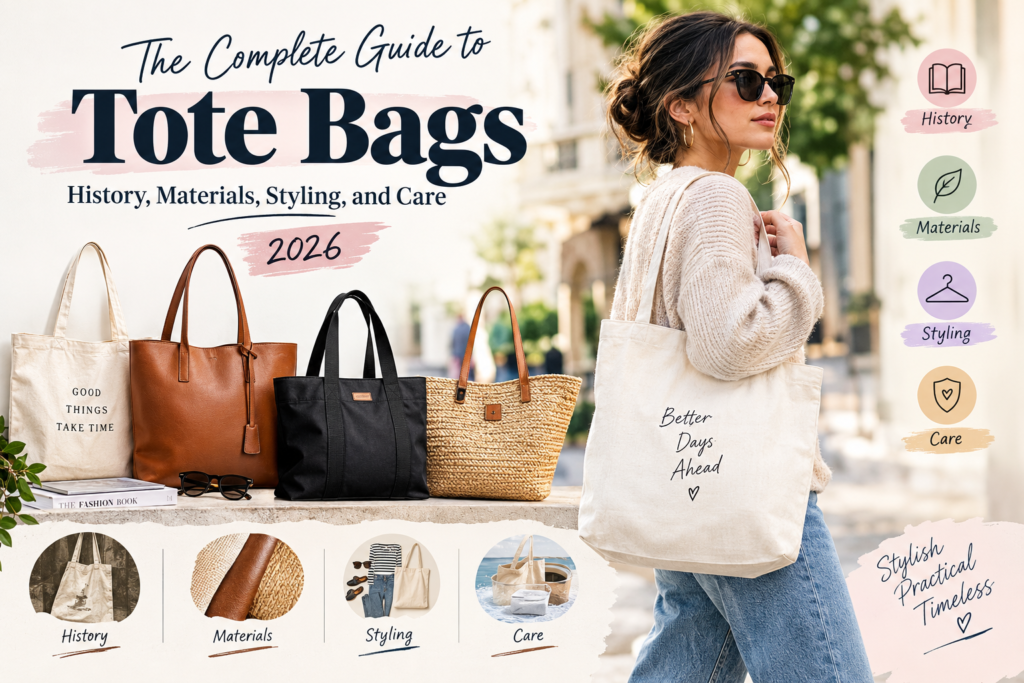
The Materials That Define Tote Bag Performance
Canvas is the material most people picture when they think of a tote bag, and for good reason. Made from compact, firm, heavy plain weave cotton, canvas is durable, resistant to wear and tear, and takes color beautifully . It machine-washes easily and actually improves in appearance with age, developing a soft patina that cheaper materials cannot replicate . Heavy nylon and synthetic options have become common in recent decades, offering lightweight durability and water resistance, though they may degrade with prolonged sun exposure . Jute and woven straw bring natural texture and rustic charm, ideal for beach days and summer markets, but they require spot cleaning rather than machine washing .
Leather and faux leather totes occupy the more polished end of the spectrum. Genuine leather develops a unique patina over time, while vegan leather offers a structured, professional look without the maintenance or cost of animal hides . Faux leather wipes clean in seconds, making it practical for commuters and anyone who eats lunch at their desk. There is also the question of sustainability. Cotton totes reduce plastic waste but their production consumes vast amounts of water, pesticides, and energy . Recycled materials, including ocean-bound plastics and repurposed canvas, offer a more circular approach, though the full environmental picture depends on production methods and longevity .
| Material | Best For | Durability | Care Level | Sustainability Notes |
|---|---|---|---|---|
| Canvas | Everyday, groceries, beach | High | Machine washable | Water-intensive production |
| Leather/Faux Leather | Work, commuting, polish | Very high | Wipe clean/condition | Faux avoids animal products |
| Nylon | Travel, lightweight carry | High | Spot clean | Non-biodegradable |
| Jute/Straw | Summer, beach, markets | Moderate | Spot clean only | Natural, biodegradable |
| Recycled Plastic | Eco-conscious, durable | High | Wipe clean | Uses ocean-bound waste |
Types of Tote Bags and Their Ideal Uses
The term “tote bag” describes a shape, not a single use case. A work tote designed for a laptop and client meetings has very different requirements from a beach tote destined for sand and sunscreen . Work totes typically range from 35 to 42 centimeters wide and benefit from structured walls, internal laptop sleeves, and secure closures . A tote that flops in on itself looks tired by month three, so look for a defined flat base and reinforced corners that hold their shape even when empty . Handle drop matters too. Drops of 22 to 25 centimeters sit cleanly under the arm when worn over a shoulder, while shorter drops force awkward carrying, especially with a coat on .
Travel totes need secure top closures and at least one interior zip pocket for passports and cards. Open-top totes are fine for the beach, but they expose valuables in airports and on public transport . Beach totes prioritize easy cleaning and sand resistance, with canvas and woven straw as the workhorses . Everyday small totes, roughly 28 to 32 centimeters wide, handle cafe visits and light errands without overwhelming the frame . There are also boat totes with their distinctive shaped bottoms, picnic totes with insulated compartments, and market totes designed specifically for groceries . The key is matching the format to the job.
Choosing the Right Tote Bag for Your Lifestyle
The most common mistake in tote shopping is buying for aesthetics alone and then discovering the bag does not fit your actual life. Start with capacity. A 20-liter tote works well for daily use if you are trying to pack less, but a 15-inch laptop needs a tote at least 40 centimeters wide internally to slide in without catching . Consider your commute. If you navigate crowded public transit, a sturdy zipper closure keeps everything contained. If you drive, an open-top tote is faster to access at stoplights .
Comfort deserves more attention than it usually gets. Long, thick shoulder straps prevent circulation cut-off during extended carries . Look for bags with both handles and a shoulder strap option, or even convertible designs with backpack straps for days when your shoulders need relief . Weight matters too. A heavily structured leather tote can weigh several pounds empty, which adds up quickly once you load it with daily essentials . Ripstop nylon, by contrast, is lightweight and tear-resistant, making it ideal for travel or days when you want capacity without heft . The best tote is the one you will actually carry, not the one that looks best on a shelf.
Styling Your Tote Bag for Work, Travel, and Everyday
A tote bag is arguably the most versatile accessory in a wardrobe because its styling potential is limited only by the contents and the context. For work, choose a structured faux leather or leather tote in a neutral tone and pair it with tailored pieces. The bag’s rigid walls and clean lines read as intentional and professional . For travel, a lightweight nylon tote that folds into nothing becomes an indispensable personal item, slipping under the seat in front of you and expanding to hold souvenirs on the return trip . The Longchamp Le Pliage, a nylon tote that folds into a compact square, has earned a cult following for exactly this reason .
For casual days, canvas totes in playful prints or natural tones add texture without effort. A straw tote paired with linen pants and sandals feels coastal and relaxed . The tote also functions as a blank canvas for personal expression. Logo totes from bookstores, museums, and brands carry cultural signals and start conversations. A well-chosen tote can communicate taste, values, or humor in a way that a designer handbag rarely does. The styling principle is simple: let the tote do the heavy lifting functionally, and let your outfit and accessories set the tone.
The Sustainable Tote Bag Movement
The tote bag occupies a complicated position in the sustainability conversation. On one hand, reusable totes reduce single-use plastic consumption, and a well-made bag used for years has a fraction of the environmental impact of disposable alternatives. On the other hand, the proliferation of cheap promotional totes has created its own waste problem. The solution lies in buying fewer, better bags and using them extensively.
How to Clean and Care for Tote Bags by Material
Most canvas and cotton tote bags can be machine-washed, but the process requires care. Turn the bag inside out to protect the exterior from friction and fading . Empty all pockets, shake out debris, and pretreat any stains with a mild soap or stain remover . Wash on a gentle cycle with cold water, using a mesh laundry bag if you have one . Never put a canvas tote in the dryer. Canvas is highly shrink-prone, and heat can cause irreversible shrinkage. Lay the bag flat on a towel or drying rack and let it air dry completely . Reshape it by hand while damp to coax out wrinkles .
Jute, straw, and leather totes require different treatment. These materials should be spot cleaned only, with a mild soap and warm water applied gently with a soft cloth . Leather should be conditioned periodically to prevent cracking, and suede details should be kept away from water entirely . For nylon and synthetic totes, hand washing or spot cleaning is safest, as machine agitation can damage waterproof coatings . Odors can be removed by airing the bag outdoors, turning it inside out, and letting it sit for a few hours. If the smell persists, sprinkle baking soda inside and let it absorb odors before wiping clean .
Common Tote Bag Problems and Practical Solutions
One of the most frequent complaints is strap breakage. The stress point where handles meet the bag body is where most totes fail, especially if the stitching is single-line rather than reinforced. The solution is to inspect this junction before buying, looking for cross-stitching or rivets . If a strap does fail, a shoe repair shop or tailor can often reinforce it for a modest cost.
Another common issue is the bag that becomes a bottomless pit. Deep, unstructured totes swallow keys, phones, and wallets, forcing you to dig around like an archaeologist. The fix is organization. Small pouches for pens, makeup, and chargers keep items grouped and accessible . A removable bag liner or insert adds pockets without changing the bag itself . For bags that collapse when set down, a flat base insert or a structured bottom panel restores shape. Finally, static and lint on dark canvas can be managed with a lint roller and anti-static spray. Most tote problems have simple, inexpensive solutions that extend the bag’s useful life.
What to Look For Before You Buy
The purchase decision comes down to a handful of variables. Material content should match your primary use. Canvas for durability and washability, leather for polish and structure, nylon for travel and lightness, straw for summer aesthetics. Construction details matter more than brand names. Check the handle attachment, the seam finish, and the base structure . A bag with boxed corners and bound seams will outlast one with overlocked edges and single-stitched handles, regardless of price.
Fit and comfort should be tested in person when possible. Load the bag with weight, put it on your shoulder, and walk around the store. Does it stay put, or does it slide off? Do the straps dig in? Is the opening wide enough to access your laptop without a struggle? Closure type matters for security. A zipper keeps contents safe on public transit, while a magnetic snap or open top offers faster access . Finally, consider longevity. A tote that costs twice as much but lasts five times as long is the better investment. The most sustainable bag is the one you keep using, and the most stylish bag is the one that fits your life without complaint.
Expert Perspectives on Tote Bag Design
Designers and stylists who work with totes daily have clear preferences. Luxury bridal stylist Maisie-Kate Keane looks for heavyweight cotton canvas, comparing the ideal weight to cardboard because it holds up better than lighter calico options . She also checks construction thoroughly, preferring seams finished with binding rather than overlocking because it makes a significant difference to how the bag wears over time . Strong cross-stitched handles are non-negotiable for her, along with boxed corners for extra bottom space without oversizing the bag .
The late Bonnie Cashin, whose leather tote designs helped define Coach’s identity, understood that the tote could be both practical and elegant. She introduced shoulder straps, metal clasp closures borrowed from dog collars, and bucket designs that are still referenced in contemporary collections . Her work demonstrated that a bag designed for carrying could also be a canvas for thoughtful design. The tote’s endurance across decades and price points suggests that this balance of utility and style is exactly what people want from an everyday bag.
Real-World Tote Bag Scenarios
Consider a freelance photographer who needs to carry a camera, lenses, a laptop, and personal items to shoots across the city. A structured leather tote with a padded laptop sleeve and interior zip pockets keeps equipment organized and accessible . The bag looks professional enough for client meetings but durable enough for a subway commute.
Now imagine a parent managing school runs, grocery shopping, and after-school activities. A large canvas tote with a boxed bottom and reinforced handles handles all three without complaint. It wipes clean, holds a surprising amount of weight, and can be thrown in the washing machine at the end of a messy week . For the frequent traveler, a lightweight nylon tote that folds into a suitcase solves the “I bought too much” problem before it starts . For the beach-goer, a straw or canvas tote in a bright print transitions from sand to boardwalk lunch without looking out of place . The tote’s genius is its adaptability. One shape, endless scenarios.
Frequently Asked Questions
What is the difference between a tote bag and a shoulder bag?
A tote bag is defined by its large, open-top construction with parallel handles emerging from the sides of the pouch, designed for carrying bulky or heavy loads . A shoulder bag typically has a single strap or a shorter handle designed to sit at the shoulder, often with a flap or zipper closure and a more compact, structured shape. The tote prioritizes capacity and ease of access, while the shoulder bag prioritizes security and a closer, more controlled carry. Many totes can be worn on the shoulder, but the defining feature is the parallel handle construction and open, roomy interior.
Can tote bags be machine washed?
Most canvas and cotton tote bags can be machine washed on a gentle cycle with cold water, as long as the bag has no leather, suede, or delicate embellishments . Turn the bag inside out, pretreat stains, and use a mesh laundry bag to protect it during the cycle . Never put a canvas tote in the dryer, because heat causes shrinkage and can damage the fabric fibers . Leather, faux leather, jute, straw, and nylon totes should be spot cleaned or hand washed only, as machine agitation can ruin their structure or coatings .
What is the most durable material for a tote bag?
Heavyweight cotton canvas is widely considered the most durable and versatile material for a tote bag, offering excellent resistance to wear, easy cleaning, and a structure that improves with age . Leather and faux leather are also highly durable, especially for structured work totes that need to hold their shape. Ripstop nylon offers an excellent strength-to-weight ratio and is tear-resistant, making it ideal for travel and lightweight carry . The best choice depends on your primary use case, but for all-purpose durability and easy care, heavy canvas remains the standard.
How do I organize the inside of my tote bag?
The most effective organization strategy for a tote bag is using small, separate pouches to group similar items. A pouch for pens and chargers, another for makeup and personal care, and a third for snacks or small food items keeps everything accessible and prevents the bag from becoming a chaotic catchall . A removable bag liner or insert with dedicated pockets can add structure without replacing the bag. For work totes, choose a design with a built-in padded laptop sleeve and at least one interior zip pocket for valuables . This system makes switching between bags effortless and keeps your essentials findable at a moment’s notice.
Are tote bags environmentally friendly?
Tote bags can be environmentally friendly when they are made from sustainable materials and used extensively over many years. Reusable canvas totes reduce single-use plastic consumption, but cotton production is water-intensive and uses pesticides . Recycled materials, including ocean-bound plastics and repurposed canvas, offer a more circular approach and divert waste from landfills and waterways . The most important factor is longevity. A tote bag that is used hundreds of times has a far lower environmental impact per use than a cheap promotional bag that falls apart after a few trips. Choosing quality construction and caring for your bag properly is the most effective way to minimize its footprint.
Conclusion
The tote bag is more than a simple container with handles. It is a design classic that has evolved from an ice carrier in 1940s Maine to a canvas for personal expression, a workhorse for daily life, and a testing ground for sustainable materials. Understanding its history, construction, and care transforms it from a thoughtless grab-and-go item into a deliberate, long-lasting investment.
The key takeaway is that the best tote bag is the one that matches your actual life. Not the trendiest one, not the most expensive one, but the one whose material, size, and structure align with how you move through your days. A well-made canvas tote that carries your groceries, your laptop, and your beach towel will serve you better than a designer bag that sits in a dust cover. Choose carefully, care properly, and the humble tote bag will reward you with years of quiet, reliable service.