
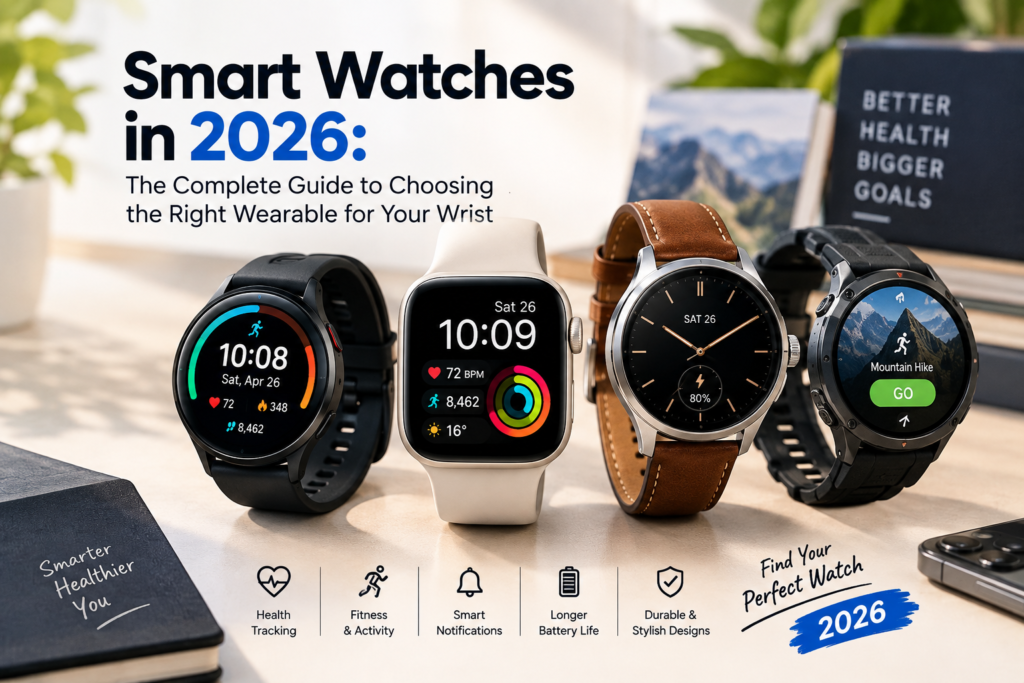

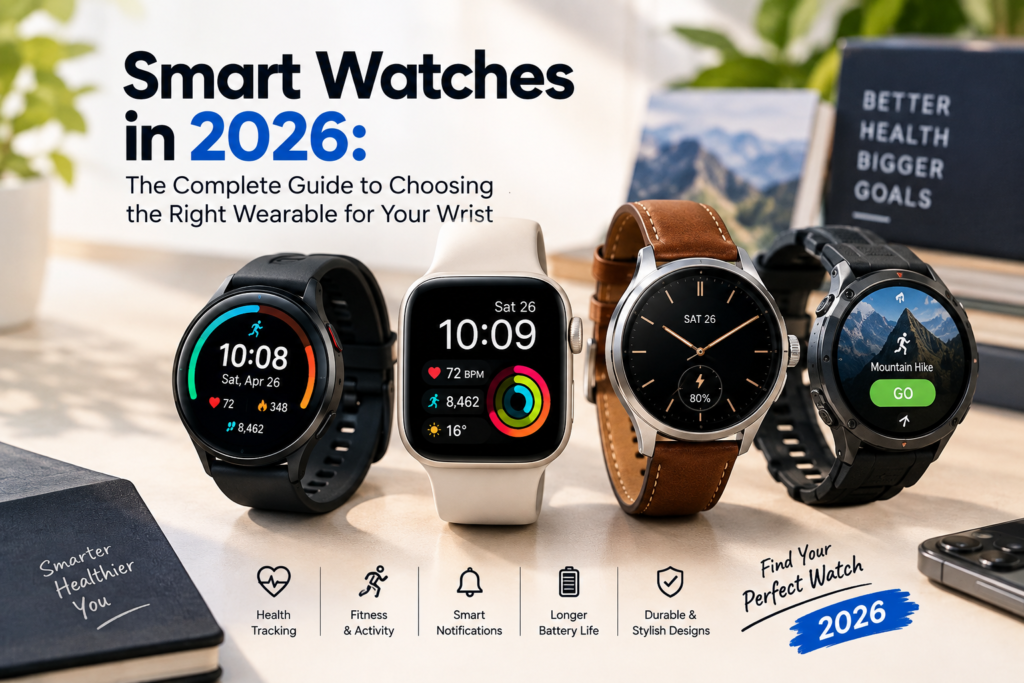
Smart watches have evolved from phone accessories into standalone health instruments that millions of people rely on daily. The category has matured to the point where the question is no longer whether a wrist-based computer can track your heart rate or count your steps, but rather which specific device ecosystem aligns with your physiology, your smartphone, and your life. Apple Watch Series 12, Samsung Galaxy Watch9, Google Pixel Watch 5, and Garmin fēnix 9 now occupy distinct territories, each with a clear philosophy about what a wearable should prioritize.
The global market reflects this maturation. Counterpoint Research reports that premium users are holding onto their devices longer, with replacement cycles extending as consumers wait for meaningful upgrades rather than incremental spec bumps . Apple Watch Series 12 and Series 11 together accounted for over 80% of Apple’s global shipments in Q2 2026, while Huawei captured a record 22% share driven largely by its home market . This isn’t a market in crisis; it’s a market finding equilibrium. The devices have become good enough that people don’t feel the need to upgrade every year, and that’s arguably a sign of success rather than stagnation.
What Exactly Are Smart Watches and How Have They Evolved
A smart watch is a wearable computing device with a programmable operating system, wireless connectivity, and integrated sensors capable of monitoring physiological signals. Unlike fitness bands that serve a single tracking purpose, these devices run apps, make calls, process payments, and increasingly function as medical screening tools. The distinction between a “smartwatch” and a “smart band” has narrowed as bands have added features, but the core difference remains: smartwatches offer application ecosystems and often cellular independence.
The evolution from early Pebble devices and the first Apple Watch to today’s models traces a path from novelty to necessity. Apple Watch Series 12 introduces a redesigned Health Sensing System with 32 electrodes for ECG, compared to just two on the Series 11 . It measures heart rate every five seconds throughout the day and heart rate variability up to 24 times more frequently than its predecessor . These aren’t trivial upgrades. They represent a fundamental shift in what a consumer device can meaningfully monitor. The watch on your wrist now collects data at a density that was previously reserved for clinical equipment, and it does so continuously, without requiring you to think about it.
The 2026 Smartwatch Landscape: Key Players and Their Philosophies
Apple, Samsung, Google, and Garmin approach the wrist from fundamentally different starting points, and understanding those philosophies matters more than comparing spec sheets. Apple positions Apple Watch Series 12 as a general health guardian that happens to do everything else well. The new Readiness score, hypertension notifications, and sleep score features reflect a philosophy of holistic wellness rather than athletic specialization . Siri Recap, arriving later this year, will transcribe key points from conversations, a feature with obvious utility for anyone who regularly takes meetings or attends lectures .
| Feature | Apple Watch Series 12 | Samsung Galaxy Watch9 | Google Pixel Watch 5 | Garmin fēnix 9 Pro |
|---|---|---|---|---|
| Display Brightness | 2,000 nits | Not specified | 3,000 nits | 3,000 nits |
| Battery (rated) | 24 hours | 40 hours (44mm) | Up to 40 hours | Up to 31 days |
| ECG | Yes (32 electrodes) | Yes | Not specified | Yes |
| Blood Pressure | Hypertension notifications | On-demand (needs cuff) | Trends monitoring | No |
| GPS | Precision L1 | Yes | Yes | Multi-band |
| Satellite | No | No | No | inReach (Pro) |
| Price (base) | $399 | ~$350 | $399 | $999 |
Health Sensor Accuracy: What the Data Actually Tells You
The gap between what smartwatch marketing implies and what peer-reviewed research demonstrates deserves honest examination. A study published in the European Heart Journal – Digital Health evaluated a photoplethysmography algorithm on a Samsung Galaxy Watch for detecting changes in mean arterial pressure, using invasive central blood pressure measurements as the reference standard. After calibration, the watch-estimated MAP changes showed strong correlation with invasive measurements (r = 0.92) and excellent diagnostic performance for detecting ≥15% increases (AUC = 0.85) . This is genuinely impressive. A consumer device tracking central blood pressure changes in near real-time with a median delay of one minute represents a meaningful technical achievement.
Battery Life and Charging: The Real-World Constraints
Battery chemistry remains the physical bottleneck that no software update can fully overcome. A watch that packs a bright AMOLED display, continuous heart rate monitoring, GPS, and cellular connectivity into a case that weighs less than 60 grams operates under severe energy constraints. The rated battery life figures rarely tell the full story. Apple rates Series 12 at 24 hours, but real-world testing by PCMag showed the watch lasting up to 43 hours with always-on display enabled . Samsung rates the Galaxy Watch9 44mm at approximately 40 hours without AOD, and user reviews suggest this is roughly accurate, though charging times of two hours frustrate some owners .
Choosing by Ecosystem: The Lock-In That Actually Matters
The single most important compatibility decision is the phone in your pocket. Google Pixel Watch 5 works best with Pixel phones, and while it functions with other Android devices, certain features and the tightest integration are reserved for Google’s own hardware . Samsung Galaxy Watch9 pairs most seamlessly with Galaxy phones, and user reviews consistently cite this integration as a key satisfaction driver . Apple Watch Series 12 is functionally inseparable from iPhone. If you use an iPhone, the Apple Watch is the only serious option; if you use a Galaxy phone, the Galaxy Watch9 makes the most sense; if you use a Pixel, the Pixel Watch 5 is the natural choice.
Feature Focus: The Health Tools That Justify the Investment
The features that separate a smart watch from a simple step tracker fall into a few categories. Continuous heart rate monitoring with irregular rhythm notifications, ECG capability, and blood oxygen sensing are now table stakes for premium devices. Apple Watch Series 12’s hypertension notifications represent a newer category: passive screening that runs in the background and alerts only when something appears wrong . Google’s Health Guardian suite takes a similar approach, with Blood Pressure Trends, Breathing Emergency Detection, and Insulin Resistance Trends all operating as background monitors that surface information when patterns emerge . Garmin’s health features are more oriented toward athletic performance, with advanced recovery metrics and training readiness scores designed for people pushing their physical limits .
The Problem-Solution Framework: Common Pain Points and Their Fixes
A second common problem is data overload. A watch that presents 15 metrics every morning can feel overwhelming rather than empowering. Apple’s Readiness score and Google’s Daily Readiness Score both attempt to distill complex physiological data into a single actionable number . This is a genuinely useful design choice. A number from 0 to 10 that tells you whether to push hard or take it easy is more actionable than five separate metrics that require interpretation. The most successful smart watch features are those that reduce cognitive load rather than adding to it. The watch should tell you what you need to know, not force you to become your own data analyst.
Sleep Tracking: The Most Underrated Feature
Sleep tracking has quietly become one of the most valuable capabilities of modern smart watches. Unlike step counting, which is easily gamed, or workout tracking, which requires intentional engagement, sleep tracking operates passively and reveals patterns that most people are genuinely unaware of. Apple Watch Series 11 and later models offer a Sleep Score that evaluates duration, consistency, and awake periods . Samsung’s Galaxy Watch9 provides detailed sleep score breakdowns that users consistently cite as one of the most useful features . Google’s Pixel Watch 5 integrates sleep data into its holistic readiness assessments .
The value of sleep tracking isn’t the nightly score. It’s the trend over weeks and months. Someone who consistently scores in the 60s despite spending eight hours in bed may discover that their sleep environment or pre-bed routine is the problem. Someone who sees their score drop during periods of high work stress has concrete evidence that stress is affecting their recovery. The watch doesn’t diagnose a sleep disorder, but it can provide the data that prompts a conversation with a doctor. And for many people, simply being aware that their sleep quality is poor is the first step toward addressing it.
Making the Decision: Matching Device to Person
The honest answer to “which smart watch should I buy” is that it depends on a small number of variables: your phone, your primary health concern, and your tolerance for charging. If you have an iPhone and want the most comprehensive health monitoring available in a consumer device, the Apple Watch Series 12 is the obvious choice, particularly if hypertension screening or readiness scoring matters to you . If you have a Samsung phone and value display quality and ecosystem integration, the Galaxy Watch9 delivers a polished experience, though charging times may test your patience . If you have a Pixel and want proactive health alerts and excellent battery life, the Pixel Watch 5 is the best Android smartwatch available .
What’s notable in 2026 is how few bad choices exist. Five years ago, buying a smart watch meant accepting significant compromises regardless of which platform you chose. Today, every major device is competent. The differences are in emphasis, not in fundamental capability. A Garmin user can track their heart rate and sleep. An Apple Watch user can go for a run. The question is which device does the most important things for you the best, not which device does everything. That’s a much healthier market dynamic than the spec-sheet wars of the past, and it means you’re likely to be satisfied with whichever device aligns with your existing ecosystem and your personal health priorities.
Frequently Asked Questions About Smart Watches
How accurate are the health sensors on modern smart watches?
The accuracy of sensors varies significantly by metric. Heart rate and step counting are generally reliable for most users in most conditions. A peer-reviewed study on Samsung Galaxy Watch PPG technology for blood pressure monitoring found strong correlation with invasive measurements for detecting mean arterial pressure changes, though the technology has not yet received clinical validation for diagnostic use . Features like sleep staging and calorie estimation remain less precise, with error margins that can exceed 30% in some conditions.
How long do these devices typically last before needing replacement?
Battery degradation is the primary factor determining lifespan. Lithium-ion batteries in these devices typically retain about 80% of their original capacity after 500 to 800 full charge cycles, which translates to roughly two to three years of daily charging. Counterpoint Research notes that replacement cycles have extended significantly, with premium users holding onto devices longer than in previous years . Many people now keep their devices for three to four years before upgrading, particularly as software updates continue to add features to older models. The Google Pixel Watch 5 is notable for being repairable, with components available through iFixit for those willing to attempt self-repair .
Can I use a smart watch without carrying my phone?
Cellular models allow full independence for calls, messages, music streaming, and navigation. Apple Watch, Galaxy Watch, and Pixel Watch all offer cellular variants that share your phone number and data plan. Garmin models offer varying degrees of phone-free functionality, with the fēnix 9 Pro including inReach satellite connectivity for emergency communication in areas without cellular coverage . However, some features still require a phone connection, and battery life decreases significantly when using cellular or satellite connectivity. For most people, the phone-free experience is a convenience for specific scenarios like running or going to the gym, not a complete replacement for carrying a phone.
What’s the difference between smart watches and fitness trackers?
Fitness trackers typically focus on step counting, heart rate monitoring, and basic sleep tracking, with limited app ecosystems and simpler displays. Smart watches offer full operating systems, app stores, cellular connectivity options, and advanced health features like ECG and blood pressure monitoring. The lines have blurred as fitness trackers have gained features and smartwatches have become more fitness-focused. For someone whose primary goal is tracking workouts and steps, a dedicated fitness tracker may offer better battery life and a lighter form factor. For someone who wants a general-purpose wearable that can make calls, pay for coffee, and monitor health metrics, a full smartwatch is the better choice.
How should I clean and maintain my smart watch for hygiene and longevity?
Most manufacturers recommend wiping the sensor area and back of the case with a lint-free cloth after workouts to remove sweat and oils that can affect sensor accuracy. For deeper cleaning, a mild soap and water solution is generally safe for watches rated for swimming, but you should avoid harsh chemicals, abrasive materials, and submerging leather or fabric bands. The sensor area is the most important to keep clean, as residue can degrade optical heart rate readings. Bands should be removed and cleaned separately, particularly after workouts or exposure to sunscreen, which can degrade silicone and fabric over time.
Conclusion
Smart watches in 2026 have matured into genuinely useful health instruments that happen to sit on your wrist and tell time. The Apple Watch Series 12, Samsung Galaxy Watch9, Google Pixel Watch 5, and Garmin fēnix 9 each represent a distinct vision of what a wearable should be, and the right choice depends less on which device is “best” in some abstract sense and more on which device aligns with your phone, your health priorities, and your tolerance for charging. The market has reached a point where every major option is competent, and the differences lie in emphasis rather than capability.
The final insight worth carrying forward is that the most valuable feature of any smart watch is the one you actually use consistently. A device that tracks your sleep but that you never wear at night provides no data. A readiness score that you ignore might as well not exist. The watch that earns its place on your wrist is the one that fits seamlessly into your daily routine, collects data passively, and surfaces insights that prompt small adjustments over time. That’s the real promise of these devices: not transformation, but gradual, informed improvement. The technology has never been better. The question is whether you’ll use it.