The mermaid dress is one of the most recognizable and dramatic silhouettes in all of fashion. Its defining characteristic is a body-skimming fit through the bodice, waist, and hips that suddenly flares out at or below the knee, creating a shape that mirrors the tail of its mythical namesake. This silhouette has the power to transform how a body reads in space, emphasizing curves and creating a sculptural line that photographs beautifully and commands attention in any room. Whether you are shopping for a prom gown, a wedding dress, or a black-tie evening look, understanding the mermaid dress means understanding a garment that works through structure and proportion rather than embellishment alone.
What Defines a Mermaid Dress Silhouette
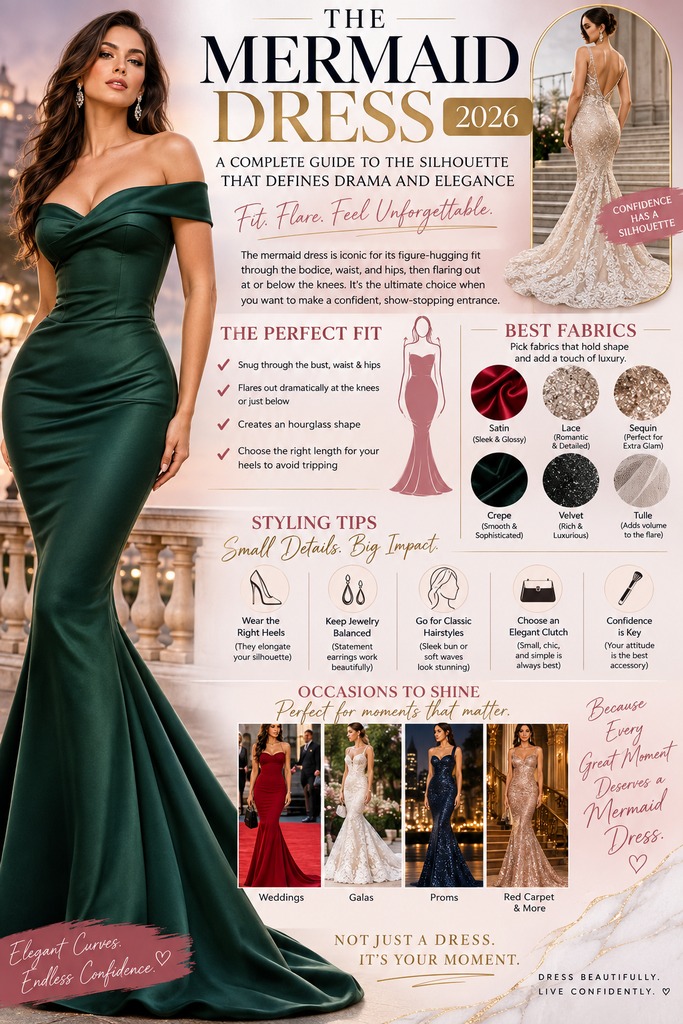
A mermaid dress is fitted from the bust through the hips and knees, then flares out dramatically into a fluted skirt. The key word here is “dramatically.” This is not a gentle A-line that skims over the body. It is a silhouette that commits to a close fit through the torso and upper legs, then releases into a wide, sculptural flare that gives the gown its signature fishtail shape. The visual effect is one of contrast: the fitted section creates a clean vertical line, and the flare adds volume and movement at the hem.
The exact placement of the flare is what distinguishes the mermaid from its close relatives, the trumpet and the fit-and-flare. A mermaid releases at or below the knee, which produces the most dramatic shape and the most restrictive stride. A trumpet begins its flare around mid-thigh, creating a similar but softer effect that is considerably easier to walk in. A fit-and-flare releases even higher, often at the upper hip or natural waist, making it the most forgiving and comfortable of the three. These distinctions matter enormously when you are actually wearing the dress rather than looking at it in a photograph, because where the flare begins determines how you move, sit, and dance.
The history of the silhouette adds another layer to understanding it. The mermaid dress first appeared in the late 19th century as fashion shifted from maximum width to maximum narrowness, with corsets that embraced the hips and limited movement to small, careful steps. French couturier Marcel Rochas popularized the style on haute couture runways in the 1930s, and a 1950 Vogue photograph by Irving Penn of his wife wearing one of Rochas’s designs helped cement the silhouette in the public imagination. From there, it became a favorite of Hollywood actresses like Marilyn Monroe and Rita Hayworth, and it has remained a red-carpet staple ever since.
Who the Mermaid Dress Flatters and Why
Petite brides and shoppers can absolutely wear a mermaid dress, but the flare placement matters more for them than for anyone else. A flare that starts at the knee can cut the leg line at an awkward point on a shorter frame, making the gown look bottom-heavy and the wearer look shorter than she is. The solution is to look for a version where the flare begins just above the knee, or to choose a trumpet silhouette that releases at mid-thigh. The goal is not to change your proportions but to work with them, and the right flare placement can make a dramatic silhouette look entirely proportional on a smaller body.
For plus-size figures, the mermaid can be spectacular, provided the construction is right. The silhouette accentuates curves and creates a defined shape, but it depends on internal structure to do so. Look for styles with built-in support, structured fabrics like mikado or crepe, and vertical seaming or paneling that elongates the figure and enhances the natural shape. A well-constructed plus-size mermaid dress with proper boning and power mesh can be as comfortable and flattering as any other silhouette, because the structure does the work of holding the shape rather than relying on the fabric to cling.
Mermaid Versus Trumpet Versus Fit-and-Flare
The three fitted-and-flared silhouettes are frequently confused, and the confusion costs shoppers money and comfort. The table below lays out the key differences clearly, so you can walk into a fitting room knowing exactly what to ask for and what to expect.
| Feature | Mermaid | Trumpet | Fit-and-Flare |
|---|---|---|---|
| Flare Point | At or below the knee | Mid-thigh | Upper hip or natural waist |
| Drama Level | Most dramatic, sculptural | Moderate, softer flare | Subtle, gentle flare |
| Movement | Most restrictive; short steps | Easier walking; natural stride | Most freedom of movement |
| Best For | Hourglass, pear shapes; formal venues | Most body types; brides who want ease | Wide range; comfort-focused events |
| Stair Test | Requires careful knee lift | Manageable with practice | Easiest of the three |
| Sitting | Fabric pulls tight across thighs | Some fabric to spare | Comfortable for long periods |
The mermaid is the most dramatic and the least forgiving of the three. It creates the most defined hourglass shape and the most striking flare, but it also demands the most precise fit and the most careful movement. The trumpet is the middle ground, offering the body-skimming feel of a mermaid with a release point high enough that walking and dancing do not require constant attention. The fit-and-flare is the softest and most comfortable, making it a strong choice for anyone who prioritizes ease throughout a long event.
The practical advice from bridal stylists is consistent: if you love the look of a mermaid but worry about movement, try a trumpet. Most people who think they want a mermaid are actually happier in a trumpet once they walk the length of the store and back. The visual difference in photographs is minimal; the difference in comfort is substantial. If you are planning to dance, navigate stairs, or sit through a long dinner, the trumpet is the version to ask for.
The Fabrics and Construction That Make a Mermaid Work
A mermaid dress depends on fabric with structure, because the silhouette has to hold a shape rather than drape over one. Heavy satin and matte crepe both do this well, keeping a clean line through the hip and a defined flare at the hem. Mikado and duchesse satin are also excellent choices, producing a crisp, architectural flare that stands away from the leg in a clean, sculptural curve and holds a precise outline in photographs. The tradeoff is that a structured flare has less swing to it and takes up more space in a crowded room or a narrow seat.
Soft fabrics like chiffon, georgette, jersey, and soft crepe produce a different effect entirely. The flare falls closer to the leg and moves with you rather than holding a fixed shape, reading as softer and more romantic. This version photographs beautifully in motion because the skirt trails and catches air as you walk, and it packs and travels far better than a structured flare. The tradeoff is that a soft flare will not give you that crisp sculptural outline when you are standing still. The choice between the two comes down to the feeling you want: architectural and commanding, or fluid and romantic.
Thin, light satin is the fabric to avoid in this shape specifically, because it clings rather than skims and shows every line beneath. The same silhouette can look expensive in one fabric and cheap in another at a similar price point, which is why fabric choice matters more for a mermaid than for a forgiving shape like an A-line. Quality construction shows in the seaming, boning, and finishing details: well-made gowns have smooth seams, properly placed boning for support, and clean hems that will not catch or fray. For a silhouette that depends on precise fit, those construction details are not luxuries. They are what make the dress wearable.
How to Move, Sit, and Dance in a Mermaid Dress
The reason many shoppers hesitate before choosing a mermaid dress is the fear of being unable to move. That fear is legitimate, because a poorly fitted mermaid is genuinely restrictive, but it is also manageable with the right preparation. The stride test is the most important check and the one people skip: walk the length of the fitting room, then turn, and pay attention to whether you can move at a normal pace or whether your steps have shortened into something careful and tentative. A gown that feels fine standing still can make walking look laborious, and that shows in every photograph and video from the event.
Sitting is the second practical concern. A mermaid skirt has less fabric to spare around the knee than a trumpet or fit-and-flare, so sitting through a long dinner can pull the skirt tight across the thighs. The solution is to smooth the back of the skirt with your hands as you sit, then lower yourself slowly so the flare spreads around you rather than bunching underneath. When standing up, press the flare forward with your hands as you rise. Practicing this at the fitting, not just imagining it, makes a real difference on the day of the event.
Stairs are the clearest test of all, since climbing requires knee lift and a mermaid restricts precisely there. If the venue has a grand staircase for a processional entrance, practice the ascent and descent before the event. Dancing is possible in a mermaid, but it requires a different approach than dancing in a looser gown. The fitted section keeps the dress in place rather than swinging around the body, and the flare gives movement to the hem. Shorter, more deliberate steps become natural after a few minutes of practice, and many wearers find that the measured walk the silhouette imposes actually reads as elegant rather than awkward.
Styling the Mermaid Dress for Different Occasions
The mermaid dress works across a remarkable range of formal occasions, and its styling needs shift depending on the context. For a prom or evening gown, the silhouette is at its most glamorous in sequins or beaded fabrics that catch light along the fitted surface, creating a red-carpet effect as the wearer turns. Accessories should be restrained because the silhouette itself is the statement. Statement earrings work better than a long necklace, since a necklace interrupts the vertical line the fitted section creates. Shoes matter more than with a looser silhouette, because the hem sits close to the floor and a change of heel height alters where the flare falls relative to the leg.
For weddings, the mermaid dress has experienced a notable revival in 2026 after years of being dismissed as dated. Designers like Danielle Frankel and Harris Reed have reimagined the silhouette with cleaner lines and subtler flares, moving away from the over-bedazzled versions that defined the early 2010s. The modern bridal mermaid is more likely to be cut in smooth crepe or satin with minimal embellishment, letting the sculptural shape do the work. Bridal stylists note that the silhouette suits formal venues, evening receptions, and brides who want a dramatic processional moment. For a bride who is hesitating between a fitted dress and a full ball gown, the mermaid offers both in one garment.
For the mother of the bride or groom, the mermaid is a glamorous option at formal and evening weddings, though it requires more careful consideration than a softer silhouette. A well-constructed mermaid with steel boning, power mesh, and a fabric with some stretch creates a sculpted shape that still allows movement across a long day of standing, sitting, and photographs. The silhouette suits rich, sophisticated colors like jewel tones and elegant darks, and styling should be restrained so the sculpted shape remains the focal point. For casual or outdoor weddings, a softer shape like an A-line reads as more appropriate, since the mermaid’s formal drama can feel like too much in a relaxed setting.
Finding the Right Fit and Budgeting for Alterations
The single most important thing to understand about buying a mermaid dress is that the silhouette depends on fit more than any other factor. A mermaid that fits properly looks sculpted, glamorous, and intentional. A mermaid that fits poorly looks uncomfortable and unfinished, because the fabric pulls and gaps in places where a looser silhouette would simply drape. This means alterations are not optional for most people. They are part of the cost of choosing this silhouette, and they should be budgeted for from the beginning.
Start shopping four to six months before the event, especially for prom or wedding gowns where popular styles and sizes sell out during peak season. Get professionally measured before ordering, because mermaid silhouettes require precise fit and sizing varies between brands. When in doubt, order slightly larger, since taking a dress in is far easier than letting it out. Schedule the first fitting six to eight weeks before the event, allowing time for the alterations to be completed and for a final fitting to confirm everything sits correctly. Alterations can add $50 to $150 or more to the total cost, and for structured mermaid gowns with complex construction, the alterations may be more involved than for simpler silhouettes.
Fabric choice affects the alteration process as well. Structured fabrics like mikado and heavy satin hold their shape but can be more difficult to adjust, while fabrics with some stretch are more forgiving during alterations. A garment that includes internal boning and power mesh may need the bodice adjusted to sit correctly, which requires a skilled alterations specialist who understands formal wear construction. The investment in proper fit is what makes the difference between a mermaid that looks like a cheap costume and one that looks like a couture gown, and it is worth planning for from the moment you start shopping.
Common Mistakes and How to Avoid Them
The most common mistake shoppers make with a mermaid dress is choosing a flare placement that does not suit their height. A flare that starts at the knee is the classic mermaid and the most dramatic, but on a shorter frame it can cut the leg line at an awkward point and make the gown look bottom-heavy. The solution is to try dresses with different flare placements and see where the flare falls in relation to your own knee rather than to a photograph. The same dress releases at different points on different heights, so the only reliable test is your own reflection in the fitting room mirror.
The second common mistake is prioritizing drama over movement. A mermaid that photographs beautifully but leaves you unable to walk confidently is not a successful dress. The stride test, the sitting test, and the stair test exist for a reason: they reveal whether the gown will work for the actual event, not just for a static photo. If the dress fails any of these tests, the solution is not to endure it. It is to try a trumpet or a fit-and-flare, which offer the same fitted aesthetic with more freedom of movement. Most people who try both end up happier in the trumpet, because the visual difference is minimal and the comfort difference is significant.
The third mistake is underestimating the importance of undergarments. A mermaid dress creates smooth, clean lines through the torso and hip, and visible underwear lines or a bra that shows through the fabric will undermine the entire effect. Seamless options work best, and many quality mermaid gowns include built-in support that eliminates the need for a traditional bra, creating smoother lines and better fit overall. If additional shaping is needed, choose pieces that will not create visible lines beneath the fabric. This is not a detail to leave until the last minute, because the right undergarments can make the difference between a dress that fits well and one that fights you all night.
Why the Mermaid Dress Endures
The mermaid dress has survived more than a century of fashion cycles because it does something that few other silhouettes can do: it creates a dramatic, sculptural shape through proportion and structure rather than through surface decoration. A mermaid in plain crepe can be as striking as a mermaid in heavy beading, because the shape itself carries the visual weight. This makes the silhouette adaptable to different aesthetics and different eras. It can be glamorous and maximalist, or clean and modern, and it still reads as a mermaid either way.
The current revival of the silhouette reflects a broader cultural shift toward romance and sensuality in fashion, as well as a renewed interest in structured, body-conscious shapes after years dominated by softer, slinkier silhouettes. Designers are reinterpreting the mermaid for a new generation by stripping away the excess of the early 2010s and focusing on construction, fabric, and fit. The result is a silhouette that feels both timeless and contemporary, capable of working for a red-carpet moment, a wedding processional, or a prom entrance without feeling like a costume from a bygone era.
What ultimately makes the mermaid dress worth considering is the way it makes the wearer feel. The fitted bodice and dramatic flare create a sense of presence that few other garments can match. When it fits properly, it does not feel restrictive. It feels intentional, like a garment that was made for the person wearing it. That is the real appeal of the silhouette, and it is why it continues to appear on runways, red carpets, and wedding aisles year after year.
FAQ
What body type looks best in a mermaid dress
The mermaid dress is most naturally flattering for hourglass and pear-shaped figures, because the fitted column through the hip and the dramatic flare mirror and balance those proportions. Hourglass figures find that the silhouette follows a line the body already has, while pear shapes benefit from the fitted torso drawing attention upward and the flare below the hip creating a balanced look. That said, the silhouette can work for athletic, petite, plus-size, and straight figures when the construction is right. .
How is a mermaid dress different from a trumpet dress
The difference between a mermaid and a trumpet dress comes down to where the skirt flares. A mermaid dress stays fitted all the way to the knee or just below, then releases into a dramatic, wide flare. A trumpet dress begins its flare at mid-thigh, creating a softer, more gradual release that still looks body-hugging but allows considerably more freedom of movement. The mermaid creates the most defined hourglass shape and the most dramatic silhouette, but it is also the most restrictive for walking, sitting, and climbing stairs.
Can you dance in a mermaid dress
Yes, you can dance in a mermaid dress, but it requires a different approach than dancing in a looser gown. The fitted section through the hip and knee limits how much you can move your legs, so steps become shorter and more deliberate. The flare gives movement to the hem, which can create a beautiful effect when you turn or sway, but fast or wide movements are not practical. Many wearers find that the measured walk the silhouette imposes actually reads as elegant rather than awkward once they practice. If dancing is a priority and you want more freedom, a trumpet or fit-and-flare offers a similar fitted aesthetic with a stride that accommodates more movement.
What fabric is best for a mermaid dress
The best fabric for a mermaid dress is one with structure, because the silhouette needs to hold a shape rather than drape over one. Heavy satin, matte crepe, mikado, taffeta, and duchesse satin are all excellent choices that create a crisp, architectural flare and keep a clean line through the hip. Soft fabrics like chiffon and georgette produce a more fluid, romantic flare that moves with the wearer rather than holding a fixed shape, which photographs beautifully in motion but does not give the same sculptural outline when standing still. Thin, light satin is best avoided because it clings rather than skims and shows every line beneath, which undermines the clean effect the silhouette is meant to create.
Is a mermaid dress appropriate for a mother of the bride
A mermaid dress can be a spectacular choice for a mother of the bride at a formal or evening wedding, where its dramatic silhouette reads as appropriately glamorous. The silhouette carries rich colors beautifully and creates a sculpted, confident look that photographs well. The consideration is comfort, because a mermaid is more fitted and less forgiving than an A-line, which affects movement across a long day of standing, sitting, and photographs. A well-constructed mermaid with steel boning, power mesh, and a fabric with some stretch manages this well, but it depends more on fit and construction than a softer silhouette. For casual or outdoor weddings, a softer shape like an A-line often reads as more appropriate.
Conclusion
The mermaid dress is more than just a silhouette. It is a piece of engineering that uses proportion, structure, and fit to create a shape that commands attention and flatters the wearer. From its origins in the late 19th century through its Hollywood heyday in the 1950s and its current revival on runways and wedding aisles, the silhouette has endured because it does something that few other garments can do: it makes the body the focal point without requiring embellishment or excess. The fitted bodice, the dramatic flare, and the clean vertical line through the torso work together to create an hourglass effect that reads as elegant and intentional.
The final insight is this: the mermaid dress is not for everyone, but it is more wearable than its reputation suggests. The key is understanding the differences between mermaid, trumpet, and fit-and-flare silhouettes, knowing where the flare should sit for your height and body type, and prioritizing fit and construction over surface decoration. A mermaid that fits properly feels sculpted rather than restrictive, and the dramatic shape it creates is worth the care it requires. Whether you are walking down a wedding aisle, stepping onto a prom floor, or making an entrance at a formal event, the mermaid dress remains one of the most powerful choices in formal wear.