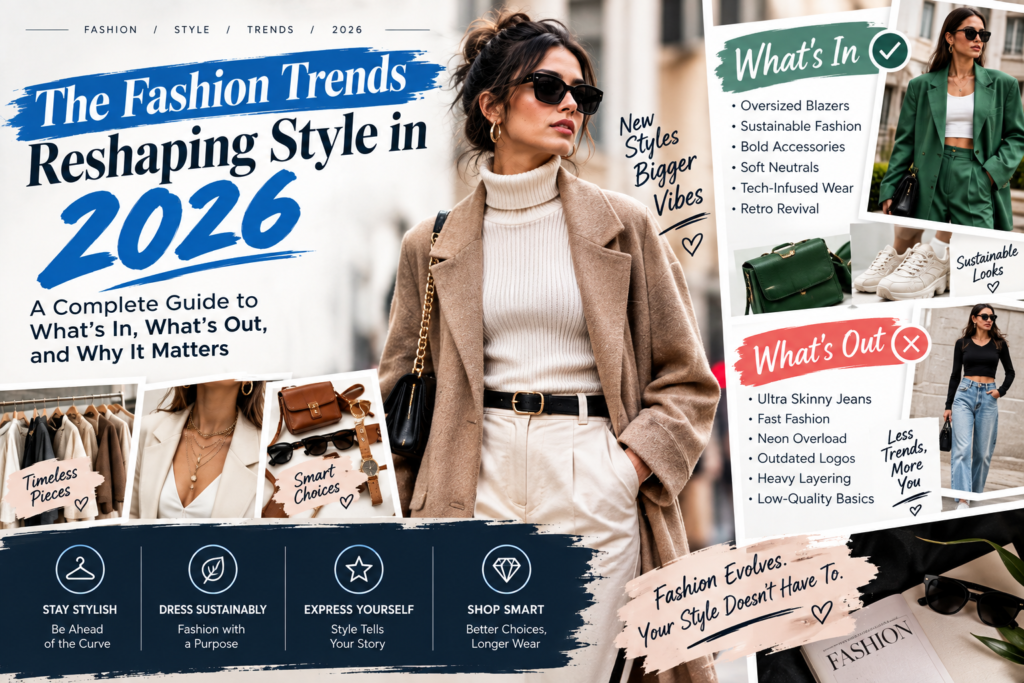

Fashion is entering one of its most electric phases in years. After seasons dominated by quiet luxury, neutral palettes, and a kind of cautious minimalism, the pendulum has swung hard in the opposite direction. The fashion trends defining 2026 are louder, more expressive, and deeply emotional. They reflect a cultural moment where consumers are tired of blending in and hungry for clothing that feels alive. This isn’t just about hemlines and colors—it’s about a fundamental shift in how people relate to what they wear.
The year’s biggest movements aren’t happening in isolation. They’re shaped by economic uncertainty, a collective craving for tactile experiences, and a generational handoff in the creative director seats at some of the world’s most influential houses. From sculptural silhouettes to artisan textures, from saturated color-blocking to the return of craft, the story of 2026 fashion is one of reinvention and release. Understanding these trends isn’t about chasing hype—it’s about recognizing the deeper currents that will shape wardrobes for seasons to come.
The Great Pendulum Swing Away from Quiet Luxury
This return to expression doesn’t mean the end of elegance. It means elegance is being redefined. The fashion trends of 2026 are not about chaos for chaos’s sake. They’re about intention. A bold color-blocked outfit can be just as polished as a beige suit if it’s executed with the right proportions and confidence. The difference is that the new elegance demands a point of view. It asks wearers to participate, to make choices, to reveal something of themselves rather than disappearing into a safe uniform.
The Return of Tactile Craft and Sensory Experience
One of the most striking threads running through the fashion trends of 2026 is a renewed emphasis on texture and touch. In an era where so much of life happens on screens, clothing has become a way to reconnect with the physical world. Designers responded with collections that begged to be felt—shaggy plush knits, brushed surfaces, looped wools, terry cloth, and “hairy” cotton canvases. According to data cited by FashionUnited, 86 percent of Millennials and Gen Z consider the tactile experience a decisive factor in their purchasing decisions. That statistic explains a lot about why runways were filled with garments that look as good as they feel.
The Spring/Summer 2026 shows made this tactile turn explicit. ELLE Singapore’s trend report described designers “going big on flouncy, fringed and tufted textures that can only be crafted by hand—and that are begging to be touched”. At Bottega Veneta, Louise Trotter’s debut collection included fur crafted from recycled fibreglass, a hyper-modern twist on a classic material. Balenciaga’s Pierpaolo Piccioli emphasized intricate tactility, while Louis Vuitton, Stella McCartney, and Givenchy all featured pieces that seemed designed to move and shimmer. These aren’t garments meant to be seen from a distance. They’re meant to be experienced up close.
This emphasis on craft is also a quiet form of resistance. As technology becomes more pervasive in daily life, handmade details carry a different kind of value. Fashion is rediscovering slower, more rooted practices—hand embroidery, traditional sewing, natural dyeing, and artisanal finishing. IFA Paris noted that “slow fashion now goes beyond production: it’s also about meaning,” with brands like Patou, Marine Serre, and MaisonCléo highlighting craftsmanship, short supply chains, and transparent storytelling. The fashion trends of 2026 aren’t just about what clothing looks like. They’re about how it was made, who made it, and what it represents.
Color as a Statement of Intent
If there’s one visual signature of 2026 fashion, it’s color. After years of beige, grey, and muted earth tones, the runways erupted in saturated hues that demanded attention. L’Officiel USA declared it plainly: “Fashion’s Minimalism Era is Over. Long Live Color”. The shift wasn’t gradual—it was a deluge. Color-blocking, a technique with roots in Yves Saint Laurent’s legendary 1965 Mondrian collection, returned with fresh urgency. Prada clashed tangerine against cool blue, Marni turned a sunshine-yellow shirt against a slate skirt into a study in contrast, and Versace and MM6 Maison Margiela built entire looks from bold primary blocks.
Specific colors emerged as defining shades of the season. Orange experienced a remarkable surge, with market adoption up 150 percent year-on-year, driven by its presence on runways at Chanel, Valentino, Dior, Prada, and Loewe. Cherry red consolidated its position, up 50 percent, establishing itself as a livelier evolution of the burgundy that dominated previous seasons. Butter yellow—soft, warm, and flattering—became a staple for linen dresses and airy separates. Cobalt blue offered an electric alternative to softer summer shades, while lime green emerged as the statement color for those willing to go bold.
The psychology behind this color explosion is worth understanding. Bold color tends to surge in uncertain times. The last comparable eruption came in the maximalist years following the 2008 financial crisis, and industry observers have noted the rhyme. Call it dopamine dressing—the counterintuitive impulse, when the world feels unstable, not to retreat into grey but to reach for vitality. Saturated color triggers a genuine emotional response. Against a backdrop of economic anxiety and screen fatigue, a chartreuse coat reads less like a whim than a small act of defiance. The fashion trends of 2026 are, in this sense, deeply psychological. They’re not just about aesthetics. They’re about how people want to feel.
Silhouettes That Take Up Space
The shapes defining 2026 fashion are unapologetically bold. After years of relaxed, easy silhouettes, designers turned their attention to construction and volume. Sculpting the body returned to vogue, but with a crucial difference: this time, the shapes feel liberating rather than constricting. ELLE Singapore noted that designers are “interested again in that classical female form of snatched waists and padded hips—only this time around, it looks liberating instead of constricting”. The hourglass is back, but it’s an hourglass that moves.
The suit underwent a particularly significant transformation. Yves Saint Laurent’s Le Smoking, the women’s tuxedo inspired by men’s formalwear, turned 60 this year, and its influence was everywhere. Anthony Vaccarello at Saint Laurent included several iterations in his fall collection, while Matthieu Blazy at Chanel reworked the suit as a tribute to Gabrielle Chanel, one of the first women to borrow from the men’s wardrobe. The modern suit isn’t just a power symbol—it’s a canvas for subversion. A tingle of subversion remains in wearing a suit, especially to events that might typically call for a dress. The fashion trends of 2026 treat tailoring as a form of self-expression, not just professional armor.
Volume also returned in dramatic fashion. Statement skirts with swooshy layers at Alaïa and sweeping proportions at Valentino staked their claim as the season’s main character. Puffball skirts, razor-sharp pleating, and precise sculpting appeared at Chloé, Balenciaga, and Dior. The message was clear: clothing should have presence. It should occupy space. In a cultural moment that often feels cramped and constrained, fashion offered an antidote—garments that allowed the wearer to expand rather than shrink.
The Art of Intentional Layering
Layering has always been part of fashion’s toolkit, but in 2026 it became an art form in its own right. Designers approached it with purpose and precision, creating outfits that felt considered rather than haphazard. At Miu Miu, aprons layered over tailored looks added quirky sophistication. BOSS leaned into tonal layering, combining creams, browns, and blacks to create visual depth. Versace’s styling—double jackets, tank-over-tee pairings—was among the most talked-about moments of fashion month.
This isn’t layering for warmth. It’s layering for meaning. Each piece in a well-constructed layered outfit contributes to a conversation, adding texture, color, or proportion in ways that a single garment couldn’t achieve alone. The fashion trends of 2026 embrace the idea that getting dressed can be a creative act, not just a utilitarian one. Transparency also played a role in this layered approach. Already popular on straight, knee-length skirts, sheer fabrics appeared on other wardrobe pieces, integrated into practical silhouettes through careful layering.
The rise of intentional layering reflects a broader cultural shift. People are tired of the uniform approach to dressing—the capsule wardrobe, the minimalist five-piece formula. They want to engage with their clothing, to experiment, to play. Layering offers that opportunity. It’s accessible, democratic, and endlessly variable. A leather jacket over a floral dress. A cropped tee under a blazer. A sheer skirt over tailored trousers. The combinations are limited only by imagination, and in 2026, imagination is exactly what fashion is celebrating.
The Y2K Revival, Refined and Reloaded
The Y2K aesthetic—the fashion of the late 1990s and early 2000s—has been simmering for several seasons, but in 2026 it reached a new level of sophistication. This isn’t a straight copy of 2002. It’s a remix, more wearable and refined. Baby tees are worn with relaxed denim instead of ultra low-rise. Rhinestone tops are styled with simple trousers so the sparkle does the talking. The goal is to capture the era’s playful, futuristic optimism without tipping into costume territory. Key Y2K pieces for the season include slim and baggy jeans, tube tops, bodysuits, butterfly or graphic-print tees, shrunken cardigans, and anything with a shiny or metallic finish.
What makes this revival interesting is its emotional resonance. For millennials who lived through the original Y2K era, the nostalgia is genuine and visceral. For Gen Z discovering it fresh, the aesthetic offers a kind of unbothered confidence that feels refreshingly uncomplicated. The fashion trends of 2026 use Y2K as a flavor, not a full transformation. One or two nostalgic pieces in an otherwise modern outfit reads as intentional and current. A head-to-toe time-capsule look can tip into fancy dress. Restraint is what separates stylish from costume.
This revival also intersects with other major trends. The American retro tattoo aesthetic—bold black outlines, saturated reds and greens, classic motifs like roses and swallows—pairs beautifully with Y2K’s playful energy. Streetwear provides the comfort and proportions that keep everything grounded. The beauty of these aesthetics is how naturally they overlap, sharing a DNA of bold graphics, confident silhouettes, and a refusal to take dressing too seriously. In 2026, the fashion trends that resonate most are those that blend nostalgia with modernity, emotion with practicality.
Sustainability and Circularity Move to the Mainstream
Sustainability is no longer a niche concern or a marketing angle. In 2026, it became a structural force reshaping how clothing is made, sold, and consumed. Circular fashion—second-hand, repair, rental, and garment transformation—has evolved from an ethical stance into a strategic and economic driver. According to The State of Fashion 2026, second-hand fashion continues to eat into the market share of new clothing, with the sector expected to grow two to three times faster than traditional retail by 2027. Integrated resale platforms like Zara Pre-Owned, renewed focus on traceability, and brand-owned second-hand programs are becoming common.
This shift is being accelerated by regulatory pressure. The EU Digital Product Passport (DPP), which will begin mandating full traceability for textiles starting in 2027, is pushing brands to rethink their supply chains from the ground up. Denim, historically one of the most environmentally complex garments, has become a blueprint for circular innovation. From regenerated cotton to sustainable dyeing technologies and reduced-impact finishing, the textile industry is proving that ecology and economics don’t have to be at odds.
For consumers, this shift is manifesting in changing purchasing habits. The fashion trends of 2026 reflect what industry analysts call “the triumph of conscious spending”—buying less but prioritizing better quality, durability, and versatility. Denim prices increased 7 percent in the EU and 1 percent in the US, while shirt prices rose 4 percent in the EU and 9 percent in the US. These aren’t just inflationary adjustments. They reflect a market where consumers are willing to pay more for pieces they believe will last. The fast-fashion model isn’t dead, but it’s being forced to evolve. Value, in 2026, is measured in longevity as much as in price.
The Rise of Neo-Bourgeois and Preppy Rebellion
One of the more unexpected developments in 2026 fashion is the return of bourgeois and preppy aesthetics, but with a rebellious twist. Numéro Magazine identified the “neo-bourgeois” look as a defining trend for Spring/Summer 2026, describing it as an aesthetic that “gets rid of its dull rigidity”. To be bourgeois and fashionable in 2026 means openwork tweed suits at Chanel, total GG monogrammed ensembles at Gucci, and lace skirts at Prada and Acne Studios. The preppy look also returned with an edge. The “new academia” aesthetic combines bookish polish—pleated skirts, cricket sweaters, varsity jackets—with a more disorderly spin.
This trend reflects a broader cultural fascination with class, aspiration, and the performance of status. In an era of economic uncertainty, clothing that signals stability and heritage carries a certain appeal. But the 2026 version of this aesthetic isn’t about conformity. It’s about remixing the codes of the establishment in ways that feel personal and subversive. A tweed jacket with cargo pants. A pleated skirt with combat boots. The fashion trends of 2026 treat tradition as raw material rather than a rulebook.
The suit’s evolution is central to this story. The tailored suit, once the uniform of corporate conformity, has been reinvented as a tool for self-expression. At Dior, Jonathan Anderson revisited the iconic Bar suit in a 1960s-inspired version. Hermès reinterprets it in leather with almost fetishistic overtones. Balenciaga and Givenchy offered cropped shirts and jackets that boldly reveal the navel. The suit is no longer just a suit. It’s a statement about power, identity, and the ways in which formalwear can be reclaimed and reimagined.
The Street Style Effect: What People Are Actually Wearing
Runway trends are one thing. What people actually wear on the streets is another. New York Fashion Week 2026 offered a glimpse of how the season’s biggest ideas are translating into real-world wardrobes. The streets confirmed several emerging trends that will likely define how people dress for months to come.
Barrel pants—the rounded, curved-leg silhouette that’s been building momentum—are going strong, moving beyond denim into khakis, jorts, and even sleeves. Cropped jackets emerged as an easy styling cheat code, instantly creating shape and making the waist look smaller. Novelty bags, oversized charms, and playful accessories dominated street style, reflecting a desire for joy and personality in even the smallest details. Elevated sportswear continued to blur the line between athletic clothing and everyday fashion, with track pants styled with heels and sleek jackets paired with skirts.
Animal prints also made a strong showing, but not the classic leopard that dominated previous seasons. Fawn print—warm brown tones mixed with soft white spots—emerged as a softer, lighter alternative. On the footwear front, white sneakers lost their status as the default choice. Bold colors, pastels, and animal prints took over, with butter yellow, chocolate brown, and soft rose emerging as key shades. The fashion trends of 2026, as seen on the streets, are about injecting personality into everyday dressing. Even the most basic outfit can become something special with the right accessory or silhouette.
A Quick Reference Guide to 2026’s Defining Trends
The following table organizes the most significant fashion trends of 2026, providing a snapshot of what’s shaping wardrobes across seasons.
| Trend Category | Key Manifestations | Cultural Drivers |
|---|---|---|
| Color | Orange, cherry red, butter yellow, cobalt blue, lime green; bold color-blocking | Dopamine dressing; rejection of quiet luxury’s neutrality |
| Texture & Craft | Shaggy knits, fringe, feathers, artisanal finishing, recycled materials | Screen fatigue; desire for tactile, emotional connection |
| Silhouettes | Statement skirts, puffball shapes, sculpted hourglass, boxy leather jackets | Reclamation of space; confidence dressing |
| Tailoring | Reinvented suits, Le Smoking influence, cropped blazers, navel-revealing jackets | Subversion of formal codes; neo-bourgeois aesthetic |
| Nostalgia | Y2K remix, retro tattoo graphics, 1980s exuberance, 1920s sensuality | Generational crossover; emotional resonance |
| Sustainability | Circular fashion, resale platforms, traceable supply chains, regenerated denim | Regulatory pressure; conscious spending shift |
| Accessories | Novelty bags, oversized charms, statement sunglasses, opera gloves | Playfulness; personal expression |
Navigating the Trends Without Losing Yourself
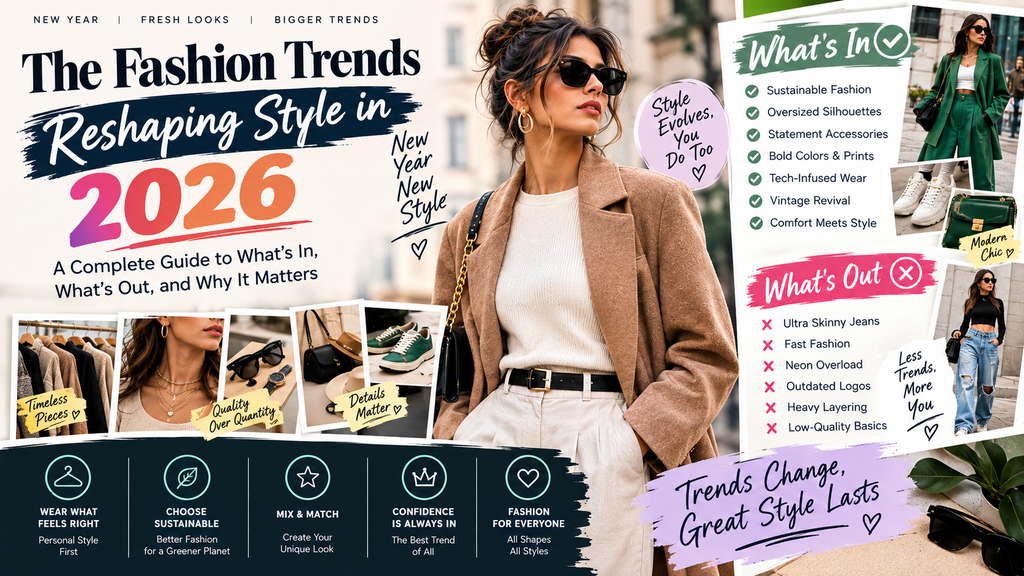
The abundance of trends in 2026 can feel overwhelming. Every season brings a new set of must-haves, and the pressure to keep up can be exhausting. But the fashion trends of 2026 actually offer an antidote to that pressure. The overarching message of the season is that personal style matters more than trend compliance. The point isn’t to wear everything that walks down a runway. It’s to find the pieces that resonate with who you are and how you want to feel.
One practical approach is to treat trends as ingredients rather than prescriptions. A single bold piece—a cherry-red blazer, a fringed skirt, a pair of barrel pants—can transform an existing wardrobe without requiring a complete overhaul. The fashion trends of 2026 work best when they’re integrated into a personal aesthetic, not when they’re adopted wholesale. A tattoo-print tee with clean denim and chunky boots is a complete look. A statement skirt with a simple white shirt makes just as much impact as an elaborate ensemble.
Balance is the key. Loud artwork wants quiet supporting pieces. Bold color wants neutral grounding. Volume wants proportion. The fashion trends of 2026 are, at their best, tools for self-expression. They offer new ways to say something about who you are, what you value, and how you want to move through the world. The goal isn’t to look like a runway model. It’s to feel like yourself, only more so.
FAQ
What Are the Biggest Fashion Trends for 2026
The defining fashion trends of 2026 are bold color, tactile craft, sculptural silhouettes, and a return to personal expression after years of quiet luxury. Orange, cherry red, and butter yellow have emerged as key shades, while textures like fringe, feathers, and shaggy knits dominate runways. Tailoring has been reinvented with subversive twists, and Y2K nostalgia continues to evolve in more refined, wearable forms. Sustainability and circular fashion have also moved from the margins to the mainstream, reshaping how clothing is produced and consumed.
Is Quiet Luxury Still Relevant in 2026
Quiet luxury has lost its dominance, but it hasn’t disappeared entirely. The fashion trends of 2026 represent a pendulum swing toward expression and visibility, but the principles of quality, craftsmanship, and timeless design remain valuable. The difference is that these principles are no longer expressed through muted neutrals and unbranded minimalism alone. They’re being applied to bolder colors, more dramatic silhouettes, and more personal styling choices. Quiet luxury was about discretion. The new luxury is about intention—and sometimes, that intention is loud.
How Can I Wear Bold Colors Without Looking Overwhelmed
The key to wearing bold colors is proportion and balance. Start with one statement piece—a bright coat, a saturated skirt, a vivid pair of shoes—and ground it with neutral or complementary pieces. Color-blocking works best when the hues are arranged with intention, not randomly combined. Consider the ratio: a large field of one color against a smaller accent of another creates visual interest without chaos. If you’re new to bold color, begin with accessories. A cherry-red bag or butter-yellow sneakers can inject personality into an otherwise neutral outfit without requiring a full commitment.
What Makes the Y2K Revival Different This Time
The Y2K revival in 2026 is a remix rather than a replica. The original early-2000s aesthetic was defined by ultra low-rise jeans, baby tees, and an unapologetically messy energy. The 2026 version is more wearable and refined. Baby tees are paired with relaxed denim instead of hip-hugging styles. Rhinestone tops are styled with simple trousers. The fashion trends of 2026 treat Y2K as a flavor rather than a full transformation. One or two nostalgic pieces in a modern outfit reads as intentional and current. The goal is to capture the era’s playful optimism without tipping into costume.
How Is Sustainability Shaping Fashion Trends in 2026
Sustainability has moved from a niche concern to a structural force in fashion. Circular fashion—resale, repair, rental, and upcycling—is growing two to three times faster than traditional retail. The EU Digital Product Passport, which mandates textile traceability starting in 2027, is pushing brands to rethink supply chains. Consumers are buying less but prioritizing quality, durability, and versatility. The fashion trends of 2026 reflect this shift: artisanal craftsmanship, natural materials, and transparent production are increasingly valued alongside aesthetic innovation. Sustainability is no longer a separate category—it’s woven into the fabric of how fashion operates.
Conclusion
The fashion trends of 2026 tell a story of release. After years of restraint, the industry and its consumers are embracing color, texture, volume, and personality with renewed enthusiasm. This isn’t a superficial swing of the pendulum. It’s a response to a cultural moment that demands emotional connection, tactile experience, and a sense of agency over how we present ourselves to the world. From the dopamine-inducing saturation of orange and cherry red to the tactile pleasures of fringe and artisanal knits, from the subversive reinvention of tailoring to the refined nostalgia of Y2K, the fashion trends of 2026 offer endless opportunities for self-expression.
The final takeaway is this: fashion in 2026 rewards intention over conformity. The most stylish people aren’t the ones who follow every trend—they’re the ones who use trends as tools, blending them into a personal aesthetic that feels authentic and alive. Whether you’re drawn to a single bold color, a statement silhouette, or a handcrafted detail that catches the light, the season’s biggest ideas are invitations, not obligations. Wear what makes you feel like yourself, only more so. That’s the real trend that never goes out of style.