
Going out tops occupy a unique space in the wardrobe. They are not quite the same as everyday basics, and they are not full eveningwear either. They sit in that sweet spot between casual and dressy, designed for dinners, cocktails, club nights, birthday celebrations, date nights, and everything in between. Yet despite how often they are worn, most people do not give them the same strategic thought they apply to jeans, dresses, or coats. That oversight leads to the familiar frustration of standing in front of a full closet with nothing that feels right for the evening ahead.
The world of evening and occasion tops has expanded dramatically over the past decade. What was once a narrow category of sequin camisoles and satin blouses has grown into a diverse landscape spanning corset tops, mesh layering pieces, structured bustiers, metallic knits, off-shoulder designs, and tailored blazers worn as tops. Understanding how these garments differ, how they interact with bottoms, and how fabric and fit influence the overall impression can transform how you shop and how you dress. This guide covers the full picture, from silhouette theory to care instructions, with the depth that this category genuinely deserves.
What Exactly Counts as a Going Out Top and Why the Definition Matters
A going out top is a garment designed for evening or social occasions that prioritizes visual impact, fit, and occasion-appropriateness over pure utility. It typically features elevated materials such as satin, velvet, sequins, mesh, lace, or metallic knits, and it is cut with the intention of being seen rather than simply covering the body. The defining characteristic is intent: these tops are chosen for how they make an outfit feel rather than for how practical they are during a full day of work or errands.
The boundaries of this category are genuinely fluid, and that fluidity is part of what makes it confusing. A silk camisole can be an everyday layering piece under a cardigan or a standout evening top worn alone with tailored trousers. A black bodysuit might read as underwear or as a sleek going-out staple depending on how it is styled. This is why understanding the category requires thinking in terms of context and styling rather than rigid garment definitions. The same piece can move between categories depending on what surrounds it.
From a merchandising perspective, retailers often separate tops into daywear, occasionwear, and eveningwear based on fabric weight, embellishment level, and neckline depth. This segmentation reflects real differences in construction. An evening top might use a heavier lining to support structure, a hidden hook-and-eye closure to keep a deep neckline in place, or boning to maintain shape through a long night of movement. These details rarely appear in daytime tops because the demands are different.
The rise of the “going out top” as a distinct shopping category also reflects broader cultural shifts. Social media has made outfit repetition more visible, which has increased demand for statement pieces that photograph well and feel distinct from everyday wear. Fast fashion responded with high-turnover trends, while premium and sustainable brands responded with investment pieces designed to last. Both approaches have merit, and the right choice depends on how often you actually go out and how much you value longevity versus variety.
The Major Styles of Going Out Tops and What Each One Communicates
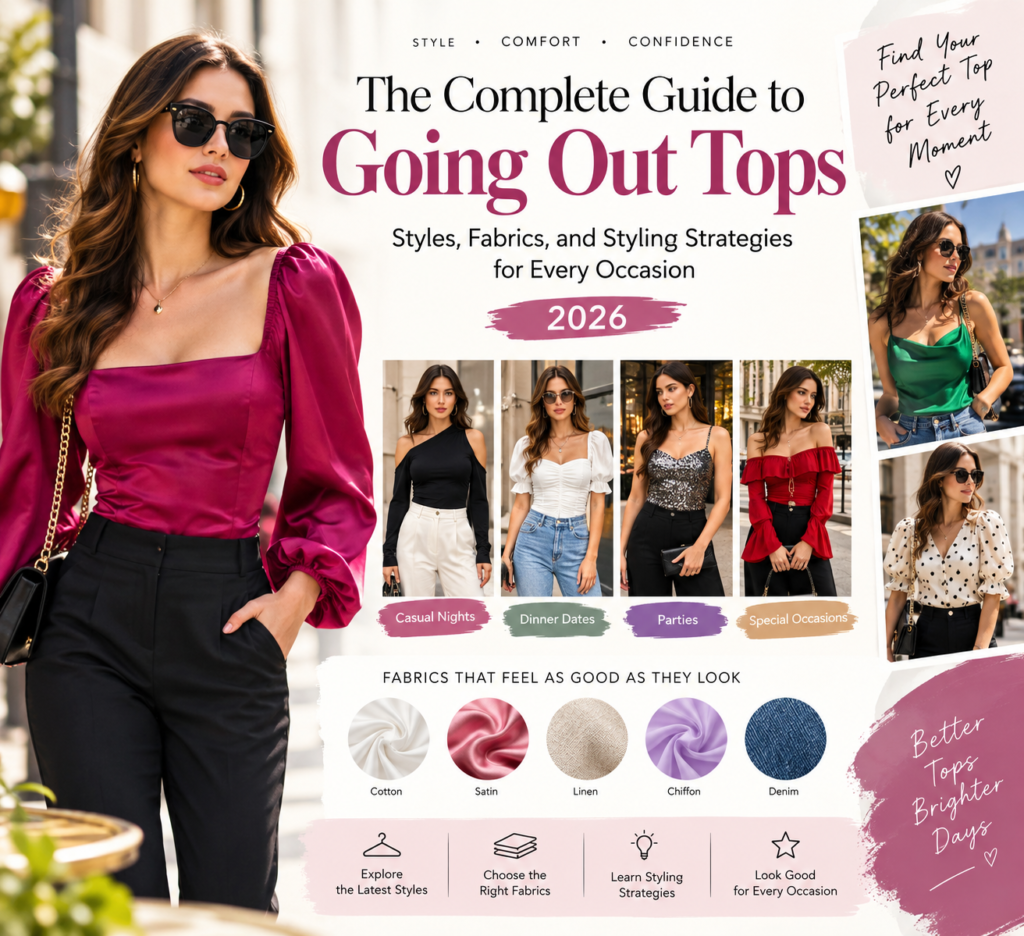
The silhouette you choose communicates something before you say a word. A structured corset top signals confidence and intentionality. A floaty off-shoulder blouse signals romance and ease. A metallic halter neck signals boldness and movement. Understanding these signals helps you choose pieces that match both the occasion and the version of yourself you want to present that evening.
Corset and bustier tops have dominated evening wear for several seasons because they combine structure with sensuality. Built-in boning, defined seaming, and often a sweetheart or square neckline create a flattering shape that holds itself up without constant adjustment. They work particularly well with high-waisted trousers, midi skirts, and wide-leg denim. The trade-off is comfort; a well-made corset top should feel supportive rather than restrictive, and if you find yourself unable to sit comfortably, the fit is wrong rather than the style.
Bodycon and fitted knit tops occupy a different register. These are typically made from stretch fabrics such as viscose elastane blends, ribbed knits, or ponte, and they follow the body closely. They are excellent for layering under blazers and for pairing with voluminous bottoms like palazzo pants or full skirts, where the contrast between fitted and flowing creates visual balance. The key quality marker here is fabric recovery; a top that stretches but does not spring back will lose shape after a few wears.
Blouses in elevated fabrics represent the more versatile end of the spectrum. A satin or silk-blend blouse with a wrap front or a tie neckline can work for a work dinner, a theatre outing, and a casual celebration. These pieces tend to have longer shelf lives because they are less trend-dependent. Investing in one or two well-cut blouses in neutral or jewel tones often delivers more outfit options than buying five trend-driven novelty tops.
Statement sleeve tops, including balloon sleeves, puff sleeves, and dramatic cuffs, offer another route to visual interest. The volume in the sleeve draws the eye upward and outward, which can balance wider hips or create an hourglass illusion when paired with a fitted waist. These work best when the rest of the outfit is relatively simple, allowing the sleeve to function as the focal point.
Bodysuits deserve their own mention because they solve a specific problem elegantly. A bodysuit stays tucked, eliminates the bulk of layered fabric at the waist, and creates a smooth line under trousers or skirts. For going out tops that need to stay put through dancing, sitting, and moving between venues, a well-fitting bodysuit is often the most practical choice despite its reputation for being fussy.
Fabric Matters More Than You Think When Choosing Evening Tops
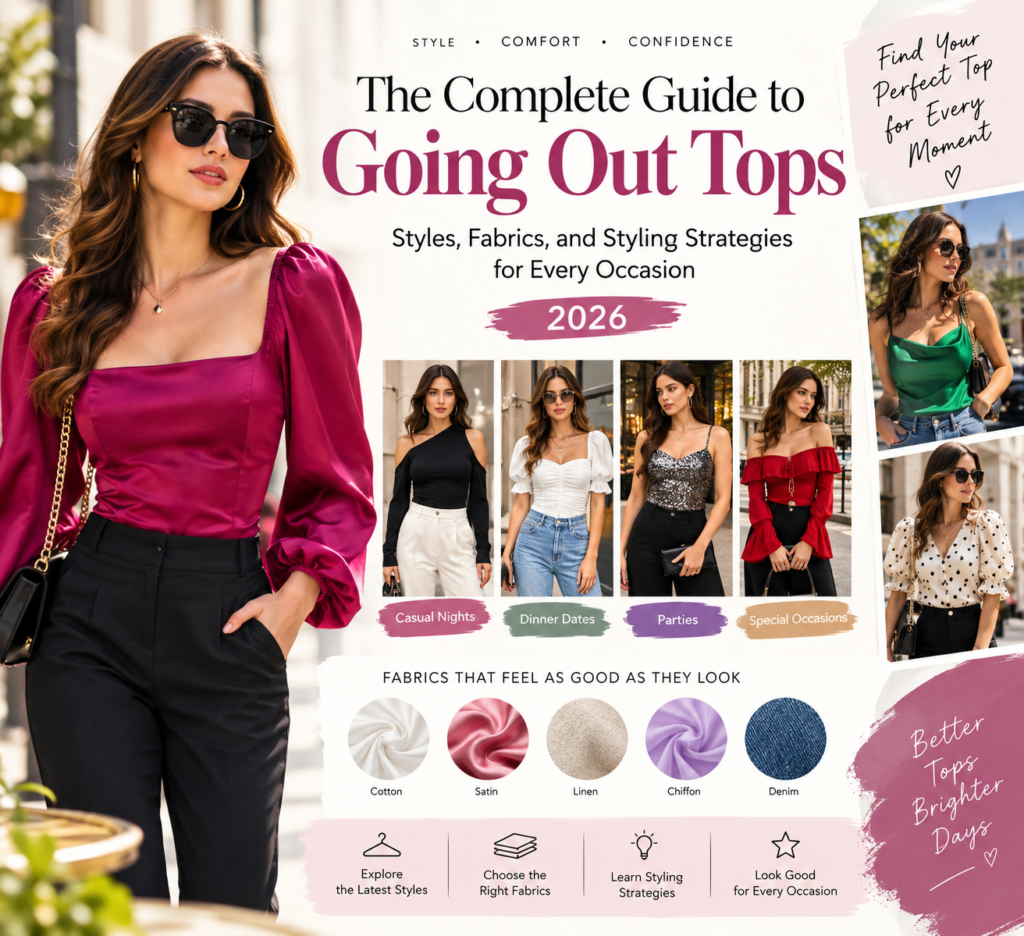
Fabric determines how a top moves, how it photographs, how it feels against the skin, and how long it lasts. A beautiful cut in a poor fabric will always underperform a simple cut in an excellent one. This is the single most overlooked principle in shopping for evening wear, and correcting it improves both comfort and appearance immediately.
Satin and silk blends are the classic choice for evening tops because of their fluid drape and subtle sheen. Real silk has a distinctive weight and temperature response, feeling cool in summer and insulating in winter, and it takes dye beautifully, producing rich, deep colors. Silk blends with viscose or polyester reduce cost while preserving much of the drape, though they may pill or snag more easily. The practical test when shopping is to hold the fabric up to the light and look for evenness of weave; uneven or overly thin satin tends to show every seam and lining edge through the fabric.
Velvet and velour create depth and luxury, absorbing light rather than reflecting it. This makes them excellent for winter evenings and for anyone who prefers a more understated elegance over sparkle. Velvet tops pair especially well with leather trousers, dark denim, and tailored wool trousers. The main care consideration is crushing; velvet should be hung rather than folded, and steam rather than ironed directly to preserve the pile.
Mesh, lace, and sheer fabrics introduce layering possibilities that opaque fabrics cannot. A mesh top over a camisole or bralette creates texture and dimension, while a lace top over a contrast lining can read as delicate or bold depending on the color combination. These fabrics demand more care in fit because they do not hide anything underneath. Seams, straps, and undergarment edges all become part of the visual composition.
Sequins, metallics, and embellished fabrics are the most overtly festive option. They are also the most demanding in terms of construction quality. Cheap sequin tops shed, scratch, and catch on everything they touch. Well-made versions use sequins sewn rather than glued, with a soft backing layer to protect the skin. Metallic knits and lamé offer a middle ground, providing shine with more flexibility and comfort than fully sequined pieces.
Jersey and ponte knits are the workhorses of this category. They stretch, recover, travel well, and hold structure better than thinner knits. Ponte in particular can be tailored almost like a woven fabric, allowing for structured blazers, fitted tops, and clean necklines. These fabrics are ideal for anyone who wants a going out top that can survive a long evening without needing adjustment.
Matching Going Out Tops to Bottom Styles and Body Proportions
The relationship between top and bottom is where most outfits succeed or fail. Volume, waistline, and color all interact, and getting the balance right is more important than following any particular trend. The general principle is contrast: fitted tops work with voluminous bottoms, and voluminous tops work with fitted bottoms. Breaking this rule deliberately can look striking, but it requires confidence and careful proportion management.
High-waisted trousers and jeans are the most common pairing for evening tops because they define the waist and elongate the leg. A cropped corset top or a tucked-in satin blouse with high-waisted wide-leg trousers creates a clean, modern line. The critical measurement is the rise; if the waistband sits at or above the natural waist, the proportion works. If it sits below, the top may cut the torso awkwardly.
Midi and maxi skirts offer a softer, more romantic alternative. A fitted knit top with a satin slip skirt creates a contrast of textures and silhouettes that feels elevated without being overdone. A voluminous tulle or chiffon skirt works best with a very fitted top to avoid a shapeless result. When pairing a going out top with a skirt, pay attention to the hemline of the top; a top that ends exactly at the waistband of the skirt creates the cleanest line, while one that ends mid-hip can add unwanted bulk.
Leather trousers and faux-leather leggings have become a staple pairing for evening tops because they add edge and texture. A soft draped blouse or a fine-knit bodysuit balances the hardness of leather. For a bolder look, a corset top in a contrasting color creates deliberate tension. The main practical consideration is that leather does not stretch much, so the top should be chosen to sit smoothly against the waistband without pulling.
Denim remains a valid choice for more casual going-out settings such as bars, gigs, and low-key dinners. Dark wash, high-waisted jeans with a satin camisole and a blazer is a reliable formula that works across a wide range of venues. Lighter washes and distressed denim shift the outfit toward daytime, which may or may not suit the occasion.
Proportion management extends to height as well. Petite frames benefit from tops that end at or just above the hip bone, paired with high-waisted bottoms to create the illusion of longer legs. Taller frames can carry longer tops, dropped shoulders, and oversized sleeves more easily. These are guidelines rather than rules, but they explain why a top that looks stunning on one person can look unbalanced on another without any difference in body shape.
Going Out Tops for Different Occasions and Venues
Context determines appropriateness more than any other single factor. A top that is perfect for a cocktail bar may be entirely wrong for a family celebration, and the reverse is also true. Reading the venue and the crowd before choosing an outfit prevents the discomfort of feeling either overdressed or underdressed.
Cocktail bars and upscale restaurants generally call for polished but not flashy choices. A silk blouse in a jewel tone, a fitted knit top with tailored trousers, or a structured blazer worn as a top with a lace camisole underneath all fit this environment. The lighting in these venues is usually warm and dim, which flatters rich colors and soft fabrics while diminishing the impact of heavy sparkle.
Nightclubs and late-night venues tolerate and often reward more dramatic choices. Corset tops, metallic bodysuits, sheer layering pieces, and statement sleeves all work in this context because the environment is high-energy and the lighting is often low with flashes of color. Comfort and security matter here; a top that requires constant adjustment will ruin the evening regardless of how good it looks in a mirror.
Concerts and live music venues sit somewhere in between, and the specific genre matters. A jazz club calls for something more refined, while a rock venue accommodates leather, mesh, and graphic elements. Practical considerations like temperature and the ability to move freely often take priority over pure aesthetics in these settings.
Date nights represent the most personal category because the “right” choice depends entirely on the dynamic. A first date at a casual restaurant calls for something approachable and comfortable, perhaps a soft knit top with good jeans. A milestone anniversary dinner allows for more glamour, such as a velvet wrap top or a satin blouse with statement jewelry. The underlying principle is alignment; the outfit should match the energy of the occasion rather than the trend cycle.
Seasonal parties, including holiday gatherings and birthday celebrations, often have their own dress codes that can be interpreted through fabric and color. Winter parties welcome velvet, deep jewel tones, and long sleeves. Summer parties welcome linen blends, bright prints, and lighter constructions. When in doubt, erring slightly toward the dressier end is generally safer than erring toward the casual end for an evening event with a stated occasion.
Size-Inclusive Considerations and Fit Guidance for All Body Types
Fit is not about achieving a single ideal shape; it is about finding garments that respect your proportions and allow you to move comfortably. For going out tops, the areas that most often cause fit problems are the bust, the waist, and the armhole. Addressing these three zones solves the majority of issues.
Bust support is the most common challenge, particularly with strapless, halter, and deep-V styles. The solution lies in construction rather than in the wearer’s body. Look for tops with built-in cups, boning, or a structured underband. If a top lacks these features, a well-fitted strapless bra or adhesive support can bridge the gap. Sizing up is rarely the answer for bust fit because it loosens the waist and shoulders; choosing a style designed for a fuller bust or having a tailor adjust the straps and underband is more effective.
Waist definition flatters almost every body type, but the method of achieving it varies. Wrap tops create a natural waistline through diagonal draping. Peplum tops flare below the waist to create an hourglass effect. Belted blouses and corset styles define the waist through structure. For those who prefer to avoid waist emphasis, straight-cut satin blouses and boxy knits worn with wide-leg trousers create a different but equally intentional silhouette.
Armholes and sleeves frequently determine whether a top feels comfortable for extended wear. A too-tight armhole restricts movement and creates bulging; a too-loose armhole exposes the bra and looks unfinished. Sleeveless tops should have an armhole that sits close to the shoulder joint without cutting in. Puff sleeves and balloon sleeves should be cut so the volume begins below the shoulder seam rather than at the neck, which prevents the shoulders from appearing wider than they are.
Petite and tall sizing exists precisely because standard proportions do not serve everyone. Petite tops shorten the torso and sleeve length, which prevents the bunching and drooping that occurs when a standard size is worn by someone shorter. Tall tops extend the body and sleeve length to prevent the cropped look that a standard size produces. Where petite and tall options are unavailable, tailoring is a worthwhile investment for going out tops, which are worn less frequently and therefore can justify a small alteration cost.
Adaptive fashion has also expanded into evening wear, with magnetic closures, seated-friendly cuts, and sensory-friendly fabrics now available in a wider range of styles. These options matter for people with limited mobility, fine motor challenges, or sensory sensitivities, and they demonstrate that style and accessibility are not in conflict.
Where to Shop for Going Out Tops and What to Look For
The retail landscape for evening tops spans an enormous range, from fast-fashion giants to independent designers to secondhand marketplaces. Each channel has distinct advantages and trade-offs, and the right choice depends on budget, values, and how frequently you will wear the piece.
High street retailers offer the widest trend coverage at accessible prices, with new styles arriving weekly. The trade-off is typically fabric quality and construction longevity. A sequin top from a fast-fashion retailer may look excellent for a single season but lose sequins, stretch out of shape, or develop pulls after a few wears. For occasional wear and trend experimentation, this can be entirely reasonable.
Mid-market and premium brands tend to use better fabrics, more considered construction, and more timeless silhouettes. A silk-blend blouse or a well-constructed corset top from this tier often outlasts several fast-fashion equivalents. The cost per wear can actually be lower when a piece survives multiple seasons, particularly for neutral colors and classic cuts.
Independent designers and small-batch labels offer distinctive pieces that stand apart from mass-market trends, often with better transparency about materials and production. These pieces frequently carry higher price points, but they also tend to hold value and can be resold if you tire of them. Buying directly from makers or from curated marketplaces supports this ecosystem.
Secondhand and vintage shopping is one of the strongest options for this category. Evening tops are frequently bought for one event and worn once or twice, which means the resale market is full of barely-worn pieces at a fraction of retail. Vintage options, particularly from the nineties and early 2000s, offer silhouettes and embellishments that are difficult to find in current production. Checking measurements against your own rather than relying on labeled sizes is essential when buying secondhand.
When evaluating any going out top in person or through detailed listings, prioritize the areas that determine real-world wearability: seam quality, lining, closure hardware, fabric recovery, and underarm construction. These details separate a top that feels good after three hours from one that feels good for twenty minutes.
Practical Size and Style Reference for Evening Tops
The table below provides a practical reference for matching top styles to occasions, body considerations, and styling needs, based on common fit and occasion patterns observed across the category.
| Top Style | Best Occasions | Fabric Typical | Styling Partner | Key Fit Consideration |
|---|---|---|---|---|
| Corset or bustier | Cocktail bars, clubs, dinners | Satin, velvet, structured knit | High-waisted trousers, midi skirts | Boning should support without restricting breathing |
| Satin blouse | Restaurants, theatre, celebrations | Silk, silk-blend, satin | Tailored trousers, slip skirts | Drape should skim rather than cling |
| Bodycon knit | Clubs, bars, layered looks | Ribbed knit, ponte, viscose blend | Wide-leg pants, blazers | Fabric recovery determines longevity |
| Bodysuit | Clubs, dancing, layered outfits | Jersey, mesh, velvet | Jeans, leather trousers, skirts | Snap closure comfort and strap security |
| Off-shoulder | Date nights, summer parties | Cotton blend, chiffon, knit | Fitted skirts, jeans | Elastic or structured band must hold without slipping |
| Mesh or sheer | Layered evening looks | Mesh, tulle, lace | Camisoles, bralettes, blazers | Underlayer visibility must be intentional |
| Sequin or metallic | Parties, festive events | Sequined mesh, lamé, metallic knit | Simple black bottoms | Lining quality prevents scratching |
| Statement sleeve | Dinners, celebrations | Cotton poplin, satin, organza | Slim trousers, pencil skirts | Sleeve volume should begin below the shoulder |
| Tailored blazer as top | Smart dinners, events | Wool blend, crepe, satin-lined | Camisole, high-waisted trousers | Shoulder fit determines overall polish |
Solving Common Problems with Going Out Tops
Even a well-chosen top can create problems in real-world wear, and knowing the solutions in advance prevents last-minute stress. The most frequent complaints involve straps slipping, necklines gaping, fabric clinging, and undergarments showing. Each has a practical fix that does not require replacing the garment.
Slipping straps are usually a length problem rather than a design flaw. Shortening the straps by even a centimeter often resolves the issue entirely, and this is a simple alteration that most tailors can complete quickly. Silicone strap grips and fashion tape offer temporary solutions for evenings when alteration is not possible. For halters, adjusting the tie point higher or lower changes the angle at which the fabric pulls across the bust, which can eliminate gaping.
Neckline gaping in button-front or wrap tops typically stems from a mismatch between the bust curve and the garment’s cut. Fashion tape applied along the inside edge of the placket holds the fabric flat against the chest. For wrap tops, adjusting the internal tie or adding a hidden snap at the crossover point prevents the wrap from opening during movement.
Fabric clinging is often a static issue rather than a fit issue, particularly with satin and synthetic blends in dry conditions. Anti-static spray applied to the inside of the garment and to the lining of the bottom resolves most cases. Wearing a slip or a smooth seamless underlayer also helps. If clinging persists, the fabric may simply be too thin for the intended use, and a different piece may serve better.
Visible undergarments are the most avoidable problem in this category because they are entirely solvable with preparation. Seamless nude-toned underwear, strapless bras with silicone grip, and nipple covers all address specific needs. For sheer or mesh tops, choosing underlayers that are intended to be visible, such as a contrasting bralette or a lace camisole, turns a potential issue into a deliberate styling choice. Trying on the complete outfit, including undergarments, before the event is the single most effective way to catch problems while there is still time to fix them.
Caring for Going Out Tops So They Last Beyond One Season
Evening tops often use delicate fabrics and embellishments that require more careful handling than everyday clothing. Following the care label is the baseline, but understanding why certain instructions exist helps you make better decisions when the label is ambiguous or missing.
Sequined and beaded tops should generally be hand-washed or spot-cleaned rather than machine-washed, because agitation loosens the attachments. If machine washing is unavoidable, turning the garment inside out and placing it in a mesh laundry bag reduces abrasion. Never tumble dry embellished pieces, as heat degrades adhesives and can warp the base fabric.
Silk and satin require gentle handling to preserve their sheen. Hand washing in cool water with a pH-neutral detergent, or dry cleaning for structured pieces, maintains the finish. Wringing or twisting silk damages the fibers and creates permanent creases. Instead, roll the garment in a towel to remove excess water and hang or lay flat to dry away from direct sunlight.
Velvet should be steamed rather than ironed, and hung rather than folded, to prevent crushing the pile. If creases do form, hanging the garment in a steamy bathroom often releases them without any direct heat. Brushing the pile with a soft garment brush restores the nap and removes dust.
Knit tops, particularly those in viscose and fine-gauge blends, should be folded rather than hung to prevent shoulder stretching. Storing them flat in a drawer or on a shelf preserves their shape. When washing, use a cool gentle cycle and lay flat to dry; hanging a wet knit causes it to stretch dramatically under its own weight.
Storage matters as much as washing. Going out tops that are worn infrequently should be stored clean, on appropriate hangers, and away from direct light to prevent fading. Padded hangers protect delicate shoulder seams, and garment bags protect embellished pieces from dust and snagging. Cedar blocks or lavender sachets deter moths without introducing harsh chemical odors.
Building a Versatile Wardrobe of Evening Tops
A functional collection of going out tops does not require dozens of pieces. It requires a small number of well-chosen items that cover the range of occasions you actually attend, in colors and fabrics that work with the bottoms you already own. This approach reduces decision fatigue and increases the likelihood that every piece earns its place.
The foundation of a versatile collection typically includes one neutral piece, such as a black or ivory satin blouse or a well-fitted bodysuit, that can be dressed up or down. A second piece in a jewel tone, such as emerald, sapphire, or burgundy, adds color without being trend-specific. A third piece with texture or embellishment, such as velvet, lace, or subtle sequins, provides the option for more festive occasions. From there, additions can be driven by specific events, seasonal gaps, or genuine enthusiasm rather than obligation.
Color strategy matters more than most people realize. Neutral tops pair with almost everything, which maximizes outfit combinations. Jewel tones flatter most skin tones and read as intentional rather than accidental. Pastels work beautifully in spring and summer but can look washed out under warm artificial light. Metallic tones function almost like neutrals in evening settings because they reflect the surrounding light rather than competing with it.
Finally, the most versatile pieces tend to have simple, well-cut silhouettes with one distinctive feature rather than several competing details. A top with an interesting neckline and a clean body will outlast a top with ruffles, cutouts, and embellishment all at once, because the simpler piece adapts to more styling contexts and does not date as quickly. This principle holds whether you are building a collection from scratch or refining one you already own.
Frequently Asked Questions About Going Out Tops
What are going out tops and how are they different from regular tops?
Going out tops are garments designed specifically for evening and social occasions, characterized by elevated fabrics, more intentional cuts, and a focus on visual impact rather than everyday practicality. Regular tops prioritize comfort, durability, and versatility for work or daily wear, often using cotton, jersey, or basic knits. Evening tops frequently use satin, velvet, mesh, lace, or metallic finishes, and they are cut to be noticed, with details like structured necklines, embellishment, or dramatic sleeves. The distinction is contextual rather than absolute, since some pieces can serve both purposes depending on styling.
What should I wear with a going out top to create a complete outfit?
The most reliable approach is to balance the top with bottoms that contrast in volume. A fitted corset or bodycon top pairs well with wide-leg trousers, palazzo pants, or full midi skirts, while a voluminous statement-sleeve top works best with slim trousers or pencil skirts. High-waisted bottoms generally create the cleanest line with cropped or tucked tops. For color, neutral bottoms allow the top to be the focal point, while tonal or monochromatic combinations create a more cohesive, elevated look. Completing the outfit with appropriate footwear, a small bag, and minimal jewelry often works better than adding many competing accessories.
How do I choose a going out top that flatters my body shape?
Start by identifying the areas you want to highlight and the areas you prefer to skim. Structured corset and wrap tops define the waist and suit most body types. Off-shoulder and halter styles draw attention upward to the shoulders and neckline. Statement sleeves balance wider hips by adding volume above the waist. Bodycon knits emphasize the figure and work well with voluminous bottoms, while straight-cut satin blouses create a more relaxed, modern line. Fit matters more than category, so prioritize garments that allow comfortable movement and do not require constant adjustment, since a top that needs fidgeting will never feel flattering regardless of its cut.
Are expensive going out tops worth the investment compared to budget options?
It depends on how often you will wear the piece and how much you value longevity. Premium evening tops typically use better fabrics with superior drape, more durable construction, and higher-quality hardware, all of which affect both comfort and appearance. A silk-blend blouse or a well-constructed corset top can last several seasons and cost less per wear than a cheaper alternative replaced multiple times. Budget options make sense for one-off events, trend experimentation, or styles you are unsure about committing to. The middle ground, buying fewer pieces at higher quality in versatile colors, tends to deliver the best long-term value for most wardrobes.
How should I care for delicate going out tops to make them last?
Delicate evening tops require gentler handling than everyday clothing. Sequined, beaded, and embellished pieces should be hand-washed or spot-cleaned, never tumble dried, and stored in garment bags to prevent snagging. Silk and satin benefit from cool hand washing with pH-neutral detergent or professional dry cleaning, and should be dried flat away from direct sunlight. Velvet should be steamed rather than ironed and hung rather than folded to preserve the pile. Knit tops should be folded rather than hung to prevent shoulder stretching. Storing all evening tops clean, on appropriate hangers, and away from direct light preserves both fabric and color.
Conclusion
The right going out tops do more than complete an outfit. They remove the friction from getting ready, eliminate the last-minute panic of having nothing to wear, and allow you to walk into a room feeling composed rather than uncertain. The difference between a wardrobe full of random pieces and a small collection of deliberate choices comes down to understanding fabric, fit, proportion, and occasion, and then applying that understanding consistently rather than shopping on impulse.
Building that collection does not require a large budget or a long shopping trip. It requires knowing which silhouettes suit your proportions, which fabrics perform best in the environments you actually visit, and which colors multiply your outfit options rather than limiting them. A well-chosen satin blouse, a structured corset top, and a reliable bodysuit will cover more occasions than a drawer full of trend-driven novelty pieces, and they will still look right three seasons from now.
The final insight worth carrying forward is that evening style is less about following trends and more about understanding how garments behave on your body in real conditions. Try pieces on fully styled, with the bottoms and undergarments you will actually wear. Pay attention to how a top feels after an hour, not just how it looks in the mirror for thirty seconds. Choose fewer pieces, choose them well, and treat them with the care their materials deserve. Do that, and your going out tops will stop being a source of stress and start being the most reliable part of your wardrobe.