The low fade haircut has a quiet confidence that most bold styles lack. It does not shout for attention the way a high skin fade does, and it does not disappear into the background like a simple taper. It sits in a sweet spot that barbers have trusted for decades: clean around the edges, conservative enough for the office, and versatile enough to pair with almost any length on top. If you have ever admired a sharp but understated cut and wondered what to call it, this is almost certainly the answer.
What makes the low fade genuinely useful is its flexibility. It can anchor a textured crop, a classic side part, a messy quiff, or even longer curtains without ever fighting for attention. The blend begins just above the ear and works downward, keeping the sides neat without stripping away the width that gives a haircut balance. Understanding where that blend starts, how it behaves on different hair types, and how to communicate it clearly to your barber is the difference between a cut that lasts three weeks and one that looks good for five.
What Exactly Is a Low Fade Haircut
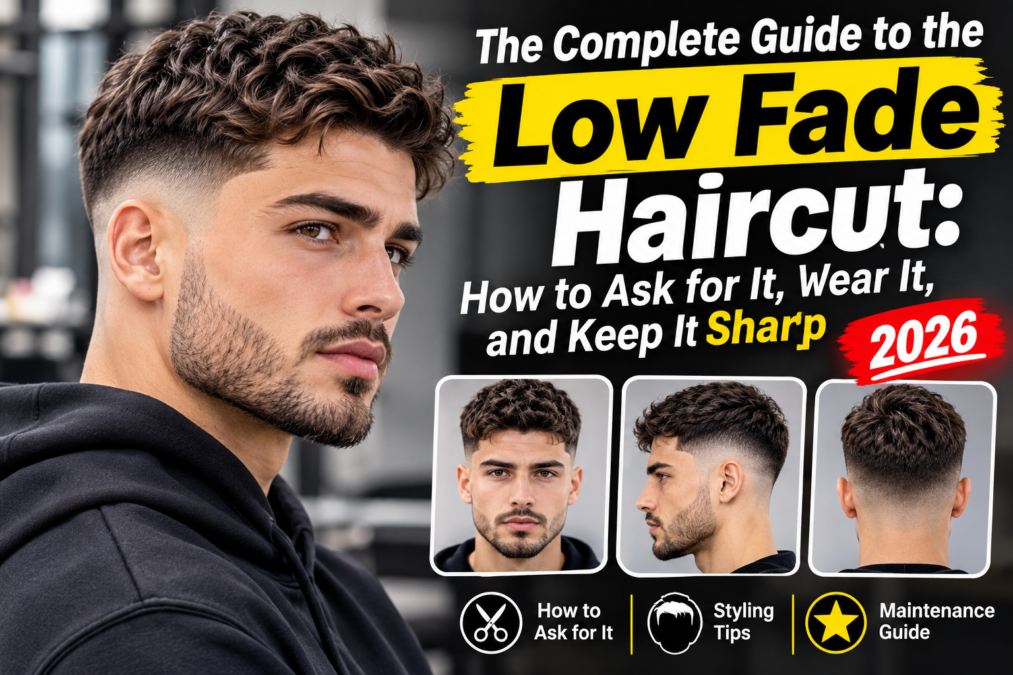
A low fade haircut is a style where the hair gradually shortens from just above the ear down toward the neckline and sideburns, creating a seamless gradient rather than a harsh line . The key word is “low.” The fade starts at the lowest practical point on the side of the head, which means the majority of the side hair retains some length. Only the bottom edge transitions into very short or skin-level clippers.
This is different from a mid fade, which begins around the temple, or a high fade, which starts at or above the temple and creates dramatic contrast . A barber named Joey Scandizzo described the low fade as offering a “softer, more classic finish” compared to its higher counterparts . That softness is precisely why it works so well for people who want a polished look without looking like they are trying too hard. The low fade does not announce itself. It simply makes everything else look better.
Why the Low Fade Suits More People Than Any Other Fade Height
Face shape is the first thing a good barber considers, and the low fade is unusually forgiving across the spectrum. Because it retains width at the sides, it helps balance longer or narrower faces by preventing the head from looking too tapered . For rounder faces, the retained side length avoids the “mushroom” effect that a high fade can create when the top is left bulky while the sides vanish .
The low fade is also the safest entry point for anyone who has never had a fade before. It grows out gradually, which means a missed appointment does not result in a jarring contrast between shaved sides and a heavy top. A mid fade needs attention every two to three weeks to stay sharp, and a high fade starts looking unkempt even sooner . A low fade, by comparison, can hold its shape for three to four weeks, and sometimes longer depending on how the top is styled . That gentler maintenance rhythm makes it practical for people who do not want to live in a barber’s chair.
Low Fade Versus Taper: Understanding the Difference
The terms fade and taper get used interchangeably in casual conversation, but they describe different techniques. A taper shortens the hair only at the very edges, the sideburns and the neckline, while leaving the rest of the sides at a consistent length. A fade takes a larger area of the sides down, often to skin, creating a visible gradient across a wider band of hair . A low fade sits somewhere between the two in effect: it creates a genuine fade, but the band where the blending happens is narrow and sits close to the bottom of the head.
A low taper fade is the gentlest version of this family. It cleans up the edges without taking the sides down to skin, which makes it especially useful for anyone with thin hair on top or a receding hairline. The principle there is that contrast draws the eye, so keeping the shortest point at a slightly longer guard rather than going to skin prevents the fade from advertising thinness above it . For someone with dense, thick hair, a low skin fade is fair game and looks exceptionally clean. The distinction matters because “low fade” alone does not specify how short the bottom finishes, and that is a separate decision from where the blend begins.
How to Ask Your Barber for a Low Fade Haircut
The single most common mistake people make is saying “low fade” and assuming the barber knows exactly what they mean. Low is relative. Your idea of low and the barber’s default setting may not align. The fix is to point. Place a finger just above the top of your ear and say the fade starts there, not higher . That physical gesture communicates more than any adjective.
The second half of the request is the finish. A low fade can end at a number one guard, a number two, or skin. Saying “low fade, starting above the ear, finishing at a one” gives the barber both coordinates they need . If you have a style on top in mind, name it too. “Low fade with a textured crop” or “low fade with a side part” tells the barber how the sides should relate to the length above. Bringing a reference photo is never a bad idea, but bring one of someone with similar hair texture and face shape, not a celebrity whose density and head geometry are completely different from yours .
Low Fade Variations Worth Knowing
The classic low fade is the foundation, but several variations change the character of the cut without altering its fundamental height. A low drop fade curves down behind the ear rather than following a straight horizontal line, which adds a bit of shape and volume toward the top . It is a subtle difference that reads as more dynamic from the side and back. A low skin fade takes the bottom all the way to bare skin, producing the sharpest possible outline. It looks incredibly crisp on the day of the cut but demands more frequent trims to maintain that precision .
A low taper fade is the most understated version, blending only at the sideburns and neckline with scissors or a higher guard rather than taking the sides down aggressively. This is the version to request if you work in a conservative environment, have thinning temples, or simply prefer a softer transition . And for anyone with curly or coily hair, a low taper is arguably the best maintenance cut available, because it removes the bulk that collects around the ears and neckline without disturbing the curl pattern above . The variation you choose should follow from what your hair actually does, not from what looks best on a screen.
Matching the Top to the Low Fade
The low fade is a supporting actor. The top is where the style lives. With a textured crop, the low fade keeps the sides flat so the choppy fringe and volume on top do the talking. With a side part, the fade cleans up the neck and sideburns while the part and sweep carry the classic character. With a quiff or pompadour, the low fade prevents the sides from puffing out and competing with the height at the front. The fade is not the feature; it is the frame .
For longer tops, the low fade becomes almost invisible from the front. If the hair on top is five inches or more and falls over the sides, the fade sits underneath, providing clean edges without interrupting the length. This is a genuinely underrated option for anyone growing their hair out but tired of looking unkempt around the ears . The key is to keep the fade low enough that it does not create a visible break between the long top and the short sides. A low fade stays hidden; a mid or high fade would interrupt the silhouette.
A Practical Reference for Low Fade Decisions
The table below summarizes the practical variables that shape a low fade, drawn from barber guidance and style references.
| Decision Point | Conservative Choice | Sharper Choice | What It Affects |
|---|---|---|---|
| Where the blend starts | Just above the ear | Slightly higher but still below temple | How much width the sides retain |
| Shortest finish | Guard 1 or 2 | Skin (bald fade) | How crisp the outline looks and how often it needs a trim |
| Variation | Low taper fade | Low drop fade or low skin fade | The shape of the gradient from the side and back |
| Top style | Side part or short crop | Textured fringe or quiff | Whether the fade supports or competes with the top |
| Maintenance interval | 3 to 4 weeks | 2 to 3 weeks | How long the cut looks intentional |
The row that matters most for first-timers is the shortest finish. A skin fade looks spectacular for about ten days and then begins to lose its edge. A guard-one finish holds its shape longer and forgives a delayed appointment. The conservative column is not the boring column; it is the sustainable one.
Maintaining a Low Fade Between Appointments
A low fade haircut is easier to live with than higher fades, but it is not maintenance-free. The faded band grows out at the same rate as the rest of your hair, which means the sharp transition softens over time. Most barbers recommend a touch-up every three to four weeks for a low fade, though some suggest stretching to four to six weeks if the finish is not taken to skin . The key is to address the neckline and around the ears before the rest of the cut looks tired.
At home, brushing the faded hair upward toward the top of the head can slightly extend the life of the cut by emphasizing the gradient even as it grows . Do not attempt to blend your own fade with clippers. The line between “low” and “mid” is thinner than it looks, and a home blend almost always ends up uneven. Clean up the neckline with a razor if needed, but leave the blending to a professional . Styling products should be focused on the top, where texture and hold actually matter.
Low Fade Versus Mid Fade: Choosing the Right Height
The choice between a low and mid fade comes down to how much contrast you want and how often you are willing to visit the barber. A mid fade starts around the temple and creates a noticeably sharper distinction between the sides and the top . It reads as more modern and more intentional, but it also exposes more of the head and demands a trim every two to three weeks to stay crisp. A low fade is subtler. It looks neat without looking styled, and it grows out gracefully .
For anyone in a professional environment with a conservative dress code, the low fade is the safer and often better choice. It pairs naturally with a beard or stubble, blending into facial hair without the awkward gap that a higher fade can create . For someone with a longer face shape, the low fade’s retained width at the sides helps prevent the face from looking too narrow . The mid fade has its place, particularly for rounder faces or people who want a more visible transformation. But the low fade is the cut that works quietly, every day, without requiring you to think about it.
What Hair Types Work Best With a Low Fade
Straight hair shows the precision of a low fade most clearly, because there is nowhere for a sloppy blend to hide. A good fade on straight hair looks almost architectural, holding its gradient for weeks . Wavy hair is more forgiving, and the natural movement masks minor blending imperfections while the fade prevents the sides from puffing out as the wave builds between cuts. Curly and coily hair benefits enormously from a low taper or low fade, because the bulk that accumulates around the ears and neckline is precisely where curls tend to expand. Removing that bulk without touching the pattern above keeps the shape clean and the volume where it belongs .
For thin hair, the rule is counterintuitive but consistent: keep the fade low and keep the shortest point at a longer guard. A high fade on thin hair creates a stark contrast between the sparse top and the bare sides, making the top look thinner than it is. A low fade with a guard-one finish preserves enough density at the sides that the top does not look isolated . The fade should support what you have, not expose what you lack.
Frequently Asked Questions About the Low Fade Haircut
How often should I get a low fade touched up?
Most barbers recommend a touch-up every three to four weeks for a low fade, though the exact interval depends on how short the finish is. A low skin fade will start to lose its crispness after about two weeks, while a low taper with a guard-one finish can hold its shape for four weeks or slightly longer . The key is to address the neckline and around the ears before the rest of the cut begins to look shapeless. If you stretch the interval too far, the gradient softens into a shapeless grow-out rather than a deliberate style.
What is the difference between a low fade and a low taper fade?
A low fade creates a gradient across a visible band of hair on the sides, taking the length down gradually toward the bottom. A low taper fade is gentler, blending only at the sideburns and neckline while leaving the rest of the sides at a consistent length . The low taper is the safer choice for thin hair, receding temples, or conservative workplaces, because it avoids the stark contrast that a true fade creates. Both sit low on the head, but the taper removes less hair.
Can I get a low fade if I have a round face?
Yes, and it can work well, provided the top is styled with some height. A round face benefits from vertical lines, so a quiff, textured crop, or blowout on top paired with a low fade on the sides creates a balancing effect without adding width at the temples . The mistake to avoid is a flat, heavy top over a low fade, which can make the face look wider. The fade height is fine; the top needs to do its part.
What should I tell my barber if I want a low fade but I am not sure about the details?
Point to where you want the fade to start, just above the ear, and say that explicitly. Then specify the shortest length you are comfortable with, such as “finish at a one” or “not to skin” . If you have a photo, show it, but also describe what you like about it: the height of the fade, the length on top, or the way the sides sit. A barber can translate a description more reliably than a photo of someone with different hair.
Does a low fade work with curly hair?
A low fade or low taper is arguably the best fade option for curly and coily hair. The fade removes the bulk that collects around the ears and neckline, which is where curls tend to expand and lose shape, while leaving the curl pattern above completely intact . The result is a clean outline with all the volume and texture preserved where it matters. A high fade on curly hair can leave the top looking like a separate block, so keeping the fade low is generally the more balanced choice.
Conclusion
The low fade haircut earns its place as one of the most practical and quietly stylish cuts in the barbering repertoire. It does not demand attention, but it makes everything around it look sharper. It works with straight, wavy, curly, and thin hair. It suits conservative workplaces and casual weekends equally. It grows out with grace rather than turning into an emergency appointment. The secret is not in the name but in the specifics: where the blend starts, how short it finishes, and what happens on top.
The final insight worth carrying into your next appointment is this: a low fade is a conversation, not a command. The barber needs to know where you want the gradient to begin and how much contrast you are willing to live with between visits. Point to the spot above your ear, name your guard number, and bring a picture if it helps. Do that, and the cut will do the rest. It will sit quietly, look intentional, and let you get on with your day without ever wondering whether your hair is doing something you did not ask for.