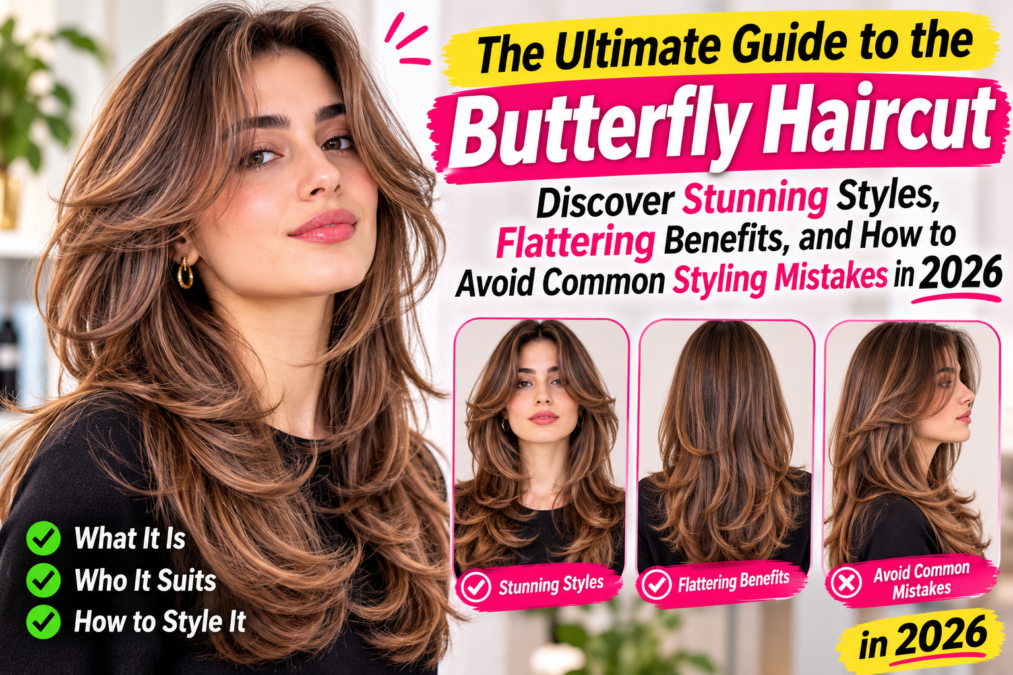
The butterfly haircut has dominated salon requests and social feeds for years now, and for good reason. It promises something rare in the world of trending styles: the illusion of a dramatic chop without sacrificing a single inch of length. The name comes from the shape those short, swept front layers make when they are blown away from the face, two curved wings framing the cheekbones while the back keeps its length . It is a clever piece of engineering disguised as an effortless trend.
But the gap between the viral version and the real-life version is wider than most people expect. The cut that looks bouncy and airy in a fifteen-second clip often demands a round brush and fifteen minutes every morning to look anything like the reference photo. Understanding what the butterfly haircut actually is, who it flatters, and what it demands in maintenance is the difference between a transformative salon visit and a frustrating grow-out period.
What the Butterfly Haircut Actually Is Beneath the Trend
A butterfly haircut is a layered cut with two distinct sections working in opposition. The shortest pieces sit somewhere between the cheekbones and the chin, sweeping away from the face to create that wing-like frame. Beneath them, longer layers cascade down past the shoulders, preserving the overall length . The contrast between short front and long back is what separates it from a standard layered trim with a few face-framing pieces.
The technique was coined by celebrity stylist Sunnie Brook roughly fifteen years ago, born from clients who wanted a visible change without losing their length . It draws from the soft, feathered layers of the 1970s shag and the 1990s “Rachel” cut, but the execution is more strategic than either. A true butterfly cut requires precision in where the short layers land, how they blend into the long ones, and how much weight is removed from the interior. Ask for “lots of layers” and you may walk out with a shag or thinned-out ends instead . The name matters less than the placement.
Who the Butterfly Haircut Flatters and Who Should Pause
The butterfly haircut works best on medium to thick hair that has enough density to support the layering without the ends going see-through . On fine or thin hair, too many short layers can expose sparse ends and make the bottom look stringy rather than full. That does not mean fine hair is excluded entirely, but the adaptation requires fewer, longer layers and a stronger baseline rather than the aggressive interior work that defines the cut on thicker hair .
Face shape plays a role too. The cut is particularly flattering on oval and square faces because the cheekbone-to-chin layers sculpt the jaw and open up the face . Angular cheekbones benefit from the swept front pieces, while rounder faces can use strategically placed layers at the jawline to create contour . Curly and wavy hair can absolutely wear the cut, but the layers must be placed based on where the curls sit dry, not where they fall when wet. Curl shrinkage can spring the front pieces far higher than intended, turning a cheekbone layer into a brow-level surprise .
The honest caveat is styling willingness. The butterfly haircut is not a wash-and-go cut if you want the signature bounce. Air-dried, it reads as a soft layered shape with much less definition. The wings need direction, whether from a round brush, a blow-dry brush, or rollers . If your morning routine is genuinely five minutes and no heat, a different layered approach will serve you better.
How to Ask for a Butterfly Haircut Without Leaving It to Interpretation
The single biggest mistake people make in the salon is asking for the cut by name and assuming the stylist shares the same mental image. The butterfly haircut is a technique, not a standardized template, and every stylist interprets the layers differently . The fix is simple and unglamorous: bring photos, plural. Three images that capture the essence of what you want give the stylist a far better brief than a label .
Be specific about where the shortest layer should land. Cheekbone-level layers create the strongest framing but may fall out of a ponytail or resist tucking behind the ears. Jaw or chin-level layers offer visible framing with a softer transition and more flexibility for tying hair back . Tell your stylist explicitly that the goal is to keep the length at the back while creating the illusion of a shorter cut, because some stylists will default to removing length when they hear “layers” .
If you have curly hair, ask for the cut to be done dry or at least shaped around your dry curl pattern. A stylist who cuts curly hair wet and stretched will misjudge where the front pieces will actually sit once shrinkage takes over . And if you are growing out bangs or a previous short cut, the butterfly is a genuinely useful transition style because the blended layers soften the grow-out line .
Styling the Butterfly Haircut Without Losing Your Mornings
The realistic styling routine for a butterfly haircut starts with damp hair and a volumizing product. A lightweight mousse gives hold and texture without weighing the hair down, and it is especially useful for thick or wavy textures. Fine hair does better with a lightweight cream instead, since mousse can make already limp strands look thinner . Rough-dry to about eighty percent, then switch to a round brush and focus your effort on the front face-framing pieces. The goal is to direct those short layers up and away from the face, curling the ends outward to reinforce the wing shape .
You do not need to style every section perfectly. The cut is forgiving enough that shaping just the front pieces and the crown can carry the whole look. Large Velcro rollers set in slightly damp front sections can reduce active blow-dry time if you have the patience to let them cool and set . For curly hair, a diffuser on low heat does the same job without disrupting the curl pattern: it lifts the roots and defines the layers without frizz .
The honest expectation is fifteen to twenty minutes on a full styling day, not five . On the days you skip it, the cut still looks like a layered shape, just flatter and less defined. That is not a failure. It is the baseline, and the styled version is the upgrade.
A Practical Reference for Butterfly Haircut Adaptations
The table below summarizes how the butterfly haircut shifts across hair types and lengths, based on the adaptations stylists actually use in the chair.
| Hair Type or Length | Layer Adaptation | What to Watch For |
|---|---|---|
| Fine, straight hair | Fewer, longer layers with a preserved baseline | Excess layering exposes sparse ends |
| Thick, straight hair | Gradual blending; remove weight only where density allows | Blunt transitions create a visible shelf |
| Wavy hair | Long layers that follow the natural wave pattern | Short layers can separate cohesive wave clumps |
| Curly or coily hair | Cut dry; place layers around the dry curl pattern | Shrinkage springs front pieces shorter than intended |
| Medium-length hair (collarbone) | Softer contrast; face frame closer to the length | Less dramatic wing effect than longer hair |
| Long hair (past shoulders) | Full contrast with cheekbone-to-chin front layers | Requires the most styling to maintain definition |
The row that matters most for most people is the final one. Long hair shows the butterfly haircut shape most clearly because there is enough length for the short front to contrast against. The longer the hair, the more dramatic the wing effect and the more styling the front pieces need to sit correctly.
Maintenance and the Grow-Out Reality
The butterfly haircut grows out more gracefully than many layered cuts because the layers are blended rather than sharply disconnected. The shape evolves rather than collapsing into a mullet, and regular trims every eight to twelve weeks keep the front pieces from getting heavy and losing their texture . If you let the short layers grow too long, the cut stops reading as a butterfly and starts reading as a standard long layer, which is fine but not the point.
The maintenance rhythm is straightforward. Trim the face-framing pieces every six to eight weeks if you want to keep the wing shape crisp. A full shaping appointment every three months keeps the overall balance intact . The back length needs far less attention, which is part of the cut’s appeal: you can preserve the length while refreshing the front.
One thing worth flagging is the styling product investment. The butterfly haircut responds best to a round brush, a blow-dry brush, or a diffuser, and it benefits from a heat protectant and a lightweight hold product. None of these are exotic, but the cut is not a zero-tool style. If you already own a blow-dry brush, you are set. If you do not, the cost of the cut includes the cost of the tool that makes it look like the photos.
Frequently Asked Questions About the Butterfly Haircut
What exactly is a butterfly haircut?
A butterfly haircut is a layered style with short, swept pieces around the face and long layers underneath, creating the illusion of a shorter cut without removing overall length . The name comes from the wing-like shape the front layers make when blown away from the face. It is a technique-driven cut, not a standardized template, which is why photos matter more than the label in the salon.
Does the butterfly haircut work on curly hair?
Yes, with the right approach. Curly hair benefits from the cut’s ability to remove bulk from the interior while preserving length and perimeter weight, which opens up the face and lets curls flow rather than clump into a triangular shape . The critical adjustment is cutting the layers based on the dry curl pattern, not the wet stretched length, because shrinkage will change where the front pieces land. A stylist experienced with curly hair is essential.
Is the butterfly haircut low maintenance?
It is low-maintenance in the sense that it grows out well and does not require frequent trims. It is not low-maintenance in the sense that it looks like the viral photos without styling. The signature bounce comes from a round brush or diffuser and a volumizing product, typically fifteen to twenty minutes on a styling day . Air-dried, it reads as a soft layered cut with less definition.
How do I ask my stylist for a butterfly haircut?
Bring three reference photos and describe where you want the shortest layer to sit: cheekbone, jaw, or collarbone. Say explicitly that you want to keep the length at the back and create the illusion of a shorter cut through layering . Avoid asking for “lots of layers” without qualification, because that can produce a shag or thinned ends instead of the specific butterfly shape.
Will a butterfly haircut make thin hair look thinner?
It can, if too many short layers are cut into low-density hair. The fix is fewer, longer layers and a stronger baseline at the ends rather than aggressive interior layering . Fine hair and low-density hair are not the same thing, and a good stylist will assess density before deciding how much weight to remove. If your ends are already sparse, a blunt cut creates more of an illusion of thickness than a heavily layered butterfly.
Conclusion
The butterfly haircut earns its staying power because it solves a real problem: how to feel like you changed your hair without losing the length you spent years growing. The short front layers frame the face and create movement, the long back preserves the familiar weight, and the grow-out is forgiving enough that a delayed trim does not turn into a disaster. It is a smart cut, not just a trending one.
The final insight worth carrying into the salon is about honesty. The butterfly haircut looks effortless because someone spent effort on it, whether that was the stylist placing the layers precisely or you spending fifteen minutes with a round brush on a Tuesday morning. If you want the version from the photos, budget for the styling. If you want a softer layered shape that works with your natural texture and a five-minute routine, ask for a modified version with longer front layers and a gentler contrast. The cut adapts, but only if you tell the truth about how you actually get ready in the morning.