
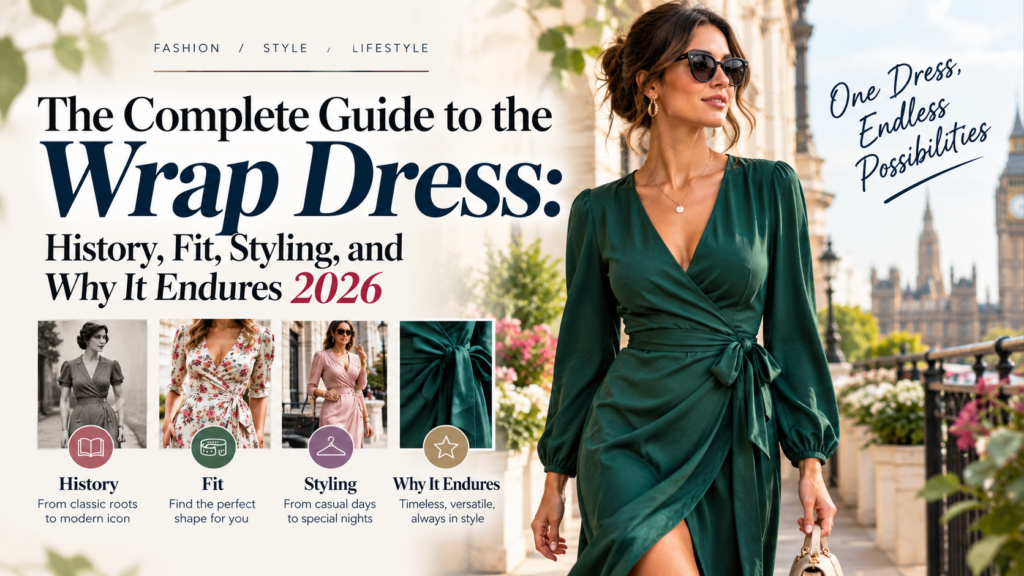

The wrap dress is more than a garment. It represents a design philosophy that puts the wearer in control of her own silhouette. Unlike fixed-waist dresses that demand the body conform to predetermined measurements, a wrap dress adapts to the person wearing it. This single characteristic explains why the style has survived decades of changing trends, body ideals, and workplace dress codes. It works because it was engineered to work with real bodies in motion, not against them.
Understanding the wrap dress requires looking beyond surface-level aesthetics. The construction details—the crossover front panels, the integrated tie waist, the V-neckline—all serve functional purposes that translate into practical benefits. A woman can adjust the fit throughout the day, accommodate fluctuations in weight or bloating, and transition the same garment from a professional meeting to an evening dinner without changing clothes. This versatility is not accidental. It is embedded in the architecture of the dress itself.
This guide explores every dimension of the wrap dress: its historical origins across multiple continents, the construction differences between true wraps and faux wraps, fabric choices for different seasons and occasions, styling strategies for various body types, and the cultural shifts that have shaped its reputation. Whether you are purchasing your first wrap dress or seeking to refine your existing collection, this comprehensive resource provides the expert-level knowledge needed to make informed decisions.
What Defines a Wrap Dress: Construction, Variations, and Key Terminology
The defining feature of a true wrap dress is a front closure formed by wrapping one panel of fabric across the other, secured by ties at the side or back . This construction creates a characteristic V-shaped neckline and an adjustable waistline that the wearer controls through the tension of the tie. The absence of a fixed seam at the waist means the dress conforms to the body’s actual dimensions rather than forcing the body into a predetermined size.
The term “wrap dress” is sometimes used loosely to describe garments that merely feature a crossover neckline. A faux wrap dress reproduces the visual appearance of a wrap but comes already fastened, slipping on over the head without any opening in front . This distinction matters because true wraps offer adjustability while faux wraps offer consistency and security. A surplice neckline, meanwhile, refers specifically to the diagonal crossover at the front, which can appear on garments that are not wraps at all . A wrap top applies the same construction principles as a wrap dress but ends at the waist or hip, without a skirt attached .
The functional advantage of true wrap construction lies in its adaptability. Because the waist tie passes through a side opening and wraps around the back, the wearer determines exactly where the waistline sits and how snugly it fits . This is particularly valuable for women whose measurements fluctuate due to menstrual cycles, pregnancy, or simply the natural variation that occurs throughout a month. A faux wrap, by contrast, fits at a fixed measurement and will not adjust if the wearer’s body changes between purchase and wearing . The trade-off is worth understanding: true wraps offer flexibility but require attention to ensure the neckline and skirt opening remain appropriately positioned during movement.
The Historical Evolution: From Ancient Asian Garments to Modern Icon
The wrap dress did not emerge fully formed in the 1970s. Its origins trace back thousands of years to wrap-style garments in East and Central Asia. The wrap-over neckline that closes to the right side originated in China during the Shang dynasty, between 1600 and 1046 B.C., before spreading to Korea and Japan . The traditional clothing of the Han Chinese, known as Hanfu, included wrap-style robes such as the shenyi, zhiduo, daopao, and jiaoling pao . Japanese robes were required by the Yoro Code of 718 AD to close from left to right in the Chinese manner, and the kimono itself originated from the Chinese jiaoling pao .
In Europe and America, wrap-style closures in clothing gained prominence through the influence of Orientalism in the nineteenth century. Chinoiserie and Japonisme in the 1910s and 1920s shaped fashion design, with the use of wrap tops and obi-like sashes drawn from the Japanese kimono . During the Great Depression, house dresses called “Hooverettes” employed wrap designs. Elsa Schiaparelli designed wrap dresses in the 1930s, and Claire McCardell’s 1940s “popover” design, made from denim, became a foundational influence on later wrap-around styles . Charles James also contributed designs to the evolution of the wrap dress .
The modern wrap dress as most people recognize it emerged in 1974, when Diane von Furstenberg introduced her silk jersey version. She had arrived in New York in 1972 with a suitcase of jersey dresses made at her friend Angelo Ferretti’s Italian factory . By 1976, she had sold over a million wrap dresses and was featured on the cover of Newsweek . Von Furstenberg’s design was softer, stretchier, and more sensual than earlier versions, with snug arms, a tie-cinched waist, and hems that typically fell below the knee . The dresses were covered in prints: orange ikat, red leopard, brown geometric shapes . They were embraced by working women as both office-appropriate and flattering.
The Psychology of Fit: Why the Wrap Dress Feels Different
The wrap dress succeeds on a psychological level that fixed-waist garments cannot replicate. When a woman ties a wrap dress, she makes a series of micro-decisions about how the garment will fit: where the waistline sits, how much of the décolletage is revealed, how snugly the fabric hugs the torso. This sense of control transforms the experience of getting dressed from one of negotiation with predetermined measurements to one of authorship. The garment becomes a collaborator rather than a constraint.
This psychological dimension explains why the wrap dress has historically appealed to women in professional settings. The design communicates both competence and approachability, structure and softness. The V-neckline draws the eye upward to the face while the cinched waist creates a visual hourglass that reads as polished and intentional . Unlike a blazer and pencil skirt combination that can feel armor-like, the wrap dress presents a version of professionalism that is confident without being combative. It telegraphs that the wearer has made an effort without suggesting she has spent excessive time or anxiety on her appearance.
The practical psychology of the adjustable tie extends beyond mere vanity. Bodies change. Weight fluctuates. Bloating happens. A fixed-waist dress that fit perfectly in the morning may feel uncomfortable after a large lunch or during the later days of a menstrual cycle. A wrap dress accommodates these natural variations without requiring a change of clothes or the discomfort of a too-tight waistband . This adaptability is not a minor convenience; it is a fundamental improvement in how clothing interacts with the reality of having a human body. The wrap dress acknowledges that bodies are not static objects to be fitted once and forgotten, but living, changing forms that deserve comfort and dignity throughout the day.
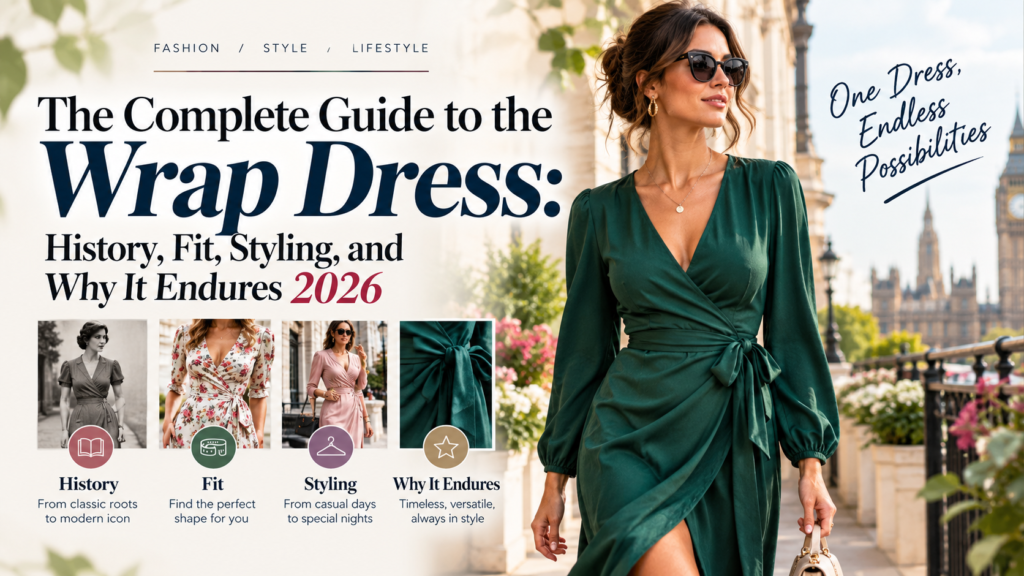
Choosing the Right Wrap Dress for Your Body Type
The claim that wrap dresses flatter every body type has become a fashion cliché, and like most clichés, it contains partial truth wrapped in oversimplification. The wrap silhouette works well for many body types because the diagonal lines of the crossover and the adjustable waist tie create an hourglass effect regardless of the wearer’s natural proportions . For hourglass figures, the wrap dress follows the natural waist and highlights balanced proportions. For pear shapes, it skims over the hips while defining the waist. For athletic or straight figures, the diagonal crossover introduces curves that might otherwise be absent .
However, the “flattering for everyone” narrative obscures important nuances. Women with apple shapes, characterized by a fuller midsection and slimmer legs, may find that the wrap tie emphasizes the stomach if the crossover starts too close to the midsection . The key variable is the placement of the waist tie and the depth of the V-neckline. A higher crossover point and a tie positioned slightly above the natural waist can create a more balanced silhouette for apple shapes . Length also matters: a wrap dress that ends just below the knee tends to feel more balanced, while extremely short versions may shift visual emphasis toward the hips .
Fabric Selection: Matching Material to Season and Occasion
The fabric of a wrap dress determines not only how it looks but how it behaves on the body. Jersey, the material Diane von Furstenberg used for her original designs, remains a popular choice because of its stretch and drape. It conforms to the body without clinging, moves fluidly, and resists wrinkling during wear. Cotton and cotton blends offer breathability and a more casual aesthetic, suitable for daytime wear, weekend outings, and warm-weather occasions. Linen provides natural texture and exceptional breathability for summer, though it wrinkles easily and requires a relaxed attitude toward creasing .
For more formal or evening-oriented wrap dresses, satin, silk, and crepe offer sheen, fluidity, and a sense of luxury. Satin wrap dresses in jewel tones photograph beautifully and read as dressed-up without requiring elaborate construction . Velvet wrap dresses suit winter events and add depth and richness to the silhouette. Crepe, a slightly textured fabric with a matte finish, bridges the gap between casual and formal, making it appropriate for office wear and semi-formal occasions alike . Viscose, rayon, and drapey silk give the dress more flow and are ideal for elegant, fluid silhouettes .
The seasonality of fabric choices cannot be overstated. A tropical wool wrap dress can serve as a year-round garment in temperate climates, offering warmth in winter and breathability in air-conditioned interiors . A lightweight cotton wrap works beautifully for summer but may feel insufficient in cooler months unless layered with a jacket or cardigan. The same wrap dress in a heavier fabric like flannel or wool blends transitions into autumn and winter. Understanding how fabric weight, drape, and texture interact with the wrap construction allows the wearer to select garments that perform well in specific contexts rather than merely looking attractive in a photograph.
Styling Strategies: From Office to Evening and Everything Between
The wrap dress excels at day-to-evening transitions because its formality level is largely determined by accessories and footwear rather than the garment itself . For the office, a midi-length wrap dress in a solid color or subtle print paired with court heels and a structured blazer reads as polished and professional . Keep jewelry minimal—a fine necklace and small studs—because the neckline already provides visual interest. A structured tote bag completes the look. For warmer or more relaxed workplaces, swap the blazer for a lightweight cardigan and the heels for block heels or smart flats.
For casual occasions, cotton or jersey wrap dresses in floral or geometric prints pair effortlessly with flat sandals, white sneakers, or ankle boots . A denim jacket draped over the shoulders adds a layer of relaxed style without competing with the dress. Crossbody bags and oversized sunglasses keep the look weekend-ready. The “rule of one statement” applies here: if the print is busy, keep accessories quiet; if the dress is a solid color, use that as an opportunity for a bolder shoe, bag, or pair of earrings .
The Cultural Conversation: Why the Wrap Dress Provokes Strong Opinions
The wrap dress has never been a neutral garment. Its association with Diane von Furstenberg, working women, and “girlboss” culture has made it a lightning rod for broader conversations about feminism, professionalism, and the politics of dressing. The New York Times noted in 2024 that the wrap dress now occupies a curious category, like skinny jeans or ankle booties: once a closet staple, now a staple of closet clean-outs . Some of this shift reflects the post-pandemic casualization of workplaces. Some reflects a generational rejection of the specific aesthetic and cultural associations that the wrap dress carried in the 2010s.
Danielle Vermeer, chief executive of a thrifting app, told the Times that in the 2010s, she worked in offices that were “very masculine and very formal,” and she would wear wrap dresses or pencil skirts and button-downs as a uniform . Now, she observes, the attire for those sorts of offices has shifted for younger workers . The wrap dress’s association with a particular era of corporate feminism has made it feel dated to some, even as its practical virtues remain unchanged. The dress did not become less functional; the cultural context around it shifted.
Yet the wrap dress persists in thrift stores, vintage shops, and the collections of women who prioritize ease and adjustability over trend alignment . It persists because the problem it solves—how to look polished without sacrificing comfort or adaptability—has not been solved by any other silhouette. The wrap dress may no longer be the default professional uniform it once was, but for women who discover its virtues independently of its cultural baggage, it remains a remarkably effective garment. The dress’s future may lie less in its identity as a symbol and more in its identity as a tool: a well-designed solution to the everyday challenge of getting dressed.
Care and Maintenance: Preserving Your Wrap Dress
The longevity of a wrap dress depends heavily on proper care, which varies significantly by fabric. Silk and cupro require dry cleaning or gentle hand washing with cold water, avoiding wringing or twisting . Lay flat or hang to dry in shade, and steam or iron on low heat from the inside to preserve the fabric’s sheen . Crepe cady and similar structured fabrics typically require dry cleaning and should be stored in a cotton dust bag in a cool, dry place . Iron at a maximum soleplate temperature of 110°C without steam, and avoid tumble drying, bleaching, or machine washing .
Jersey and cotton wraps are generally more forgiving. Many are machine washable, though cold water and gentle cycles extend the garment’s life . Wash with similar colors and avoid overloading the machine to prevent stretching or distortion. For linen wrap dresses, accept that wrinkling is part of the fabric’s character; ironing while slightly damp helps achieve a smoother finish. Store wrap dresses on padded hangers to maintain the shape of the shoulders and bodice. If the dress has a tie that creases easily, roll it loosely rather than folding it sharply.
Frequently Asked Questions
What is the difference between a wrap dress and a faux wrap dress?
A true wrap dress features a genuine front opening where one panel crosses over the other and ties at the waist, allowing the wearer to adjust the fit and coverage. A faux wrap dress looks similar but comes already fastened with no opening, slipping on over the head like a standard dress . The faux wrap offers more security and requires no adjustment during wear, while the true wrap offers more flexibility in fit and more control over the neckline depth . Both styles create the signature V-neckline and defined waist, but the true wrap’s adjustability makes it more accommodating for women whose measurements fluctuate or who struggle to find fixed-waist garments that fit comfortably.
How do you tie a wrap dress so it stays in place?
Cross the two front panels over each other, ensuring the inner panel is secured against the body. Pass the attached tie through the opening at the side seam, bring it around the back, and knot at the waist . A center knot reads as more formal; a side knot feels more relaxed . To prevent the dress from shifting during wear, test whether the inner layer stays closed when you bend forward, and consider adding a small internal snap or a piece of fashion tape for additional security . The tie should be snug enough to define the waist but not so tight that it restricts movement or creates uncomfortable pressure when sitting.
What body types look best in a wrap dress?
The wrap dress works well for hourglass and pear shapes because the waist tie highlights the narrowest part of the torso while the skirt skims over the hips . For athletic or straight figures, the diagonal crossover introduces curves and creates an hourglass illusion . Women with apple shapes, characterized by a fuller midsection, may need to experiment with crossover placement and tie position to find the most flattering configuration . The “flattering for everyone” narrative oversimplifies the reality that garment fit depends on individual proportions, but the wrap silhouette’s adjustability makes it more adaptable than most fixed-waist designs . Trying multiple lengths, fabrics, and crossover depths is the most reliable way to identify what works for a specific body.
Can you wear a wrap dress to a wedding?
Yes, a wrap dress is one of the most reliable choices for wedding guests because its formality level adjusts easily with fabric and accessories . A silk or satin wrap in a jewel tone suits formal evening weddings; a printed cotton or linen wrap works for garden or beach ceremonies . The one firm rule is to avoid white, ivory, or cream, which are reserved for the bride . For houses of worship that require more coverage, a light shawl or tailored jacket can address the V-neckline without changing the dress’s silhouette . The wrap dress’s comfort during long ceremonies, meals, and dancing makes it a practical choice for events that last several hours.
What shoes and accessories work best with a wrap dress?
The wrap dress’s built-in visual interest—the V-neckline and cinched waist—means accessories should complement rather than compete. For daytime, flat sandals, white sneakers, or ankle boots work well with cotton and jersey wraps . For professional settings, court heels or block heels in neutral tones pair with midi-length wraps in solid colors or subtle prints . Evening looks call for strappy heels and a small clutch with satin or velvet wraps . Jewelry should be minimal: a fine necklace, small studs, or a single statement earring. A wide belt over the tie can sharpen the waist for a more structured look, though the wrap already provides definition .
Conclusion
The wrap dress endures because it solves a problem that other silhouettes ignore: the reality that bodies change, comfort matters, and clothing should adapt to the person rather than the reverse. From its origins in ancient Asian wrap-style garments to Diane von Furstenberg’s revolutionary 1974 design, the wrap dress has evolved through centuries of cultural exchange and design innovation . Its construction—the crossover panels, the adjustable tie, the V-neckline—embodies a philosophy of wearer control that remains rare in fashion.
Whether you choose a true wrap for maximum adjustability or a faux wrap for consistent security, a jersey version for everyday ease or a satin one for evening elegance, the wrap dress offers a combination of polish and practicality that few garments can match. The cultural conversation around the wrap dress may shift with each generation, but the garment’s fundamental utility does not a trend but as a tool.