

When temperatures plummet, the instinct to reach for trousers and thick jumpers kicks in. But there is something quietly rebellious and deeply practical about choosing a dress in the depths of winter. The right winter dresses solve a genuine problem: how to look polished and feel warm without spending twenty minutes wrestling with layers that never quite sit right. They are the one-and-done answer to cold-weather dressing, offering elegance with a fraction of the morning decision fatigue.
This guide is not a generic list of what is trending. It digs into the mechanics of why certain fabrics work, how layering actually functions, and which silhouettes flatter different body types without sacrificing warmth. From the science of merino wool to the psychology of choosing a dress when it is minus five outside, everything here is grounded in practical experience and industry knowledge.
The modern winter dress has evolved far beyond the chunky sweater dress your grandmother wore. Designers now engineer fabrics that regulate temperature, cuts that accommodate thermal layers underneath, and silhouettes that transition from office to evening with nothing more than a change of boots. Understanding this evolution changes how you shop and how you dress.
Why Winter Dresses Deserve a Place in Every Wardrobe
The case for winter dresses rests on a simple truth: they are efficient. A single garment does the work of two or three separate pieces, which means fewer decisions and fewer opportunities for something to look off. When you are facing a dark, cold morning, that efficiency is not laziness. It is strategy. The best cold-weather dresses are designed to be worn with layers, so they function as a base that you build upon rather than a complete outfit you have to reinvent.
There is also a psychological dimension that fashion writers rarely discuss. Pants in winter can feel restrictive, especially when you are layering tights or thermal leggings underneath. A dress, by contrast, offers freedom of movement. It allows you to sit comfortably, walk without constraint, and avoid the bunching and twisting that plagues heavy trousers. Many women who wear dresses year-round cite this physical comfort as their primary reason, not aesthetics.
And let us not ignore the aesthetic advantage. A well-chosen winter dress in a rich fabric like wool crepe or cashmere blend reads as intentional and elevated. It signals that you made an effort, even if the effort was simply pulling one garment over your head. That is the quiet power of the dress as a wardrobe tool.
The Fabric Science Behind Warmth and Comfort
Understanding fabric is the single most important skill for dressing well in winter. The material determines warmth, breathability, drape, and how the garment feels against your skin after an hour of wear. Merino wool, for instance, is not just warm. Its fibers have a natural crimp that traps air in tiny pockets, creating insulation without bulk. It can absorb up to thirty percent of its own weight in moisture while still feeling dry, which means you stay warm even if you have been walking briskly or navigating a humid commute .
Cashmere occupies a different space. It is softer than merino, often measuring just fourteen to sixteen microns in fiber diameter, which gives it that signature buttery feel . It provides exceptional warmth for its weight because the fine fibers trap heat efficiently. The trade-off is durability. Cashmere pills more easily than merino and requires gentler care. For a winter dress that will be worn frequently, a cashmere blend often outperforms pure cashmere because the added fibers provide structure and resilience.
Polyester and nylon have a reputation problem, but in winter clothing they serve legitimate functions. Polyester is hydrophobic, meaning it pulls moisture away from your skin and dries quickly, which makes it useful in base layers. Nylon, when woven into a tight fabric and treated with a durable water repellent finish, becomes an effective barrier against snow and sleet . The key is understanding where each fabric belongs in your layering system.
| Fabric | Primary Strength | Best Use in Winter Dress | Care Consideration |
|—|—|—|—|—|
| Merino Wool | Temperature regulation, moisture wicking | Base layer or mid-layer dress | Gentle wash, reshape and dry flat |
| Cashmere | Softness, warmth-to-weight ratio | Luxurious standalone or layered dress | Hand wash or dry clean, store folded |
| Wool Blends | Durability, structure, warmth | Structured midi or maxi dresses | Dry clean recommended for tailored fits |
| Ponte Knit | Stretch, shape retention | Fitted sheath or wrap dresses | Machine washable, low maintenance |
| Velvet | Insulation, festive appearance | Evening and occasion dresses | Steam to refresh, avoid heavy pressing |
| Silk | Insulation as a base layer | Under-dress base or lining | Hand wash cold, air dry away from sun |
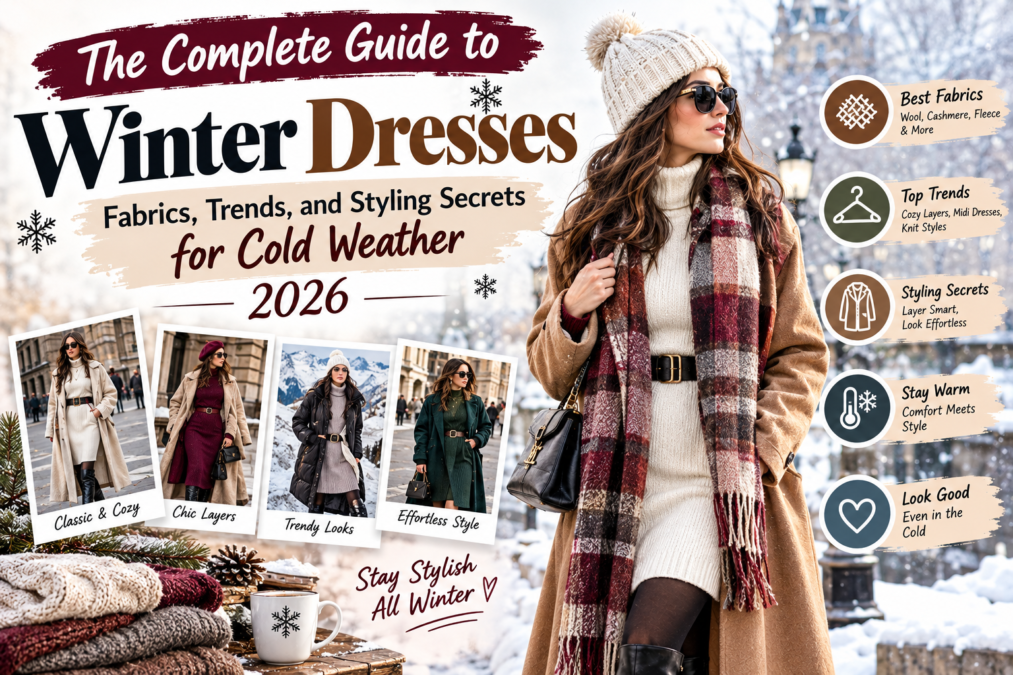
Trending Silhouettes and Styles for the Season
The sweater dress remains the archetypal winter garment, but the versions gaining traction now are elevated rather than basic. Think cashmere blends, high necklines, and long sleeves that hit at the wrist rather than the palm . The oversized cable-knit dress, styled with knee-high boots and a matching sweater tied at the neck, has become a street style staple because it delivers both comfort and a deliberate aesthetic . What separates a modern sweater dress from a dated one is restraint in detailing: no bell sleeves, no flared hems, just clean lines in luxurious materials.
Blouson-waist dresses represent a newer silhouette that is gaining momentum. The design features a relaxed, folded-over waist that creates the visual effect of a matching skirt and top, a styling trick that adds interest without adding bulk . For women who find traditional waistlines uncomfortable or restrictive, the blouson offers an elegant alternative. It works particularly well in fluid fabrics like silk blends or fine wool, where the drape softens the volume rather than exaggerating it.
Turtleneck dresses occupy a practical middle ground. They frame the face, provide neck coverage that eliminates the need for a scarf in milder cold, and skim the body in a way that allows layering underneath. A sleek black turtleneck dress in a wool blend, paired with a structured coat and ankle boots, is one of those outfits that looks expensive without requiring expensive pieces . The silhouette does the work.
Layering Techniques That Actually Keep You Warm
The biggest mistake people make with winter dresses is treating them as standalone garments. They are not. A dress is the foundation of a layering system, and understanding how the layers interact is what separates a warm, comfortable day from a miserable one. The base layer should be thin and moisture-wicking. A silk camisole or a fine merino long-sleeve top adds warmth without adding visible bulk. This is the layer that manages sweat, which is critical because moisture against the skin is what makes you feel cold even when the air temperature is manageable .
The dress itself becomes the mid-layer in this system. It should be substantial enough to provide insulation but not so thick that it prevents a coat from fitting properly over it. A common problem is choosing a heavy knit dress and then discovering that no winter coat comfortably accommodates the volume. The solution is to prioritize fabrics with high warmth-to-weight ratios: merino, cashmere blends, fine wool, and quality ponte knits.
The outer layer is where you can afford to go bulky. A long wool coat, a shearling-lined jacket, or a faux fur piece adds the final barrier against wind and cold. The key is length. A coat that extends past the hem of a midi dress creates a continuous line of warmth and looks intentional. A short jacket over a long dress breaks the silhouette and leaves the lower half of your body exposed to the elements. Proportion matters as much as fabric .
Footwear and Tights: The Foundation of Warmth
Tights are not an afterthought. They are the difference between a winter dress that works and one that leaves you shivering at a bus stop. Opaque tights in wool blends or fleece-lined versions provide genuine insulation. Ribbed and cable-knit textures add visual interest while serving the same thermal function . For the coldest days, layering a pair of sheer tights under opaque ones creates an extra barrier without adding visible thickness.
Boots are the natural partner to winter dresses, but the height and style matter. Knee-high boots create a continuous line from hem to foot, which is both slimming and warm. Ankle boots work with midi dresses only if there is no awkward gap of bare leg between the hem and the boot. If a gap exists, tights bridge it. Over-the-knee boots add drama and extra warmth, particularly with shorter sweater dresses .
The heel height is a personal decision, but there is a practical consideration. Flat boots are easier to walk in on icy surfaces, while heeled boots elevate the silhouette of a long dress. A block heel or a platform sole offers a compromise: height without the instability of a stiletto on slick pavement. For everyday wear, a low block heel or a sleek flat boot is the most versatile choice.
Colour, Pattern, and Texture for the Colder Months
Winter colour palettes tend to lean dark, but that does not mean boring. A monochromatic black outfit, styled with varying textures like a leather dress under a wool coat with velvet accessories, creates depth without introducing colour . The interplay of matte and shine, smooth and textured, is what makes an all-black look feel deliberate rather than lazy.
For those who want colour, the season offers rich options. Pistachio green has emerged as a surprisingly versatile shade that works across day and evening, pairing well with neutrals and transitioning into spring . Deep burgundy, forest green, and camel are perennial winter favourites because they flatter most skin tones and feel inherently warm. Plaid and tartan patterns add visual warmth and heritage appeal, particularly in wool and wool-blend fabrics .
Texture is the unsung hero of winter dressing. Velvet adds festive depth and catches light in a way that flat fabrics cannot. Lace overlays on dark satin create a romantic, moody effect. Fringe and beading add movement and interest to evening dresses . Even a simple wool dress can feel elevated if the weave has a visible texture, whether that is a herringbone, a rib, or a subtle bouclé.
Styling Winter Dresses for Different Occasions
A winter dress is only as versatile as the styling around it. For the workplace, a structured midi dress in a solid neutral, paired with a blazer and closed-toe boots, reads as professional and polished. Adding a belt defines the waist and breaks up a large expanse of fabric. A structured tote and minimal jewellery complete the look without competing with the dress.
For evening events, the same dress can be transformed with a change of accessories. Swap the blazer for a faux fur jacket or a tailored wool coat. Replace everyday boots with heeled ankle boots or pumps. Add a clutch and statement earrings. The dress stays the same, but the styling shifts the context entirely . This is the efficiency argument in practice: one garment, multiple occasions.
Casual weekends call for a different approach. An oversized sweater dress with leggings or thermal tights, paired with chunky boots and a crossbody bag, is comfortable and practical. A scarf wrapped around the neck adds colour and warmth. This is the version of winter dressing that prioritizes ease without abandoning style entirely.
Problem Solving: Common Winter Dress Challenges
The most frequent complaint about winter dresses is that they are either too cold or too bulky. The solution lies in understanding the difference between insulation and volume. A thin merino base layer under a lightweight wool dress provides more warmth than a thick acrylic sweater dress worn alone. The layering system matters more than the thickness of any single piece .
Another common problem is static cling, particularly with synthetic fabrics and tights. Anti-static spray is the straightforward fix, but a light application of body lotion on your legs before putting on tights works in a pinch. Dryer sheets rubbed lightly over the inside of the dress can also reduce static. The root cause is usually low humidity, so a humidifier in the bedroom during winter months helps prevent the issue before it starts.
Finding a winter dress that fits properly over layers is another challenge. The solution is to size up when choosing a dress intended for layering, or to look for styles with stretch in the fabric. Ponte knits and jersey blends accommodate an extra layer without pulling or gaping. Structured fabrics like wool crepe do not, so if you plan to wear a turtleneck underneath, either choose a relaxed fit or look for a style with a higher stretch content.
Caring for Winter Dresses So They Last
Winter fabrics require more care than summer cotton. Wool and cashmere should be washed infrequently, as over-washing breaks down the fibers and causes pilling. When washing is necessary, use cold water and a gentle detergent designed for wool. Never wring or twist the garment. Instead, press the water out gently and lay it flat to dry on a towel . Hanging a wet wool dress will stretch it out of shape.
Velvet and silk require different handling. Velvet should be steamed rather than ironed to restore its nap and remove wrinkles. Silk should be hand-washed in cold water or dry-cleaned, depending on the construction of the dress. Always check the care label first, because blends behave differently from pure fabrics .
Storage matters too. Wool and cashmere dresses should be folded rather than hung, because hanging can distort the shoulders over time. Use padded hangers for structured dresses and fold knits and softer fabrics. Cedar blocks or lavender sachets deter moths without the chemical smell of mothballs. Store winter dresses clean, because invisible stains from sweat or food can attract insects and set over time .
Frequently Asked Questions
What are the warmest fabrics for winter dresses?
Merino wool and cashmere are the warmest natural options for winter dresses, offering excellent insulation without excessive bulk. Merino wool regulates temperature and wicks moisture, while cashmere provides exceptional softness and warmth relative to its weight . Wool blends with synthetic fibers can also be effective, particularly when the wool content is high. For the coldest conditions, layering a thin merino or silk base under the dress adds significant warmth without adding visible thickness.
How can I wear a dress in winter without freezing?
The key is a three-layer system: a moisture-wicking base layer against your skin, the dress itself as a mid-layer, and a substantial coat as the outer layer. Thermal tights or fleece-lined tights protect your legs, and knee-high boots eliminate exposed skin on the lower leg . Accessories like scarves, gloves, and hats retain heat at the extremities. Avoid cotton as a base layer because it absorbs moisture and becomes cold against the skin .
Which winter dress styles suit different body types?
A-line and wrap dresses flatter most body types because they define the waist without clinging to the hips. Hourglass figures benefit from wrap and belted styles that highlight the waist. Pear shapes look best in A-line silhouettes that skim the hips. Apple shapes suit empire waists and V-necklines that draw the eye upward. Rectangle or athletic builds can create curves with belted sweater dresses or blouson styles . The goal is balance, not concealment.
Are sweater dresses still in style?
Sweater dresses remain a core winter staple, but the current versions are elevated rather than basic. Look for cashmere or wool-blend fabrics, high necklines, and long sleeves that hit at the wrist. Avoid bell sleeves and flared hems, which can look dated. The most modern styling pairs an oversized cable-knit dress with knee-high boots and minimal accessories . The silhouette is timeless, but the fabric quality and detailing determine whether it feels current.
How should I care for wool and cashmere winter dresses?
Wash wool and cashmere sparingly, using cold water and a gentle wool-specific detergent. Never wring or twist the garment. Press water out gently and dry flat on a towel to maintain shape. Store folded rather than hung to prevent stretching. Use cedar or lavender to deter moths. For structured wool dresses, dry cleaning is often the safest option, particularly for tailored pieces with linings .
Conclusion
Choosing winter dresses that genuinely work is not about chasing trends. It is about understanding the intersection of fabric technology, layering principles, and personal fit. A merino wool midi in a neutral tone will serve you better than a trendy acrylic piece that pills after three wears. A well-fitted base layer will keep you warmer than any single thick garment. And a silhouette that flatters your body will make you want to wear the dress, which is ultimately what makes any purchase worthwhile.
The final insight is this: winter dressing does not have to be a compromise between warmth and style. The fabrics and designs available now make it possible to look elegant and feel comfortable at the same time. The dress that works for you is the one that fits your life, your climate, and your sense of self. When you find it, you will wonder why you ever thought winter meant abandoning dresses altogether.