A silver chain for men is one of the few pieces of jewelry that can move from a plain tee to a button-down without looking out of place. It does not need a pendant to feel finished, and it does not demand a special occasion. The problem is that the market is flooded with options that look identical in photos and behave very differently after a month of wear.
The difference between a chain that becomes a daily staple and one that ends up in a drawer comes down to three things: the metal actually used, the width relative to your build and wardrobe, and the weave that determines how the chain sits against your chest. Understanding those variables before you buy is the difference between a considered purchase and a guessing game.
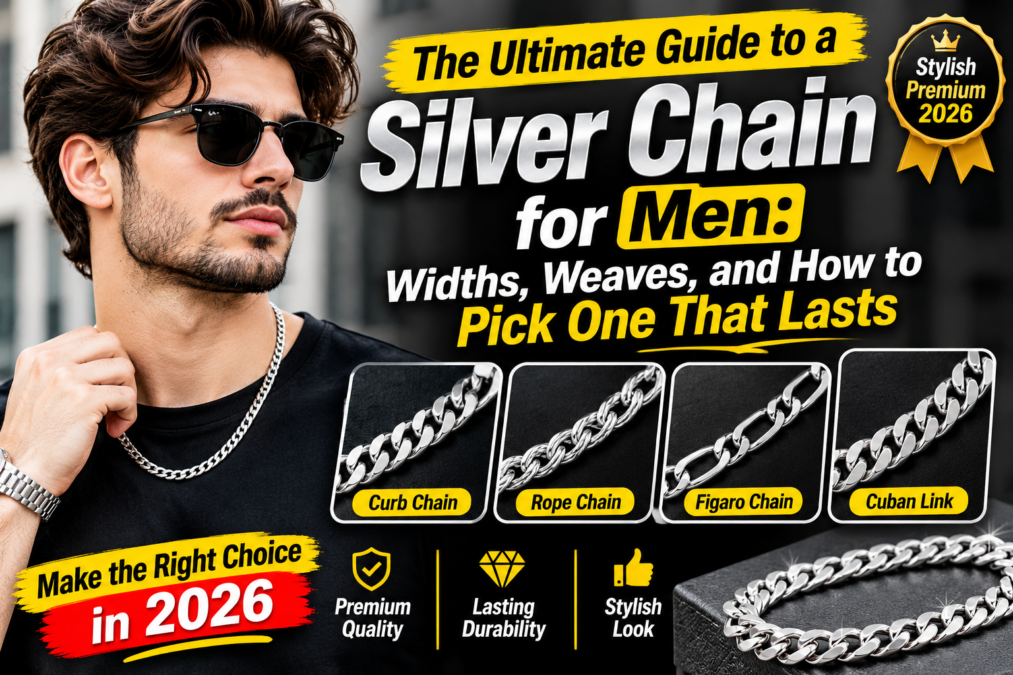
What Sterling Silver Actually Means and Why It Matters for a Silver Chain for Men
The first thing to check on any listing is whether the chain is solid 925 sterling silver or a silver-tone impostor. Sterling silver contains 92.5 percent pure silver alloyed with copper or zinc, a combination that gives the metal enough hardness to resist scratches and deformation during daily wear . Pure silver is too soft for jewelry that will be worn regularly, which is why the 925 standard exists.
The budget tier of the market is dominated by stainless steel and silver-plated base metals. These pieces can be fine for testing whether you enjoy wearing a chain at all, but they will not age like sterling . A plated chain will eventually reveal the base metal underneath, usually at the clasp and the high-friction points where links rub against each other. Look for clear material descriptions that name the alloy rather than vague “silver” language, and check for hallmarks or stamps such as “925” on the clasp or tag . A seller who cannot or will not specify the metal is telling you something useful.
Rhodium plating is worth understanding as a separate feature. Some sterling chains are finished with rhodium, an inert and hypoallergenic metal that protects against tarnish and keeps the chain bright without requiring frequent polishing . This is not the same as silver plating; the sterling core remains, but the surface is treated to resist the oxidation that turns silver dark over time.
Choosing the Right Width for Your Build and Wardrobe
Width is the variable that most directly determines whether a chain reads as subtle or statement. The common mistake is buying the width that looks impressive in a product photo without considering how it will interact with the clothes you actually wear. A 10mm Cuban link that photographs beautifully on a bare chest can look excessive under a collared shirt, while a 2mm box chain that seems too delicate online may be exactly right at the collar of a polo.
For a first chain intended to work across most of your wardrobe, the 4–5mm range is the practical starting point for a Cuban link. At roughly 4mm, the chain shows enough definition to add texture against a plain white tee without becoming the first thing people notice. Moving toward 5mm gives the links more presence, which suits heavier fabrics and looser fits . If your usual uniform leans toward polos and button-downs rather than tees and jackets, a slimmer 2–3mm box chain sits more naturally at the collar and reads as a small detail rather than an accessory .
Build matters as much as wardrobe. A thinner neck and lighter frame generally suit 8–10mm Cuban links at a shorter length, while medium and athletic builds can carry 10–13mm comfortably, and larger frames can move into the 13–20mm range without the chain looking disproportionate . The goal is proportion, not maximum visibility.
Understanding Chain Weaves and What Each One Does
The weave determines how the chain reflects light, how it drapes, and how durable it is under daily wear. The Cuban link is the most recognizable option, defined by flattened or rectangular links twisted at an angle so they lie in the same direction and create a flat, reflective surface . That construction is what gives the Cuban its visual density and its ability to catch light evenly across the chest. It is a substantial weave that works best in wider gauges.
The box chain uses small, square links that form a neat, regular pattern. At 2–3mm, it offers a clean line of silver with minimal texture, which is why it pairs well with collared shirts and a more restrained overall look . The trade-off is that a slim box chain can look too fine if the rest of your style leans toward oversized clothing or substantial watches, so consider the whole outfit rather than the chain in isolation.
The rope chain occupies the middle ground between texture and restraint. Its twisted construction creates a spiraling pattern that catches light from multiple angles, giving it more shine than a box chain without the visual weight of a Cuban link. A 3–4mm rope chain is a reasonable choice if you want some surface interest against simple clothing but do not want the chain to dominate . For durability under active daily wear, weaves with more structural interlocking, such as the Bismarck or curb variations, tend to hold up better than delicate constructions .
A Practical Reference for Choosing Your First Silver Chain
The table below summarizes the starting points that correspond to common builds and wardrobe habits, drawn from guidance on width, length, and weave selection.
The first thing to check on any listing is whether the chain is solid 925 sterling silver or a silver-tone impostor. Sterling silver contains 92.5 percent pure silver alloyed with copper or zinc, a combination that gives the metal enough hardness to resist scratches and deformation during daily wear . Pure silver is too soft for jewelry that will be worn regularly, which is why the 925 standard exists.
The budget tier of the market is dominated by stainless steel and silver-plated base metals. These pieces can be fine for testing whether you enjoy wearing a chain at all, but they will not age like sterling . A plated chain will eventually reveal the base metal underneath, usually at the clasp and the high-friction points where links rub against each other. Look for clear material descriptions that name the alloy rather than vague “silver” language, and check for hallmarks or stamps such as “925” on the clasp or tag . A seller who cannot or will not specify the metal is telling you something useful.
Rhodium plating is worth understanding as a separate feature. Some sterling chains are finished with rhodium, an inert and hypoallergenic metal that protects against tarnish and keeps the chain bright without requiring frequent polishing . This is not the same as silver plating; the sterling core remains, but the surface is treated to resist the oxidation that turns silver dark over time.
| Wardrobe or Build Profile | Suggested Width | Suggested Weave | Why It Works |
|---|---|---|---|
| Mostly tees, jeans, and jackets | 4–5 mm | Cuban link | Enough definition to read against cotton without a pendant |
| Polos and button-downs, minimal style | 2–3 mm | Box chain | Sits neatly at the collar as a small detail |
| Want texture without bulk | 3–4 mm | Rope chain | Surface shine and pattern without heavy visual weight |
| Thin neck, light build | 8–10 mm | Cuban link | Proportional presence at a shorter length |
| Medium or athletic build | 10–13 mm | Cuban link | Balanced weight and width for the frame |
| Large or robust build | 13–20 mm | Cuban link or heavy curb | Carries visual weight without looking undersized |
The pattern that emerges from this table is that width should follow build, and weave should follow wardrobe. A 4mm Cuban and a 4mm box chain occupy very different visual territory despite sharing a number, because the link geometry changes how much surface area catches light and how much visual density the chain presents.
The first thing to check on any listing is whether the chain is solid 925 sterling silver or a silver-tone impostor. Sterling silver contains 92.5 percent pure silver alloyed with copper or zinc, a combination that gives the metal enough hardness to resist scratches and deformation during daily wear . Pure silver is too soft for jewelry that will be worn regularly, which is why the 925 standard exists.
The budget tier of the market is dominated by stainless steel and silver-plated base metals. These pieces can be fine for testing whether you enjoy wearing a chain at all, but they will not age like sterling . A plated chain will eventually reveal the base metal underneath, usually at the clasp and the high-friction points where links rub against each other. Look for clear material descriptions that name the alloy rather than vague “silver” language, and check for hallmarks or stamps such as “925” on the clasp or tag . A seller who cannot or will not specify the metal is telling you something useful.
Rhodium plating is worth understanding as a separate feature. Some sterling chains are finished with rhodium, an inert and hypoallergenic metal that protects against tarnish and keeps the chain bright without requiring frequent polishing . This is not the same as silver plating; the sterling core remains, but the surface is treated to resist the oxidation that turns silver dark over time.
Length, Clasp, and the Details That Determine Daily Wearability
The clasp is the part of the chain that receives the most mechanical stress and the part buyers think about least. A sturdy lobster clasp with clean finishing is a better sign of build quality than a decorative toggle or a flimsy spring ring. Close-up photos of the clasp and the link joints are the most useful quality signal a listing can provide; smoothly closed links and clean finishing point toward better construction than blurry images that avoid showing detail . Return policies matter here too. A restrictive or hard-to-find return policy makes it harder to resolve problems if the chain arrives looking different from the listing, and that friction is worth factoring into the decision before you buy .
Tarnish, Care, and the Longevity of Sterling
Sterling silver tarnishes. This is not a defect; it is a chemical reality of the alloy reacting to sulfur compounds in the air and on skin. The question is how quickly and how visibly it happens, and that depends on the finish, the storage, and how often the chain is worn. Rhodium-finished pieces resist tarnish more effectively and require less frequent polishing, which is one reason the finish is worth paying attention to .
The practical care routine for a silver chain for men is straightforward. Store the chain in a dry place away from direct sunlight and humidity, ideally in a soft pouch or a lined box rather than loose in a drawer where it will rub against other metal. Wipe it with a soft cloth after wearing, particularly if you have been sweating, and use a silver polishing cloth rather than abrasive cleaners when tarnish does appear. Chains worn regularly tarnish more slowly than chains stored for long periods, because the friction of movement and contact with skin helps keep the surface active.
The long-term value calculation is worth making honestly. A budget stainless chain costs less upfront but will not look the same in five years. A solid sterling chain costs more but can be polished back to brightness repeatedly, and the metal itself retains value. The middle tier of mainstream sterling from non-luxury brands is where most relaxed, intentional daily chains sit, paying for genuine silver and solid links rather than a designer name . That is the tier where a first serious chain makes the most sense.
Frequently Asked Questions About a Silver Chain for Men
Is 925 sterling silver good for a men’s chain?
Yes. 925 sterling silver is the standard alloy for jewelry that will be worn regularly because the 7.5 percent alloyed metals give it the hardness and wear resistance that pure silver lacks . A solid 925 chain can be polished back to brightness and will outlast plated or stainless alternatives. The key is confirming that the chain is solid sterling rather than silver-plated, which requires checking the material description and looking for a 925 hallmark on the clasp .
What width should a first silver chain for men be?
For a Cuban link intended to work with tees, jeans, and casual jackets, 4–5mm is the practical starting point . If your wardrobe leans toward polos and button-downs and you want a subtle detail, a 2–3mm box chain is a better fit . Width should also follow build: thinner frames suit 8–10mm Cuban links, medium builds suit 10–13mm, and larger frames can carry 13–20mm without the chain looking out of proportion .
How do I spot a fake or low-quality silver chain?
Look for vague material language. A trustworthy listing specifies the alloy, such as 925 sterling silver, rather than simply saying “silver.” Check for photos of the hallmark or stamp on the clasp, and study close-ups of the links and clasp for clean finishing and smoothly closed joints . Be cautious of rock-bottom prices for large solid sterling chains, which can signal plating, hollow construction, or misrepresented metal. Several warning signs together should push a listing into the category of not worth the risk.
What is the most durable chain weave for daily wear?
Weaves with more structural interlocking and less exposed surface area tend to hold up best. The Bismarck weave is among the most durable options and suits active wearers, while curb and Cuban variations with solid links also perform well under regular use . Delicate constructions and very fine box chains are better suited to occasional wear or layering than to daily abuse. Regardless of weave, the clasp is usually the first component to fail, so build quality at the closure matters as much as the links themselves.
Does rhodium plating matter on a silver chain?
Rhodium plating is a protective finish, not a replacement for sterling silver. It is an inert, hypoallergenic metal that reflects light strongly and protects the silver underneath from tarnish and everyday wear . A rhodium-finished sterling chain will stay brighter for longer and require less polishing than an unplated one. It does not change the fact that the core metal is sterling, so a rhodium-finished 925 chain is still a solid silver piece with an added surface treatment.
Conclusion
A silver chain for men is a small purchase with an outsized effect on how put-together you look, but only if the fundamentals are right. Solid 925 sterling over plated mystery metal, a width that matches your build and your actual wardrobe rather than a product photo, and a weave that suits the way you plan to wear it. Those three decisions do more work than any brand name on the clasp.
The final insight worth carrying into the purchase is about restraint. The most versatile silver chain for men is rarely the widest or the most elaborate. It is the one that sits comfortably against your usual clothes, catches light without demanding attention, and still looks like silver a year from now. Start with a width and weave that fit the life you actually live, verify the metal before you pay, and the chain will earn its place as the piece you reach for without thinking.