Rare Beauty has built its reputation on blushes and lip products, but the Rare Beauty highlighter line deserves equal attention. The brand offers two distinct formulas—a liquid luminizer and a powder silky touch compact—and each solves a different problem for different skin types and makeup routines. Choosing between them is not about which is “better” in some abstract sense. It is about understanding how each formula behaves on your skin, in your climate, and within your existing routine.
The stakes are higher than they look. A highlighter that sits beautifully on dry skin can turn greasy by noon on an oily complexion. A powder that looks like a second skin in winter can cling to texture in summer humidity. This guide breaks down both Rare Beauty formulas, the shade ranges, the application techniques that actually work, and the honest trade-offs that reviews and testers have documented.
What Makes the Rare Beauty Highlighter Line Different
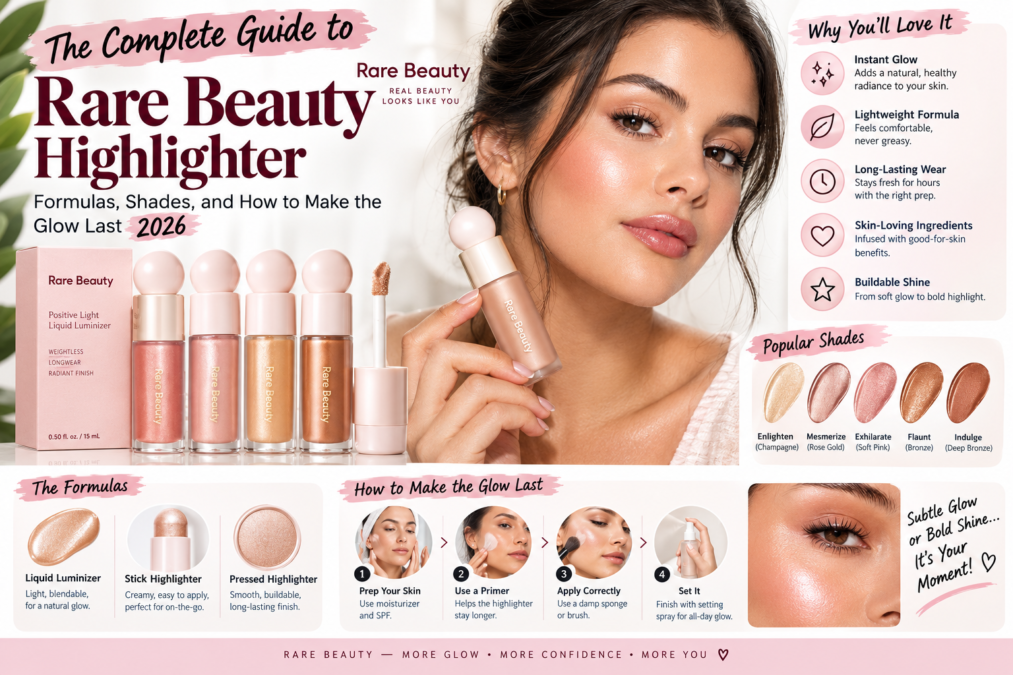
Most highlighter launches follow a predictable pattern: one formula, a handful of shades, and a marketing campaign built around “glow.” Rare Beauty took a different route by releasing two formulas that serve genuinely different purposes. The Positive Light Liquid Luminizer is a silky, second-skin fluid designed for a dewy, lit-from-within finish, while the Positive Light Silky Touch Highlighter is a talc-free powder that melts into the skin for a semi-sheer, glass-like sheen .
The liquid formula comes in ten shades, including the recent additions Exhilarate (champagne gold) and Reveal (warm copper), and is built around a Botanical Blend of lotus, gardenia, and white water lily that the brand says helps soothe and nourish skin . The powder compact offers four flexible shades—Enlighten, Exhilarate, Flaunt, and Mesmerize—and uses prismatic microshimmers to create a semi-sheer shine that enhances natural warmth rather than masking it . Both are vegan, cruelty-free, and dermatologist-tested, which matters for anyone with sensitive skin who has been burned by glitter-heavy formulas in the past.
The distinction between the two is not just texture. It is philosophy. The liquid is for people who want their highlighter to look like skin that happens to be catching light. The powder is for people who want a defined, reflective pop that photographs sharply and holds its placement through a long day.
Liquid vs Powder: How the Two Formulas Actually Behave
The liquid luminizer has a texture that testers consistently describe as weightless. Allure’s senior beauty editor put the Exhilarate shade through office days, workout classes, and date nights, reporting that it looked “even more diffused and skin-like” after a sweaty Solidcore session and was transfer-proof enough to survive close contact . That durability is unusual for a liquid highlighter, which often fades or slides by mid-afternoon. The formula layers well over liquids, powders, and creams without disturbing the base underneath, a detail that matters if you have already set your foundation .
The powder compact behaves differently in a way that suits certain skin types better. Space NK’s testers noted that the powder has “better staying power” for oily skin and that the texture is “so soft and easy to apply” on both cheeks and eyes . The talc-free formula goes on as a powder but melts into the skin, which is why it avoids the chalky, dry look that cheaper powder highlighters produce. ELLE’s reviewer wore it through Art Basel humidity and cheek-to-cheek kisses without transfer, and described the finish as a “glazed gleam” rather than a frosty stripe .
The trade-off is fragility. Multiple reviewers on Google Shopping and Sephora have reported that the powder compact breaks easily, sometimes arriving already shattered or cracking after a single drop . The formula is delicate, and the packaging does not fully protect it. If you travel frequently or carry your makeup in a bag that gets knocked around, the liquid formula is the more practical choice despite the powder’s superior oil control.
Finding Your Shade Across Two Different Palettes
The shade naming across the two formulas is inconsistent, which is the single most confusing thing about the Rare Beauty highlighter range. The liquid luminizer’s Enlighten is a cool champagne, but the powder’s Enlighten is also a cool champagne—so far, so logical. But the liquid’s Mesmerize is a rose bronze, while the powder’s Mesmerize is described as a warm rose quartz . The names overlap without mapping perfectly, which means you cannot simply order your liquid shade in the powder version and expect the same result.
For the powder compact, the four shades cover a useful range. Enlighten is the palest, a cool champagne that one tester found “can look quite white depending on the lighting” on warmer skin tones . Exhilarate is a soft golden champagne that works well as a daily option for medium skin. Mesmerize leans rose, flattering for anyone who prefers a pink-toned glow. Flaunt is a bold gold that Space NK’s testers specifically recommended for dark skin tones . The limited shade range is the powder’s biggest weakness. If you have deep skin and want something more copper or bronze, the liquid line’s Reveal shade has no powder equivalent.
The liquid range is broader and more forgiving. Reflect is a deep bronze that suits medium-to-deep skin, while Captivate offers a copper option for warm undertones . For fair skin, Enlighten and Enchant provide cool and soft pink options respectively. The ten-shade lineup means most people can find something that matches their undertone without having to settle for a shade that is merely “close enough.”
A Comparison Table for Choosing Between the Formulas
The table below summarizes the practical differences between the two Rare Beauty highlighter formulas based on brand specifications and tester feedback.
| Feature | Positive Light Liquid Luminizer | Positive Light Silky Touch Highlighter |
|---|---|---|
| Formula type | Liquid, silky second-skin fluid | Talc-free pressed powder |
| Finish | Dewy, wet, lit-from-within | Semi-sheer, glass-like sheen |
| Shade range | 10 shades | 4 shades |
| Best for skin type | Dry, normal, mature, combination | Oily, combination, younger skin |
| Application tool | Fingertips or damp sponge | Precision brush or fingers |
| Staying power | Long-lasting, transfer-proof per testers | Strong on oily skin, fragile packaging |
| Notable weakness | Can disturb base if over-blended | Compact breaks easily; limited shades |
| Layering | Over makeup without disturbing base | Last step, over all other products |
The “best for skin type” row is the one to pay attention to. Powder highlighters generally suit oily skin because they control shine and hold placement, while liquids and creams are more forgiving on dry or mature skin because they melt in rather than sitting on top of texture . Rare Beauty’s powder is softer and more skin-like than most powders, which makes it more versatile than the category average, but the underlying logic still applies.
How to Apply Rare Beauty Highlighter for a Natural Finish
Placement matters more than product amount with both formulas. The high points of the face—tops of the cheekbones, brow bone, inner corners of the eyes, cupid’s bow, and the bridge of the nose—are where light naturally hits, and that is where highlighter belongs . Putting it lower on the cheek or dragging it toward the center of the face creates a greasy look rather than a lifted one.
For the liquid luminizer, the brand recommends one to two dots directly over the areas you want to glow . Warmth from your fingertip melts the product into the base, which is why fingers often work better than a brush for this formula. A damp sponge can also press it in and sheer it out simultaneously. The key is to work quickly and tap rather than drag, because the liquid grabs within seconds and dragging will pull up the foundation underneath.
For the powder compact, a small tapered brush gives the most control. Rare Beauty sells a Precision Highlighter Brush designed specifically for this, and Selena Gomez has described it as “small enough that it gives me full control of where I highlight, but fluffy enough to make blending easy” . A fan brush works for a sheerer veil, while a small fluffy eyeshadow brush allows for more targeted placement on the brow bone and inner corner . Tap off excess before applying, and build in thin layers rather than loading the brush once. Two light passes always look more like skin than one heavy application.
The Honest Trade-Offs: What Reviews Reveal
No product is universally loved, and the Rare Beauty highlighter line has documented weaknesses that are worth knowing before you buy. The most consistent complaint about the liquid luminizer is that it can disturb the base makeup underneath. Multiple Sephora reviewers reported that it “tears up everything underneath” or leaves a “strangely shaped dot” with a visible frame around the application area, even after blending . This seems to happen more often when the formula is applied over a freshly set or powdered base rather than over liquid foundation.
The powder compact’s fragility is the other major issue. Reviews on Google Shopping describe compacts breaking “extremely easily,” with one reviewer noting that it is “perfect for your vanity but definitely not fit for travel” . Another said the formula is beautiful but the packaging is “cheap” and broke twice . This is not a rare defect; it is a consistent pattern. If you buy the powder, keep it at home or wrap it carefully.
On the positive side, the pigment payoff and texture receive near-universal praise. Allure’s tester described the powder as “so light and fine that it feels like you’re applying air,” with a payoff that is “glimmery, shimmery—but not too shimmery” . A Google Shopping reviewer with textured cheeks wrote that they “could overdo this highlight and still look stunning,” which is a meaningful endorsement from someone who is usually wary of powder formulas emphasizing texture . The brand has earned a #1 ranking in the highlighter category on at least one product ranking platform, which reflects consistent satisfaction despite the packaging complaints .
Frequently Asked Questions About Rare Beauty Highlighter
Which Rare Beauty highlighter is better for oily skin?
The Positive Light Silky Touch Highlighter powder is generally the better choice for oily skin. Powder formulas sit on the surface and control shine, while liquid highlighters can add to the greasy look that oily skin already produces by midday . Space NK’s testers specifically noted that the powder has better staying power for oily skin types . If you prefer the liquid formula’s finish, apply it only on the high points and set it lightly with a translucent powder to lock it in place.
What is the difference between the Rare Beauty liquid and powder highlighter?
The liquid luminizer is a fluid formula that melts into the skin for a dewy, wet-looking glow, and it comes in ten shades. The powder compact is a talc-free pressed formula that creates a semi-sheer, glass-like sheen and comes in four shades . The liquid is more versatile for mixing with other products and suits dry or mature skin, while the powder offers more control and better oil absorption. Both are designed to be buildable, but the liquid is more forgiving for beginners because it blends with fingers.
What shade does Selena Gomez use in Rare Beauty highlighter?
Selena Gomez has been documented using the Enlighten shade in both the liquid and powder formulas. Space NK’s review notes that “the pearlescent Enlighten shade is her go-to for both formulas,” and that with the liquid luminizer she applies three dots across each cheekbone . Enlighten is a cool champagne that suits fair to light-medium skin tones. If your skin is deeper or warmer, Exhilarate or Flaunt will likely be more flattering.
Why does my Rare Beauty liquid highlighter look patchy?
Patchiness usually comes from applying the liquid over a powdered or freshly set base, or from dragging the product instead of tapping it in. The liquid grabs quickly, so blending needs to happen immediately after application. Sephora reviewers who reported a “frame” around the applied area found that the product blends to be barely noticeable apart from that edge . Try applying it over liquid foundation before setting powder, and use a tapping motion with your fingertip or a damp sponge rather than a sweeping brush.
Does the Rare Beauty powder highlighter break easily?
Yes, the powder compact has a documented fragility issue. Multiple reviewers report that it breaks easily, sometimes arriving broken or cracking after minor drops . The formula itself is soft and delicate, and the packaging does not provide much protection. If you want to keep the powder intact, store it flat at home and avoid carrying it loose in a bag. The liquid luminizer is a more travel-friendly option for the same glow effect.
Conclusion
The Rare Beauty highlighter line succeeds because it does not pretend that one formula can serve every face and every routine. The liquid luminizer is for the person who wants their skin to look lit from underneath, who prefers blending with fingertips, and who values transfer-proof wear over oil control. The powder compact is for the person who wants a defined, glassy sheen that holds its placement through a long day, who understands that powder over liquid is the layering order that works, and who is willing to treat the delicate compact with care.
The final insight worth carrying into your routine is about restraint. Both formulas are more pigmented and more buildable than they first appear, which means the most common mistake is using too much. Start with one dot or one light tap, blend it until the edges disappear, and add more only if the light hits your cheek and you want it to hit harder. The glow that looks like skin is always built in thin layers. The glow that looks like highlighter is applied all at once. Rare Beauty’s best products reward the first approach, and that is why they have earned a place on vanities far beyond the brand’s initial fanbase.