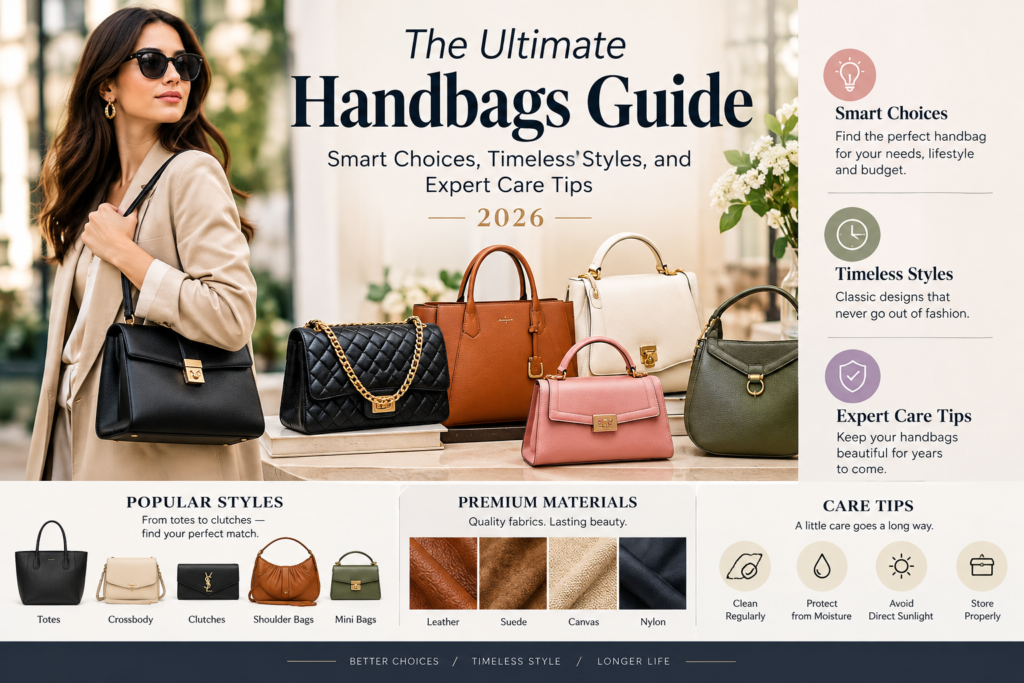

Handbags are far more than functional accessories. They carry our daily essentials, they finish an outfit, and they quietly signal who we are before we say a word. A structured leather tote says something different from a slouchy canvas shopper, and a compact crossbody tells a different story than an oversized weekender. Yet for all their presence in our lives, most people never stop to consider the engineering, materials science, and design thinking that separate a bag that lasts a decade from one that falls apart in a season.
The modern handbag market is enormous and genuinely confusing. Prices range from a few pounds to tens of thousands, materials span everything from bonded leather to full-grain calfskin, and marketing language is deliberately vague. This guide cuts through that noise. It covers how bags are constructed, which materials actually hold up, how to match a bag to your lifestyle rather than to a trend, and how to care for one so it stays beautiful for years. Whether you are buying your first serious piece or rebuilding a collection with intention, the principles here apply.
What Defines a Handbag and How the Category Breaks Down
A handbag is a bag with a handle or strap designed to be carried by hand, on the shoulder, or across the body, used to hold personal items such as a wallet, phone, keys, and cosmetics. That definition is deliberately broad because the category spans an enormous range, from tiny evening clutches to structured work totes to casual everyday shoulder bags.
The confusion in the market comes from brands inventing new names for old shapes. A “shoulder tote” is a tote. A “convertible satchel” is a satchel with a removable strap. The underlying structure rarely changes. Learning the core shapes means you can evaluate any bag on its merits rather than on its marketing label, and it makes online shopping far more reliable when photographs can be misleading.
The Anatomy of a Quality Handbag
Understanding how a bag is built is the fastest way to judge quality in person. The exterior material is the most visible component, but it is only one of several that determine whether a bag will last. Stitching is arguably the single best indicator. Look for tight, even, dense stitching with no loose threads or skipped sections. A well-made bag uses a consistent stitch length throughout, and the thread should match the leather or canvas in both colour and weight. Uneven stitching is a reliable sign of rushed production.
Hardware is the second indicator. Zippers, clasps, rings, and feet take constant stress, and cheap hardware is the most common point of failure. Quality zippers glide smoothly without catching, and metal components feel substantial rather than hollow. Look for hardware that is solid brass, nickel, or stainless steel rather than plated plastic. Plating wears through over time, exposing a dull base metal beneath, while solid metal ages gracefully. Protective feet on the base of a structured bag are a small detail that prevents scuffing and extends the life of the leather.
Interior construction matters just as much and is often invisible in product photos. A quality lining should be tightly woven and securely stitched to the bag, not glued. Cotton canvas and fine suede are common linings, and both wear better than thin synthetic fabrics that snag and tear. Interior pockets should be reinforced at the seams, and the lining should be attached in a way that prevents it from pulling away from the exterior over time. Edge finishing is another tell. Painted edges should be smooth and evenly applied, and folded or bound edges indicate more careful construction. On a leather bag, the quality of the edge paint is a strong signal of overall craftsmanship.
Leather Grades and Materials Explained
Leather is the dominant material in serious handbags, but the word covers an enormous range of quality. Full-grain leather is the top layer of the hide, retaining the natural grain and fibre structure. It is the most durable option, develops a patina with use, and resists moisture better than lower grades. Top-grain leather has the outermost layer sanded away to remove imperfections, producing a more uniform surface at the cost of some durability. Corrected-grain leather has been heavily sanded and embossed to hide flaws, and it is the most common material in mid-range bags.
Genuine leather is a legal marketing term that tells you almost nothing. It technically means the material contains some real leather, but it is often a thin layer split from the hide and bonded to a synthetic backing. Bonded leather, also called reconstituted leather, is made from leather scraps ground up and glued together with a binder. It is the lowest grade and tends to peel and crack within a few years. Bonded leather should be understood as a short-term material rather than an investment.
Beyond leather, the material landscape includes coated canvas, which is cotton canvas treated with PVC or polyurethane, used by brands like Louis Vuitton and Gucci for its durability and water resistance. Nylon is lightweight, strong, and easy to clean, and it is favoured for travel and casual bags. Vegan leather is a broad category that includes polyurethane, cactus leather, apple leather, and mushroom-based mycelium materials. Quality varies enormously, and some plant-based options now rival animal leather in durability and feel. The right material depends on your priorities. Leather offers longevity and patina. Canvas offers lightness and water resistance. Nylon offers practicality. Vegan options offer an ethical choice without necessarily sacrificing performance.
Handbag Material Comparison
| Material | Durability | Water Resistance | Care Needs | Best For |
|---|---|---|---|---|
| Full-grain leather | Excellent, develops patina | Good, improves with treatment | Condition twice yearly | Investment bags, daily use |
| Top-grain leather | Very good, more uniform | Good | Condition regularly | Structured bags, work totes |
| Corrected-grain leather | Moderate, embossed finish | Moderate | Wipe clean, avoid abrasives | Mid-range everyday bags |
| Bonded leather | Poor, peels over time | Poor | Minimal, short lifespan | Budget, occasional use |
| Coated canvas | Very good, scratch resistant | Excellent | Wipe with damp cloth | Travel, everyday, recognisable prints |
| Nylon | Very good, lightweight | Good | Machine or hand wash | Travel, casual, sporty |
| Vegan leather (PU) | Variable, often moderate | Good | Wipe clean, avoid heat | Ethical choices, trend pieces |
| Suede | Moderate, delicate | Poor, needs protection | Brush, protect with spray | Statement bags, autumn styling |
Matching a Handbag to Your Lifestyle and Needs
The most common mistake in buying a bag is choosing based on how it looks in a photograph rather than how it will function in your actual life. A beautiful structured tote is useless if you commute by bicycle and need both hands free. A tiny crossbody is frustrating if you carry a laptop every day. The starting point should always be an honest inventory of what you carry and how you move through your week.
Capacity is the first consideration. Measure the largest item you routinely carry, whether that is a laptop, a tablet, a water bottle, or a notebook, and check the bag’s interior dimensions against it. Many bags look large enough in photos but have tapered interiors that cannot accommodate a rectangular object. Weight is the second consideration. Leather bags, particularly large ones, can weigh a kilogram or more before you put anything in them. A bag that is heavy when empty becomes a burden by mid-afternoon. Nylon and coated canvas offer a lighter alternative with comparable durability.
Choosing Colours and Building a Cohesive Collection
Colour choice is more strategic than it appears. Neutral tones such as black, tan, navy, grey, and cream work with the widest range of outfits and tend to hold their resale value better than seasonal shades. Black is the most practical and forgiving, while tan and caramel bring warmth without being limiting. Navy is a quiet alternative to black that pairs well with denim and lighter tailoring. Cream and off-white are elegant but require more care, since they show marks easily and are difficult to clean.
Building a collection is best approached in stages rather than all at once. A practical framework starts with a workhorse bag in a neutral colour and durable material, sized to carry daily essentials. The second addition is a smaller crossbody for weekends, travel, and evenings, in a colour that complements the first. The third is an occasion bag, either a clutch or a small structured piece, in a finish that feels special. From there, additions should fill genuine gaps rather than duplicate what you already own. A brightly coloured or patterned bag works best when it is the only statement piece in an outfit, so it earns its place when you already own the neutral foundations.
The capsule approach has a practical benefit beyond tidiness. Bags that are worn regularly stay in better condition than bags that sit in dust bags for months. Leather benefits from the natural oils in your hands and from being conditioned as part of routine care, and a bag that is used is a bag that is maintained. Owning fewer, better bags and rotating them deliberately is more satisfying than owning many that never quite work.
How to Spot Quality and Avoid Common Buying Mistakes
Spotting quality is a skill that improves with practice, and there are several checks that take only a minute in a shop. Hold the bag by its handles and look at how the body hangs. A well-made bag holds its shape, while a poorly constructed one twists or sags. Open the bag and inspect the lining attachment. If the lining is glued rather than stitched, or if it pulls away from the sides, the bag will deteriorate quickly. Check the zipper by running it the full length. It should move smoothly without catching, and the pull should feel solid rather than flimsy.
Symmetric details are another reliable indicator. Handles should be attached at matching heights, hardware should be aligned, and any pattern should match at the seams. On coated canvas, the pattern should align across the joins, which requires more material and more careful cutting. Asymmetry in these details is a sign of cost-cutting. Inspect the stitching under the flap and inside the pockets, where quality control is often weakest, and check the base for feet or reinforced panels.
Common buying mistakes are worth naming directly. Buying for a trend rather than a need leads to bags that sit unused. Assuming price guarantees quality is unreliable, since some mid-range brands match luxury construction at a fraction of the cost. Ignoring weight leads to beautiful bags that are never carried. Overlooking closure type leads to daily frustration. Failing to check return policies is a risk with online purchases, since colour and scale are hard to judge on screen. Finally, buying bonded leather while believing it is full-grain is a widespread error, and it is why reading material descriptions carefully matters more than trusting a brand name.
Caring for Your Handbag So It Lasts for Years
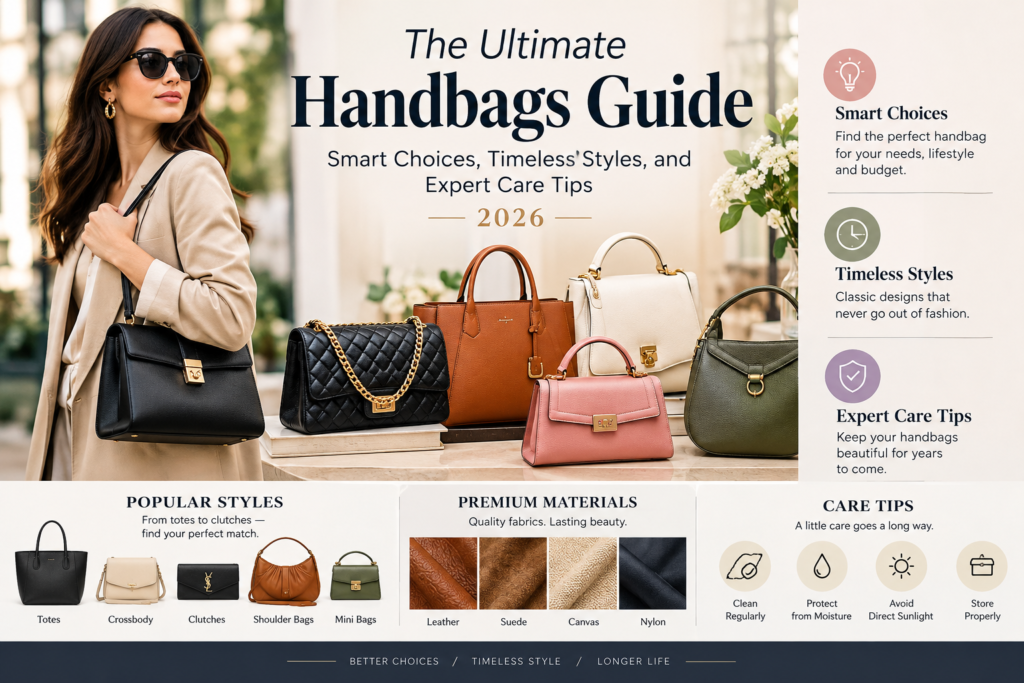
Leather bags benefit from a simple routine. Conditioning twice a year with a product matched to the leather type keeps the material supple and prevents cracking. Applying a protective spray when the bag is new helps repel water and stains, and reapplying according to the product instructions maintains that protection. Cleaning should be gentle. A soft, slightly damp cloth removes surface dust, and mild leather soap handles deeper marks. Harsh chemicals, alcohol, and household cleaners strip the natural oils that keep leather healthy.
Storage is the other half of care. Storing a bag in its dust bag protects it from dust and light, and stuffing it with tissue or bubble wrap helps it hold its shape. Structured bags should be stored upright rather than folded, and chain straps should be tucked inside to prevent them from pressing into the leather. Placing bags on a shelf rather than hanging them by their straps prevents stretching and distortion at the attachment points. Avoiding prolonged direct sunlight prevents fading, and rotating bags prevents any single piece from bearing all the wear.
Sustainable and Ethical Considerations in Handbags
Sustainability in the bag market is genuinely complicated, and consumers are right to be sceptical of vague claims. Genuine leather has a significant environmental footprint, largely tied to livestock farming and the tanning process, which uses chemicals that require careful management. Chrome tanning is faster and cheaper than vegetable tanning, but it produces wastewater that must be treated. Vegetable-tanned leather uses natural tannins and is generally considered more environmentally sound, though it takes longer to produce and is often more expensive.
Plant-based alternatives have advanced considerably. Materials made from cactus, apple waste, pineapple fibre, and mycelium now offer genuine leather-like performance, and some luxury brands have adopted them. The trade-offs are real, though. Many plant-based materials still rely on a polyurethane binder, which introduces a plastic component, and their durability varies widely. Recycling and repair programmes are another meaningful step. Many brands now offer repair services and take-back schemes, and buying second-hand extends a bag’s life, which is one of the most effective sustainability measures available to any individual.
The most useful rule for consumers is to buy less and buy better. A single well-made leather bag that lasts fifteen years has a lower environmental cost than five cheaper bags that each last three. Choosing timeless designs over trend pieces reduces turnover. Supporting brands that publish transparent information about their supply chains, materials, and labour practices is a practical way to direct spending toward better outcomes. Certifications such as the Leather Working Group standard for tanneries provide a verifiable benchmark, and brands that reference them are generally more accountable than those that rely on unverifiable claims alone.
Frequently Asked Questions About Handbags
What is the difference between full-grain and genuine leather?
Full-grain leather is the top layer of the hide, retaining its natural grain and fibre structure, making it the most durable and highest-quality grade available. Genuine leather is a legal term that only guarantees the material contains some real leather, and it is often a thin split bonded to a synthetic backing. Full-grain develops a patina over time and can last decades with proper care, while genuine leather typically peels and cracks within a few years. When shopping, look for the specific grade rather than the generic term, and expect full-grain to be described explicitly.
Which handbag is best for daily use?
The best daily bag balances capacity, weight, and organisation against your actual routine. A mid-sized tote or satchel in full-grain leather or coated canvas with a secure closure, at least one interior zippered pocket, and adjustable straps covers most needs. If you commute on foot or by public transport, a crossbody with a wide strap distributes weight better than a shoulder bag. If you carry a laptop, check the interior dimensions carefully, since many stylish totes taper and cannot fit a rectangular sleeve. Weight when empty is often overlooked, and a heavy bag becomes tiring by the afternoon.
How do I stop my handbag from losing its shape?
Stuffing the bag with tissue or bubble wrap when not in use helps it hold its structure, and storing it upright in a dust bag rather than hanging it by the straps prevents distortion. Structured bags should never be folded or stacked under other items. Conditioning leather twice a year keeps it supple and less prone to sagging, and avoiding overloading the bag prevents stress on the handles and base. For soft leather bags that naturally slouch, a base shaper or bag insert can add structure without changing the character of the bag.
Are expensive handbags worth the money?
Price does not automatically equal quality, and some mid-range brands match luxury construction at a fraction of the cost. What justifies a higher price is verifiable quality: full-grain leather rather than bonded, solid metal hardware rather than plated plastic, dense and even stitching, and a lining that is stitched rather than glued. Resale value, repair services, and warranty policies also factor into the calculation. A bag that is used daily for a decade and can be repaired is often better value than a cheaper bag replaced every two years, so the honest measure is cost per year of use rather than the price on the label.
How should I clean and store my handbag?
Leather bags should be wiped with a soft damp cloth, conditioned twice a year, and protected with a spray matched to the leather type. Suede needs a soft brush and a protective spray, and it should never be cleaned with water. Coated canvas and nylon wipe clean with a damp cloth, and the hardware should be dried to prevent tarnishing. Store every bag in its dust bag, stuffed to hold its shape, on a shelf rather than a hook, and away from direct sunlight to prevent fading. Rotating bags regularly keeps them maintained and spreads wear evenly across your collection.
Conclusion
Choosing and caring for handbags is less about chasing labels and more about understanding construction, material, and fit for purpose. A bag that suits your daily routine, is built from materials that age well, and receives basic care will outlast a rotation of trend pieces by years, and it will look better doing it. The knowledge required is not complicated. Learn the core shapes, read material descriptions carefully, check stitching and hardware before committing, and store and condition your bags properly.
The deeper takeaway is that a handbag is one of the few accessories worn every single day, which makes it a genuine investment in how your days feel. A well-chosen bag that carries what you need, sits comfortably, and looks good after five years of use is worth more than a shelf of beautiful pieces that never leave the wardrobe. Buy with intention, care with consistency, and the handbag you choose today will still be earning its place in your rotation a decade from now.