
Most people cycle through the same three or four haircuts for decades, not because they lack curiosity, but because the stakes feel unnecessarily high. A bad cut means weeks of awkward growth, photos you avoid, and a slow erosion of confidence every time you pass a mirror. That risk calculus is exactly why browsing hairstyle ideas has become a quiet obsession for so many, a low-stakes way to explore before committing to the chair.
Hairstyle Ideas
The problem is that the internet is drowning in inspiration and starving for guidance. A Pinterest board full of glossy editorial shots tells you nothing about whether a cut will work with your cowlick, your morning routine, or the fact that you have exactly seven minutes to get ready before the school run. This guide treats hairstyle ideas as a practical planning exercise rather than a fantasy scroll, connecting what looks good on a screen to what actually works on your head, your schedule, and your texture.
Why Most Hairstyle Ideas Fail Before You Even Reach the Salon
The single biggest reason a haircut disappoints is a mismatch between the inspiration image and the reality of the hair it lands on. A photo of a sleek, glassy bob on a model with fine, straight hair will not translate onto thick, wavy strands without significant styling effort every single morning. The cut itself may be technically correct, but the daily labor required to make it look like the reference photo is the hidden cost nobody mentions in the comments section.
Stylists see this disconnect constantly. Someone brings in a screenshot of a layered shag or a blunt fringe, and the consultation becomes a negotiation between what the client wants and what their hair will naturally do. The successful appointments are the ones where the conversation starts with texture, density, and routine rather than with the picture. A good stylist will look at your hair’s natural fall, your growth pattern at the crown, and the amount of time you are genuinely willing to spend with a round brush before they ever pick up the scissors.
There is also a timing problem. Hairstyle ideas collected in a burst of late-night scrolling often get acted on impulsively, without any thought to how the cut will look at week six. A style that depends on sharp, clean edges looks untidy fast if your hair grows quickly. A cut that relies on volume collapses by day three if you live in a humid climate or skip the blow dryer. The most useful filter for any idea is a simple question: what does this look like when I am running late and have done nothing to it?
The Face Shape Framework and How to Actually Use It
Face shape is the most cited and least understood variable in the hairstyle conversation. The general principle is straightforward enough: the goal is balance, softening strong angles or adding width where the face is narrow, and the classic categories of oval, round, square, heart, and diamond each come with their own recommended directions . An oval face is described as the most versatile, suiting everything from blunt bobs to long layers and fringes, while a round face benefits from length and face-framing pieces that create the illusion of elongation .
But face shape advice becomes genuinely useful only when it is treated as a starting point rather than a rulebook. A square jaw that looks striking with a soft, wispy fringe can also carry a sharp, chin-length cut if the attitude is intentional. The “rules” exist to explain why certain shapes flatter certain bone structures, not to police what anyone is allowed to try. The more practical application is to understand what a cut does to the proportions of your face and then decide whether that effect is what you want.
Texture and face shape interact in ways that simple diagrams cannot capture. A heart-shaped face with fine, straight hair may find that the bouncy curls recommended to soften a wide forehead require heat styling every morning to look anything like the inspiration photo. The same face shape with naturally wavy hair might get that softness for free. The framework is useful, but the execution always depends on what your hair is already inclined to do.
A Practical Map of Hairstyle Ideas by Hair Type and Commitment Level
The table below organizes common directions by the two variables that matter most in real life: how much natural texture you are working with, and how much daily effort you are willing to invest. It is not a catalog of every option, but a decision aid for narrowing the field before the salon consultation.
| Hair Type | Low-Effort Directions | Higher-Effort Directions | What to Ask For |
|---|---|---|---|
| Fine and straight | Blunt bob or lob with minimal layers, collarbone-length cuts that air-dry smooth | Graduated bob with internal layers for lift, curtain bangs that need styling to sit right | “Keep the ends blunt, no heavy layering” |
| Thick and wavy | Long layers with face-framing pieces, shag cuts that embrace the natural bend | Voluminous blowout styles, architectural layers that require round-brush work | “Remove weight without losing the wave” |
| Curly and coily | Rounded, layered shapes that work with the curl pattern, medium-length cuts for shape retention | Defined curly bobs with precision cutting, fringe cut dry to the curl | “Cut it dry and shape it to my pattern” |
| Straight and dense | Blunt one-length cuts, sharp bobs that rely on density for impact | Choppy shags, heavily textured ends that need styling product | “Break up the weight at the ends” |
The low-effort column is not a consolation prize. Some of the most striking hairstyle ideas in circulation right now are deliberately pared back, built on the principle that the cut does the work so the styling does not have to. A blunt, single-length cut on thick hair can look sharper and more intentional than a heavily layered style that requires constant maintenance, precisely because it holds its shape without intervention. The trade-off is that blunt cuts reveal split ends and uneven growth more readily, so they demand regular trims to stay crisp .
The higher-effort column deserves honesty too. A graduated bob or a layered shag can be transformative, but only if you are actually going to style it. The women who look effortlessly cool with a messy shag are often spending ten minutes with a texture spray and a diffuser, or they have a natural wave that does half the work. If the honest answer is that you will not do that, the low-effort column is not settling; it is choosing a different kind of result.
Trend Directions Worth Knowing Before Your Next Appointment
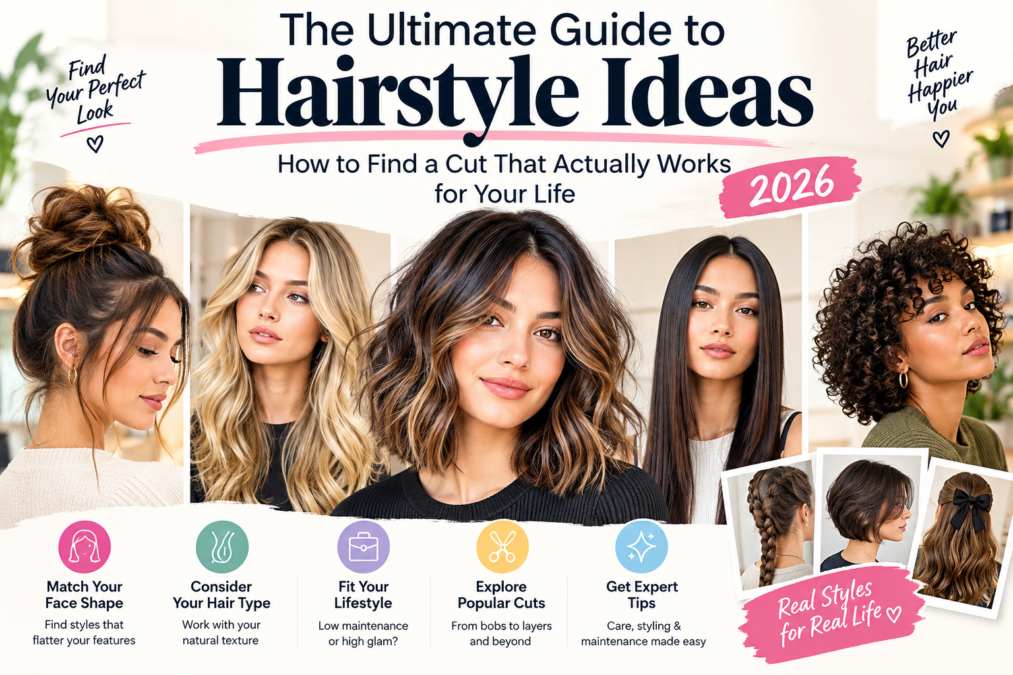
The current landscape of hairstyle ideas is defined less by one dominant cut and more by a shift in mood. The overarching direction is polished but not stiff, natural but intentional . The boho, undone texture that dominated recent years is giving way to hair that looks healthier and more deliberate, with glossy finishes and shapes that feel put together without appearing overworked. That translates into directions like the graduated bob, which sits between jaw and shoulder with subtly shorter layers at the back and a deliberately broken-up, choppy texture .
Bangs are having an unusually rich moment, with options spanning the entire commitment spectrum. Wispy, see-through fringe sits at the low end, skimming the brows and growing out into face-framing layers with minimal drama. Curtain bangs remain the forgiving middle ground, flattering most face shapes and blending into layers when they grow. At the high-commitment end, micro bangs and blunt, disconnected fringes offer graphic impact but require trims every four to five weeks to stay sharp . The bottleneck bang, narrow at the center and widening around the cheekbones, sits somewhere in between, offering definition without the weight of a full fringe.
For anyone drawn to longer lengths, the “flow” direction is worth understanding even if the name sounds vague. It describes a freestyle cut that works with natural texture, grows out gracefully, and transitions from professional to casual without a hard line . The practical advantage is maintenance: while a sharp fade or a precision bob begins to look untidy by week three, a freestyle cut simply becomes a slightly longer version of itself. It is a hairstyle idea built for people who want to visit the salon less often without looking like they have given up.
How to Translate an Inspiration Photo Into a Real Conversation
Bringing a photo to the salon is better than bringing nothing, but a screenshot alone is an incomplete brief. The image shows the destination; it does not show the route. The most useful thing you can do is annotate the photo before you go, mentally or literally, marking which specific elements you are drawn to. Is it the length, the fringe, the way the layers sit around the jaw, the texture, or the color? A stylist can replicate one element faithfully while adapting the rest to your hair, but only if they know which part matters.
The language you use matters more than most people realize. “Shorter but not too short” means nothing. “Chin-length blunt bob with no layers and a fringe that hits just above the brow” gives a stylist something to work with. If you are unsure how to describe what you want, describe what you do not want. Ruling out a full fringe, heavy layering, or a length above the shoulder narrows the field considerably and prevents the most common source of disappointment.
It also helps to be honest about your styling habits. If you know you will not use a round brush, say so. If you wash your hair every day and let it air-dry, that is critical information. A stylist who knows you will do nothing to your hair can cut a shape that looks intentional in its natural state rather than one that only works after twenty minutes of effort. The consultation is not a test of your knowledge; it is a transfer of information, and the more accurate the information, the better the result.
Maintaining the Idea After the Salon Door Closes
The gap between a fresh cut and a grown-out one is where most hairstyle ideas lose their shine. Hair grows roughly half an inch per month, which means even a perfect cut starts to shift within a few weeks. Short styles and fades show their age fastest, often needing attention every two to four weeks to stay sharp. Medium-length cuts can stretch to four to six weeks, and longer styles can go six to eight weeks before the shape starts to collapse .
The neckline is the silent culprit in most cases. Even a well-cut style starts to look neglected when the hair at the nape grows out, creating a fuzzy edge that reads as untidy regardless of how good the rest of the cut still looks. A quick cleanup between full appointments, whether at the barber or with a trimmer at home, buys visual time. The same principle applies to the front: a fringe that was sharp at week one is a different shape entirely by week four, and regular trims keep the original idea intact.
Product choice matters less than consistency. A lightweight texture spray or a matte clay used daily will keep a cut looking intentional far longer than an elaborate routine deployed once a week. The goal is not to recreate the salon blowout every morning; it is to keep the shape readable. Hair that is washed too often and stripped of natural oils looks flat and uncooperative, while hair that is gently cleansed and minimally styled holds its cut better . The maintenance routine is part of the hairstyle idea, not an afterthought.
Frequently Asked Questions About Hairstyle Ideas
How do I know if a hairstyle idea will actually suit me?
The most reliable test is a combination of face shape, hair texture, and honest assessment of your daily routine. Face shape explains why certain proportions flatter your bone structure, but texture determines whether the cut will look like the inspiration photo without daily styling effort . A cut that requires skills or time you do not have will not suit you regardless of how well it photographs on someone else.
What are the most low-maintenance hairstyle ideas right now?
Blunt, single-length cuts and collarbone-length styles that rely on the natural fall of the hair are consistently the lowest-maintenance directions. The current trend toward polished but natural finishes favors shapes that hold their form without constant intervention, including the freestyle flow cut for men and minimal-layer bobs for women . The common thread is a cut that looks intentional when air-dried, not one that only works after styling.
Should I bring a photo to my salon appointment?
Yes, but bring it as a conversation starter rather than a specification sheet. A photo communicates the overall mood and silhouette far better than words, but a stylist needs to know which specific element you are drawn to and how your hair differs from the person in the image. Annotating the photo or describing what you like about it turns a vague reference into a usable brief.
How often should I get a trim to keep my hairstyle looking fresh?
Short cuts and fades typically need attention every two to four weeks, medium-length styles every four to six weeks, and longer cuts every six to eight weeks . The neckline often needs a quicker touch-up between full appointments because it grows out faster than the rest of the cut and is the first visual signal that a trim is overdue.
What is the difference between a layered cut and a blunt cut?
A layered cut uses different lengths throughout the hair to create movement, volume, and texture, while a blunt cut keeps the ends at a single length for a sharper, denser silhouette . Layers can make fine hair appear fuller and reduce bulk in thick hair, but they often require more styling to look intentional. Blunt cuts are lower-maintenance in daily styling but show split ends and uneven growth more readily.
Conclusion
The best hairstyle ideas are not the ones that generate the most saves on a mood board. They are the ones that survive contact with your actual life: your texture, your schedule, your willingness to style, and the version of yourself that shows up on a Tuesday morning with no time to spare. A cut that works with your hair rather than against it will look better on day thirty than a more ambitious style looks on day three.
The final insight worth carrying into your next appointment is this: treat inspiration as a filter, not a target. Use the images and trends to narrow the field, then let your stylist translate the direction into a shape that suits the hair you actually have. The most flattering hairstyle ideas are the ones that make you look like yourself on a good day, not like someone else on their best one.