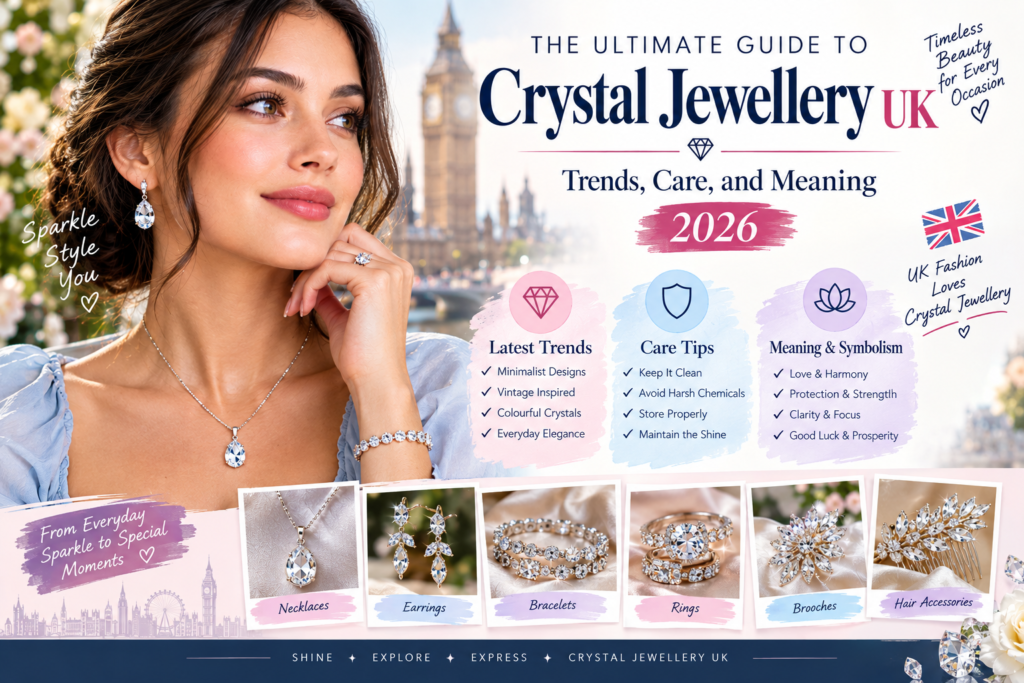

Crystal jewellery UK has experienced a remarkable surge in popularity over recent years, moving from niche boutiques into mainstream British fashion. Walk through any high street in London, Manchester, or Edinburgh, and you will notice the shimmer of faceted stones catching the light in shop windows. The appeal is multifaceted: crystals offer the visual drama of fine gemstones at accessible price points, they carry symbolic meanings that resonate with modern wellness culture, and British brands have developed distinctive design languages that set them apart from international competitors.
This guide explores the landscape of crystal jewellery in the United Kingdom with depth and practical insight. It covers the major brands shaping the market, the technical distinctions between crystal types, the cultural and spiritual dimensions that drive consumer interest, and the essential care routines that keep these pieces looking brilliant for years. Whether you are a first-time buyer curious about what makes Swarovski different from natural quartz, or a seasoned collector seeking to understand the heritage behind British crystal design, this resource provides the expertise you need.
What Crystal Jewellery Means in the British Market
The term “crystal jewellery” encompasses a broader range of products than many consumers initially realise. At its most technical, crystal refers to a solid material whose atoms are arranged in a highly ordered microscopic structure, which gives it distinctive optical properties. In the jewellery trade, however, the word typically describes two distinct categories: precision-cut lead crystal or glass, most famously produced by Swarovski in Austria, and natural crystalline gemstones such as quartz, amethyst, and rose quartz that have been cut and polished for adornment.
In the United Kingdom specifically, crystal jewellery occupies a fascinating middle ground between costume jewellery and fine jewellery. It is priced above mass-market fashion accessories but below diamond or precious gemstone pieces, making it accessible to a wide demographic. The British market has also developed its own design traditions. Butler and Wilson, founded in 1969 on Portobello Road, built a reputation for bold, playful crystal designs that attracted celebrity clients including Princess Diana and Elton John . That heritage of British creativity continues to influence contemporary brands, which often blend crystal elements with sterling silver, gold plating, or base metals to create pieces that feel distinctive rather than generic.
The growth of the UK wellness market has been a significant catalyst for crystal jewellery sales. British consumers, particularly younger demographics, are increasingly drawn to pieces that offer both aesthetic appeal and personal meaning. Stones associated with calm, protection, or love have found a natural home in a culture that values mindfulness and self-care. This convergence of fashion and wellness has created a market where a customer might buy an amethyst bracelet because it complements her outfit and because she believes it helps her sleep better.
The Major Players in British Crystal Jewellery
Any serious discussion of crystal jewellery UK must begin with Swarovski, the Austrian crystal manufacturer whose name has become almost synonymous with the category. The company scooped the Fashion Jewellery Brand of the Year accolade at the 2026 UK Jewellery Awards, cementing its dominance in the British market . Swarovski produces precision-cut crystal to extraordinary optical standards, and its UK retail presence spans from standalone boutiques to authorised stockists in independent jewellers. The brand operates across a wide price range, from entry-level pieces around £29 to statement collections in the £200 to £350 bracket, such as the Idyllia and Numina ranges that use the company’s highest-grade crystals for black-tie occasions and milestone celebrations .
Understanding Crystal Types and What Distinguishes Them
The word crystal gets applied to materials with vastly different compositions, and understanding these differences is essential for making informed purchases. The most common type in fashion jewellery is lead crystal or lead-free crystal, a form of glass with a high refractive index that produces exceptional brilliance when cut. Swarovski crystals fall into this category. They are manufactured rather than mined, produced to exacting standards that ensure consistent colour, clarity, and cut. This consistency is one of the reasons Swarovski has become the default reference point for crystal quality in the UK market. As one retail guide notes, Swarovski is “precision-cut crystal — not gemstone, not diamond — but it is high-quality Austrian crystal manufactured to extraordinary optical standards” .
A third category deserves mention: crystal-embellished jewellery, where small crystal elements are set into metal frameworks alongside other stones or materials. This approach is common in both high-street fashion jewellery and more premium pieces. The quality of the crystal used in these settings varies enormously, from cheap acrylic rhinestones to high-grade Austrian crystal. Checking whether a piece specifies the crystal origin—Swarovski, Preciosa, or a generic designation—is a reliable indicator of quality.
The Cultural and Spiritual Dimensions of Crystal Jewellery
For many British buyers, crystal jewellery carries meanings that extend well beyond aesthetics. The association of specific stones with particular qualities or energies has deep roots in various cultural traditions, and these associations have been enthusiastically adopted by the modern wellness movement. Rose quartz, with its soft pink hue, is widely linked to love and compassion. Amethyst, the purple variety of quartz, is associated with calm, intuition, and protection from anxiety. Clear quartz earns the title “Master Healer” in crystal lore, valued for its purported ability to amplify energy and promote clarity .
The birthstone tradition offers another framework for crystal jewellery selection. Each month has an associated gemstone, and many British consumers choose crystal pieces based on their birth month. February’s amethyst, for instance, has a rich history that includes the ancient Egyptian belief that it could prevent intoxication—a association that gave the stone its name, derived from the Greek word meaning “not drunken” . March’s aquamarine, named for the ocean, was historically carried by sailors for safe voyages. Wearing your birthstone is a way of personalising jewellery that adds a layer of meaning beyond pure decoration.
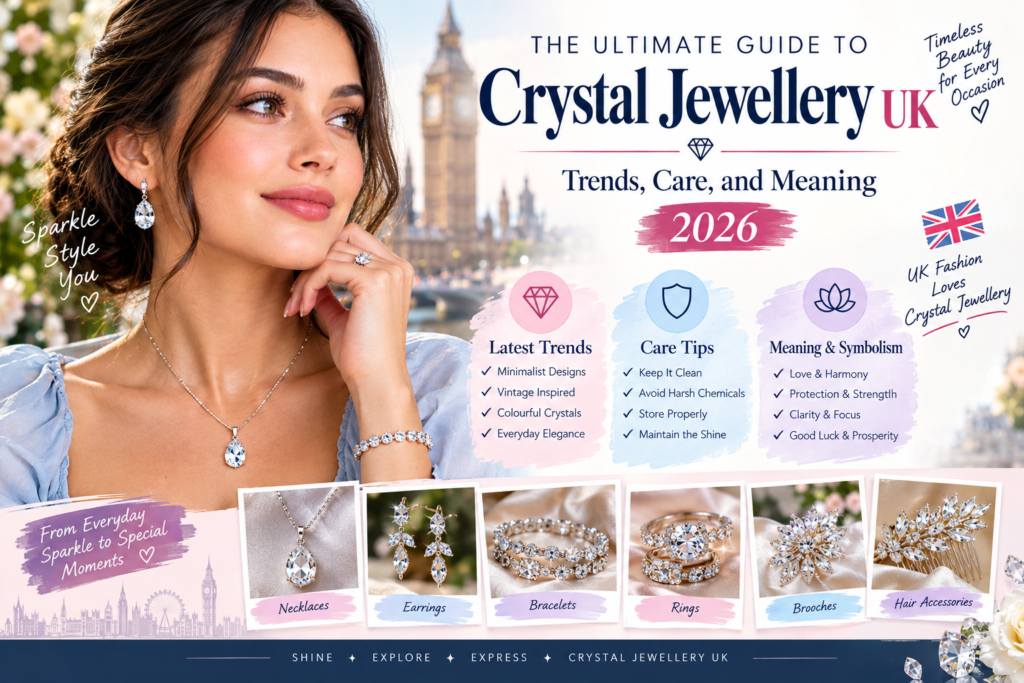
A Practical Guide to Crystal Types and Their Properties
The table below summarises the most common crystals used in jewellery available in the UK, along with their key characteristics and symbolic associations.
| Crystal Type | Colour Range | Typical Use in Jewellery | Symbolic Associations | Care Considerations |
|---|---|---|---|---|
| Amethyst | Purple to violet | Beads, cabochons, faceted stones | Calm, intuition, sleep, protection | Avoid prolonged sun exposure; clean with soft cloth |
| Rose Quartz | Pale pink to rose | Beads, tumbled shapes, carved hearts | Love, compassion, emotional healing | Can fade in strong sunlight; gentle cleaning only |
| Clear Quartz | Colourless to milky | Faceted stones, points, beads | Clarity, amplification, healing | Durable but can chip; avoid harsh chemicals |
| Citrine | Yellow to amber | Faceted stones, beads | Optimism, creativity, abundance | Stable colour; standard care |
| Turquoise | Blue to blue-green | Cabochons, beads, inlay | Protection, calm, friendship | Porous; avoid water and chemicals; keep away from skin oils |
| Lapis Lazuli | Deep blue with gold flecks | Beads, cabochons | Wisdom, truth, spiritual connection | Relatively soft; avoid scratching; gentle cleaning |
| Swarovski Crystal | Wide range including crystal, coloured | Faceted components, pavé settings | Fashion, sparkle, celebration | Avoid water, perfume, hairspray; polish with lint-free cloth |
| Preciosa Crystal | Wide range | Beads, components | Fashion, sparkle | Similar care to Swarovski |
| Moonstone | Milky white with blue sheen | Cabochons, beads | New beginnings, intuition, feminine energy | Relatively soft; protect from scratches |
How to Choose Crystal Jewellery That Suits Your Style
Selecting crystal jewellery that you will actually wear requires more thought than simply picking the prettiest piece in the display case. The most successful choices balance three factors: your personal style, the occasions where you will wear the piece, and the practical realities of your daily life. A woman who works in a corporate environment and gravitates toward minimalist tailoring may find that a pair of small crystal stud earrings or a delicate crystal pendant serves her better than a bold statement necklace that feels out of place in her wardrobe. Conversely, someone who loves colour and texture and attends social events regularly might find that a crystal statement piece becomes the most-worn item in her jewellery box.
Colour is a powerful consideration. Crystal jewellery UK buyers have access to an extraordinary range of hues, from the icy sparkle of clear crystal to deep sapphire blues, emerald greens, and warm amber tones. The most flattering choice depends on your skin tone and the colours you already wear. Cool-toned complexions often suit silver settings and crystals in cool colours—blue, purple, clear, and pink. Warm-toned complexions tend to look particularly good with gold settings and crystals in warm hues—amber, citrine, and turquoise. That said, the old rules are increasingly treated as suggestions rather than laws, and many of the most striking crystal jewellery looks involve deliberate contrast.
Scale matters as much as colour. The current trend in crystal jewellery, according to British designers, favours “refinement, sculptural sparkle rather than excess” . Rather than the chandelier earrings and heavy necklaces that defined earlier crystal eras, contemporary designs lean toward sophisticated silhouettes that catch light without overwhelming the wearer. Crystal drops in warm gold tones, mid-sized studs with architectural cuts, and delicate crystal chains are all strong choices for everyday wear. That said, statement pieces retain their place for those who love them. The key is honesty about your lifestyle. A crystal tiara might be a magnificent purchase, but if you have nowhere to wear it, it becomes an expensive ornament rather than a wearable investment.
Crystal Jewellery as Gifts: A British Perspective
Crystal jewellery has become one of the most popular gift categories in the United Kingdom, and for good reason. It occupies a sweet spot in the gifting landscape: more special than a generic fashion accessory, more accessible than fine jewellery, and adaptable to almost any personal style. The symbolic dimensions of crystals also make them unusually meaningful gifts. A rose quartz bracelet given to a friend going through a difficult time carries a message of love and support that a pair of plain earrings cannot replicate. An amethyst piece for someone starting a new job or embarking on a stressful period communicates a wish for calm and clarity.
The British gifting calendar offers numerous occasions where crystal jewellery fits naturally. Birthdays, anniversaries, and Christmas are obvious options, but crystal pieces also work well for milestones that other jewellery categories struggle to address. A crystal set for a wedding couple—stones chosen to symbolise love, harmony, and commitment—offers a more personal alternative to a standard gift voucher . For bridesmaids, matching crystal bracelets provide a gift that will actually be worn again, unlike many wedding favours that languish in drawers. The growing market for crystal jewellery UK means that buyers at almost any budget can find something appropriate, from small tumbled stone hearts for wedding guests to substantial Swarovski pieces for significant occasions.
When choosing crystal jewellery as a gift, the recipient’s personality should guide the selection as much as the symbolic properties of the stones. A friend who loves bold fashion and maximalist style will appreciate a statement crystal brooch or a dramatic cocktail ring far more than a delicate amethyst bracelet that feels too subtle for her taste. Conversely, someone with a minimalist aesthetic may prefer a single perfect crystal stud or a fine chain with a small crystal drop. The meaning behind a stone only enhances a gift if the recipient is likely to actually wear it.
The Problem of Counterfeits and How to Avoid Them
The popularity of crystal jewellery has inevitably attracted counterfeiters and sellers of misdescribed goods. The UK has robust consumer protection laws, including the Hallmarking Act 1973, which regulates the description of precious metal content in jewellery . However, these protections apply primarily to precious metals rather than to crystals themselves. A seller who describes a glass bead as “crystal” may be committing a trade description offence, but enforcement is inconsistent, and online marketplaces are flooded with misdescribed items.
The most common problem in the crystal jewellery market is the sale of glass or acrylic imitations as natural gemstones. A buyer searching for an amethyst bracelet may receive a piece made from dyed glass or synthetic material that looks similar at a glance but lacks the properties—and the value—of the natural stone. The Chelsea filter, a simple gemmological tool, can detect some imitations by revealing characteristic colour reactions under filtered light, but most consumers do not have access to such equipment . Practical alternatives include buying from established UK retailers with reputations to protect, asking direct questions about stone origins, and being sceptical of prices that seem too low for the claimed material.
For manufactured crystal, the situation is somewhat different. Swarovski crystal has a distinctive quality and consistency that is difficult to replicate exactly, but counterfeit Swarovski items do exist. The safest approach is to buy from authorised stockists or directly from the brand. Many UK jewellers clearly identify themselves as authorised Swarovski retailers, and this designation provides meaningful assurance of authenticity . For natural crystals, buying from specialist crystal shops or jewellers who can trace their supply chains offers better protection than purchasing from anonymous online sellers.
Caring for Crystal Jewellery to Preserve Its Brilliance
Crystal jewellery, whether manufactured or natural, requires thoughtful care to maintain its appearance. The specific routines differ depending on the material, but several principles apply across the board. Crystal is delicate and can be damaged by harsh chemicals, abrasive materials, and excessive heat. Swarovski’s own care guidance recommends buffing gently with a soft, clean cotton cloth to remove dust and dirt, and explicitly warns against using chemical glass cleaners . The same advice applies to most crystal jewellery: gentle cleaning with a soft, dry cloth is usually sufficient, and more stubborn dirt can be addressed with a cloth dampened with lukewarm water.
The enemies of crystal jewellery are consistent and well-documented. Heat can affect the adhesive used to set crystals, particularly in pieces where stones are glued rather than prong-set. Humidity can cause discolouration in metal settings and, in some cases, affect the crystal itself. Pressure—excessive force during handling, packing, or cleaning—can chip or dislodge stones . Perfume, hairspray, soap, and lotion are particularly damaging. Swarovski advises placing jewellery on last when getting dressed and removing it before washing hands, swimming, or applying personal care products . This simple habit—jewellery on last, off first—dramatically reduces exposure to chemicals that dull crystal brilliance and corrode metal settings.
Storage matters as much as cleaning. Crystal jewellery should be stored individually in soft pouches or the original packaging to prevent pieces from scratching each other . A shared jewellery box where crystal pieces tumble against metal chains is a recipe for dulled surfaces and chipped facets. For natural stones, additional considerations apply. Porous materials like turquoise should be kept away from water and skin oils, which can cause discolouration over time. Softer stones like moonstone and opal benefit from protective settings that minimise direct contact with hard surfaces. A little attention to these details will keep crystal jewellery looking its best for years.
Why Crystal Jewellery Resonates in Modern Britain
The sustained popularity of crystal jewellery in the UK reflects broader cultural currents that show no sign of fading. The wellness movement has given many consumers a language for discussing the emotional and spiritual dimensions of adornment that earlier generations might have dismissed as superstition. Wearing amethyst for calm or rose quartz for self-compassion is, for many British buyers, a small ritual of intention-setting woven into the fabric of daily life. The stones become reminders of values and aspirations, tangible anchors for abstract goals.
At the same time, crystal jewellery UK offers a form of accessible luxury that resonates in an era of economic uncertainty. A beautiful crystal piece can deliver the visual pleasure and personal expression of fine jewellery at a fraction of the cost. It can be worn every day without the anxiety that accompanies expensive gemstones, and it can be collected and layered without requiring a significant financial commitment. The design innovation within the British crystal market—from Swarovski’s precision engineering to independent designers’ playful takes on traditional forms—ensures that there is something for almost every aesthetic.
Frequently Asked Questions About Crystal Jewellery UK
What is the difference between Swarovski crystal and natural crystal?
Swarovski crystal is a precision-manufactured material made from glass with a high lead or barium content, cut to exacting standards that produce exceptional brilliance and colour consistency. Natural crystal refers to minerals mined from the earth, such as amethyst, rose quartz, or clear quartz, which have formed over geological time and possess a crystalline atomic structure. Natural stones vary in colour, clarity, and inclusions, while manufactured crystal offers uniformity. Both have their place in crystal jewellery UK, but they differ in price, care requirements, and the kind of aesthetic they deliver.
How can I tell if crystal jewellery is genuine?
For manufactured crystal, buying from authorised stockists of recognised brands like Swarovski or Preciosa provides the strongest assurance. Counterfeit items exist, but authorised retailers are contractually obligated to sell genuine products. For natural crystal, the task is more challenging without gemmological training. Buying from reputable UK jewellers who can describe their sourcing, asking direct questions about stone treatment and origin, and treating unusually low prices with scepticism are practical safeguards. Tools like the Chelsea filter can help identify some imitations, but they are not a substitute for buying from trusted sellers .
How should I clean my crystal jewellery?
Clean crystal jewellery gently with a soft, dry cotton cloth to remove dust and fingerprints. For more stubborn dirt, dampen a clean cloth with lukewarm water and wipe carefully, then dry immediately with a soft cloth. Avoid chemical cleaners, ultrasonic cleaners, and abrasive materials, all of which can damage crystal surfaces or loosen settings. Swarovski specifically warns against chemical glass cleaners and recommends a silver polishing cloth for metal components . For natural stones, check whether the specific mineral is porous or water-sensitive before using any moisture.
Can crystal jewellery be worn every day?
Yes, many crystal pieces are designed for daily wear, particularly small stud earrings, delicate pendants, and slim bracelets. The key is choosing pieces with secure settings and being mindful of activities that expose the jewellery to chemicals, impact, or excessive moisture. Removing crystal jewellery before swimming, showering, exercising, or applying perfume and lotion will significantly extend its lifespan. Some natural stones are softer than others and may require more careful handling in daily wear, while manufactured crystal and harder stones like quartz are more forgiving.
What are the most popular crystal types for jewellery in the UK?
Swarovski crystal remains the most recognised and widely available manufactured option in the British market, stocked by hundreds of retailers nationwide. Among natural crystals, amethyst, rose quartz, clear quartz, and turquoise are consistently popular, both for their aesthetic qualities and their symbolic associations. The wellness-driven demand for calming and protective stones has boosted interest in amethyst, black tourmaline, and moonstone. For those seeking distinctive British design, brands like Butler and Wilson offer crystal pieces with a heritage appeal that mass-market products cannot replicate .
The Enduring Allure of Crystal Jewellery
Crystal jewellery UK represents a fascinating intersection of craft, culture, and personal expression. It is a category where ancient symbolism meets contemporary design, where accessibility does not preclude beauty, and where a small stone can carry meaning far beyond its physical weight. Whether you are drawn to the precision sparkle of Swarovski, the earthy uniqueness of natural amethyst, or the theatrical exuberance of British statement brands, the world of crystal jewellery offers something genuinely rewarding.
The final insight is this: crystal jewellery rewards attention. Pay attention to the materials, and you will avoid disappointment. Pay attention to care, and your pieces will retain their brilliance for years. Pay attention to meaning, and your jewellery becomes more than decoration—it becomes a daily reminder of what matters to you. In a market saturated with disposable fashion, crystal jewellery offers something that lasts.