
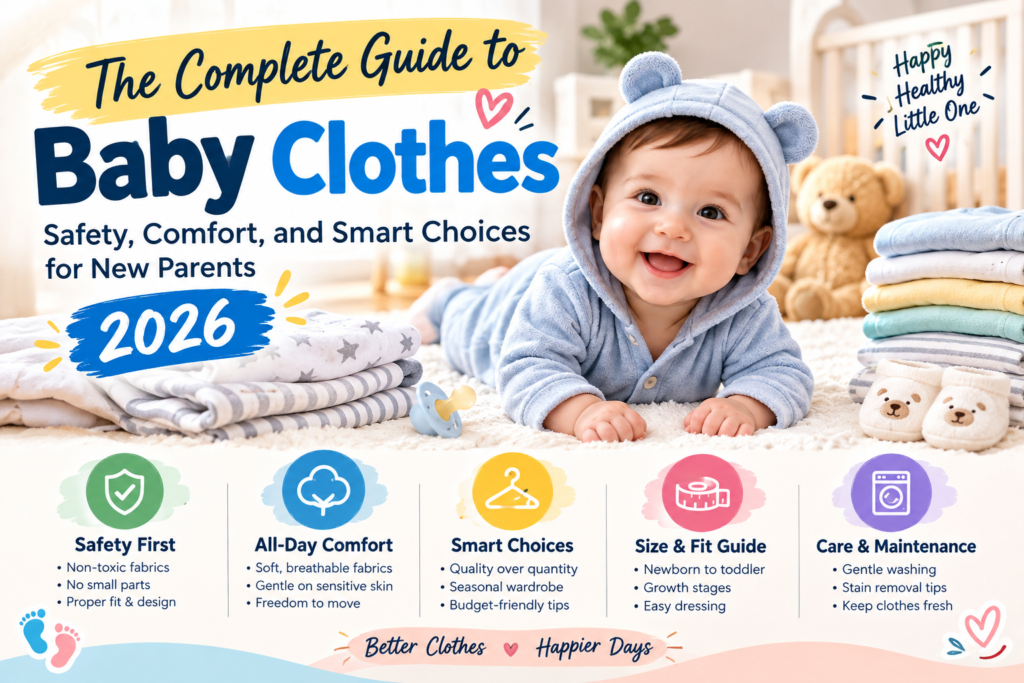
Bringing a newborn home is a whirlwind of emotions, sleepless nights, and an overwhelming amount of stuff. Among the tiny socks, the impossibly small onesies, and the delicate mittens designed to stop those razor-sharp baby nails from scratching that perfect skin, baby clothes occupy a special place in the heart of every parent. They are more than just fabric. They are the first layer of comfort, the first defense against the elements, and often the first tangible expression of love a parent wraps around their child.
Yet choosing the right garments is not as simple as picking the cutest design on the shelf. The world of infant apparel is governed by a complex web of safety regulations, material science, and practical design considerations that most parents never stop to think about until they are standing in the nursery at 3 AM, wrestling with a snapsuit that seems designed by a puzzle maker with a grudge. Understanding what makes baby clothes genuinely safe, comfortable, and practical transforms a stressful shopping experience into a manageable, even enjoyable, part of preparing for a new arrival.
This guide dives deep into the fabric, the safety standards, the sizing quirks, and the practical realities of dressing an infant, offering an expert-level look at the tiny garments that play such a large role in early parenthood.
What Defines Baby Clothes and Why Terminology Matters
At its core, baby clothes refers to garments designed for infants and young children, typically ranging from newborn sizes through toddler years. The term encompasses a vast array of items, from the humble bodysuit and the all-encompassing sleepsuit to the more formal outfits reserved for special occasions. Understanding the specific terminology used in the industry and by medical professionals can help parents navigate the market with greater confidence.
In clinical and regulatory language, the term “infant clothing” often has a more precise definition. For instance, under U.S. Consumer Product Safety Commission regulations, an “infant garment” is defined specifically as a garment sized for children nine months or younger, with particular dimensional restrictions for exemption from certain flammability testing requirements. A one-piece infant garment must not exceed 25¾ inches in length, while a two-piece garment must have no piece longer than 15¾ inches, and it must carry a label stating the age of the intended wearer. These technical distinctions are not just bureaucratic pedantry. They determine whether a garment must undergo rigorous flame-resistance testing, which has significant implications for fabric choice and chemical treatment.
Beyond regulation, the vocabulary of infant apparel is rich with practical meaning. A “layette” refers to the complete collection of garments and accessories gathered for a newborn, including clothing, bedding, and essentials like bibs and mittens. This term, derived from the Old French word for a small box or drawer, captures the holistic approach parents must take when preparing for a baby’s arrival. The modern layette balances the need for practical daily wear with the emotional desire to dress a newborn in garments that feel special and celebratory.
The Science of Safety: Flammability Standards and Regulatory Compliance
Safety is the paramount concern in infant apparel, and no discussion of baby clothes is complete without addressing the regulatory framework that governs what can be sold. In the United States, the Consumer Product Safety Commission (CPSC) enforces the Flammable Fabrics Act, which includes specific standards for children’s sleepwear. These regulations require that sleepwear for children above nine months and up to size 14 must either pass stringent flammability tests or be designed as “tight-fitting” garments that minimize the risk of ignition.
The logic behind tight-fitting sleepwear is rooted in real-world accident data. A study cited by the CPSC found that children under five had a higher incidence of sleepwear-related fires than other age groups, leading to the first flammability standards in the 1970s. The reasoning is straightforward. Loose, flowing nightgowns can easily brush against a candle, a fireplace ember, or a stove burner. Tight-fitting pajamas, by contrast, reduce the amount of air between the fabric and the skin, and they are far less likely to come into contact with an open flame in the first place. The CPSC explicitly notes that “close-fitting nightwear is invariably safer than long, loose nightwear”.
Material Matters: Organic Cotton, Merino Wool, and the Fabric of Comfort
The fabric that touches a baby’s skin matters more than most parents realize. A newborn’s skin is significantly thinner and more permeable than an adult’s, making it more susceptible to irritation from rough textures, chemical residues, and synthetic fibers that trap heat and moisture. The choice of material is not merely a matter of comfort; it is a foundational decision that affects skin health, temperature regulation, and even sleep quality.
Organic cotton has emerged as the gold standard for infant apparel, and for good reason. Unlike conventional cotton, which can be cultivated with heavy applications of pesticides and synthetic fertilizers, organic cotton is grown without these chemical inputs. The resulting fiber is softer, more durable, and free from the residues that can trigger allergic reactions or skin sensitivities in vulnerable populations. Parents who have struggled with a colicky baby only to discover that a synthetic sleepsuit was contributing to overheating often become lifelong advocates of organic cotton once they make the switch.
Merino wool is another material that deserves serious consideration, particularly for temperature regulation. Its fibers are incredibly fine and soft, far removed from the itchy wool sweaters of childhood memory. Merino wool is breathable, moisture-wicking, and naturally thermoregulatory, meaning it helps keep a baby warm in cool conditions and cool in warm ones. It also resists odors and is naturally fire-resistant, reducing the need for chemical flame retardants. For parents in temperate climates or those looking for a year-round option that performs in both summer and winter, merino wool garments offer a compelling combination of comfort and performance. Bamboo rayon is another increasingly popular choice, marketed for its breathability and silky softness against the skin.
Chemicals to Avoid: Understanding PFAS, Phthalates, and BPA in Infant Textiles
The safety conversation around baby clothes extends beyond flammability and into the realm of chemical exposure. A growing body of research has drawn attention to the presence of industrial chemicals in textiles, including those marketed for infants. The Environmental Working Group (EWG) has reported that bibs and baby clothing marketed as stain-resistant and easy-care contained the highest concentrations of PFAS, a class of “forever chemicals” associated with cancer, reproductive issues, and endocrine disruption.
PFAS, or per- and polyfluoroalkyl substances, are used to impart water, stain, and wrinkle resistance to fabrics. They do not break down in the environment or the human body, and they accumulate over time. For infants, whose developing systems are particularly vulnerable to hormonal disruption, the presence of these chemicals in everyday clothing is a legitimate concern. Phthalates, used to soften printed inks and incorporate plastic into garments, have been linked to skin and asthma irritation and behavioral issues in children. Bisphenol A (BPA), sometimes used as an anti-static treatment or protective agent, can transfer to the skin on contact and has been associated with developmental and cardiovascular problems.
The regulatory landscape for these chemicals varies significantly by region. The European Union has banned over 30 substances from use in fashion and restricted phthalates and PFAS, while California’s Safer Clothes and Textiles Act, effective in 2025, bans PFAS in textiles. Until comprehensive federal regulation exists in all markets, parents can take practical steps to reduce exposure. Washing new clothing before wear is a simple and effective measure that removes a significant portion of surface chemical residues. Steering clear of garments marketed as stain-resistant or easy-care, particularly in bright neon colors, is another prudent strategy, as these features often rely on chemical treatments.
Sizing Systems and the Reality of Rapid Growth
One of the great practical challenges of dressing an infant is the bewildering pace of growth. A baby who fits perfectly into newborn sizes one week may be bursting out of them the next. The sizing systems used for baby clothes vary by region and brand, and understanding them can save parents from purchasing garments that will never be worn or that are uncomfortably tight from the first wearing.
In many European countries, sizing is based on height in centimeters, with size 56 corresponding to a baby of average birth weight and size 50 for smaller newborns. In the United States, sizes are typically based on age in months, but the correlation between age and size is far from precise. A baby labeled as fitting “3-6 months” may be too large for that range at three months or may still fit comfortably at seven months. The variability is compounded by differences between brands, which is why experienced parents learn to rely less on the label and more on the actual dimensions of the garment.
The practical implication of rapid growth is that a newborn’s wardrobe should prioritize flexibility over quantity. Purchasing fewer items in high-quality materials that can withstand frequent washing and wearing is generally wiser than stocking up on dozens of pieces in a single size. Neutral colors and simple designs also have practical advantages, as they can be worn by subsequent children regardless of gender and tend to coordinate more easily with other items. For parents preparing a layette, focusing on versatile basics like short-sleeved bodysuits, long-sleeved bodysuits, and sleepsuits in a range of sizes will cover the majority of daily needs without creating a mountain of unused clothing.
Design Features That Make Daily Life Easier
The most thoughtfully designed baby clothes incorporate features that address the practical realities of caring for an infant. These design elements are not merely conveniences; they can significantly reduce the stress and difficulty of daily tasks like diaper changes and dressing a squirming baby.
Snap fasteners, also known as poppers, have largely replaced buttons on infant garments for good reason. They are easier to manipulate, particularly during the bleary-eyed hours of night feeds and changes, and they are less likely to come loose and pose a choking hazard. Full leg and back openings on sleepsuits and bodysuits allow for nappy changes without removing the entire garment, a feature that becomes invaluable when dealing with a blowout at 4 AM. Fold-over scratch mitts on the sleeves of newborn garments are another simple but brilliant innovation. They prevent very young babies from accidentally scratching their delicate skin with their own sharp nails, eliminating the need for separate mittens that inevitably get lost in the laundry.
Envelope necklines, a common feature on bodysuits, serve a dual purpose. They make it easier to pull the garment over a baby’s head during dressing, and they allow the bodysuit to be pulled down over the body rather than up over the head in the event of a messy accident. This design detail, rooted in an understanding of how babies actually live, demonstrates the thoughtfulness that distinguishes genuinely well-designed infant apparel from garments that are merely scaled-down versions of adult clothing.
Table: Comparative Guide to Common Baby Clothes Fabrics
| Fabric Type | Key Properties | Best For | Considerations |
|---|---|---|---|
| Organic Cotton | Breathable, soft, hypoallergenic, free from pesticide residues | Everyday bodysuits, sleepsuits, sensitive skin | More expensive than conventional cotton; retains shape well with proper care |
| Conventional Cotton | Soft, breathable, widely available, affordable | General daily wear, budget-conscious purchases | May contain pesticide residues; less durable than organic |
| Merino Wool | Thermoregulatory, moisture-wicking, naturally fire-resistant, odor-resistant | Temperature regulation, year-round layering, sleepwear | Requires careful washing; higher initial cost |
| Bamboo Rayon | Silky soft, breathable, moisture-absorbing | Summer clothing, sensitive skin | Less durable than cotton; environmental concerns about processing |
| Polyester Blends | Durable, wrinkle-resistant, quick-drying | Outerwear, garments requiring frequent washing | Traps heat and moisture; can irritate sensitive skin; may contain chemical treatments |
| Cotton-Polyester Blend | Balances softness with durability and shape retention | Sleepwear, everyday garments | Retains some heat-trapping properties of polyester |
Organic Versus Conventional: Making Informed Choices
The decision between organic and conventional baby clothes involves trade-offs that parents must weigh according to their values, budget, and practical circumstances. Organic cotton is undeniably softer and free from the pesticide residues that can linger on conventional fibers, but it also carries a higher price tag. For parents of a baby with particularly sensitive skin or a family history of allergies or eczema, the investment in organic materials may be well justified by the reduction in irritation and discomfort.
However, the organic label is not a guarantee of perfect safety or ethical manufacturing. The certification process for organic cotton focuses on agricultural practices and fiber processing, but it does not necessarily address all aspects of garment production, including the dyes and finishes applied to the finished fabric. A garment can be made from certified organic cotton yet still be treated with chemical finishes for wrinkle resistance or colorfastness. Parents who are concerned about chemical exposure should look beyond the organic label and consider the full lifecycle of the garment, including the reputations of the brands and the transparency of their manufacturing processes.
For families on tight budgets, the choice does not have to be between expensive organic options and potentially problematic conventional ones. High-quality conventional cotton garments from reputable manufacturers can be perfectly safe and comfortable, particularly if they are washed before first use to remove surface residues. The key is to prioritize materials that are soft, breathable, and appropriate for the season, regardless of whether they carry an organic certification. A well-made cotton sleepsuit from a trusted brand will serve a baby far better than an ill-fitting organic garment that is uncomfortable to wear.
The Role of Accessories in a Complete Layette
Baby clothes extend beyond the main garments to include a range of accessories that serve specific functions. Bibs, for example, become indispensable once a baby begins teething and drooling, protecting clothing from constant moisture that can lead to skin irritation and rashes. The historical advice from nineteenth-century childcare manuals, which recommended bibs made from “coarse white cotton, or bird’s eye diaper” for their absorbency, still holds true today. Modern bibs often feature waterproof backing and adjustable closures, but the fundamental principle remains the same.
Hats and caps are another essential accessory, particularly for newborns who lose heat rapidly through their heads. A soft cotton or merino wool hat provides warmth without overheating, and it protects the delicate skin of the scalp from sun exposure during outdoor outings. Socks and booties keep tiny feet warm, though parents quickly learn that babies have an almost supernatural ability to remove them. Mittens, whether integrated into sleepsuit sleeves or as separate accessories, prevent scratching during the early weeks when nails are sharp but too delicate for easy trimming.
Problem-Solution: Common Issues and Practical Resolutions
Even with the best intentions and the most carefully selected garments, parents encounter problems with baby clothes that require practical solutions. One of the most common issues is skin irritation, which can manifest as redness, dry patches, or a persistent rash. While many factors can contribute to skin irritation, the fabric of the clothing is often a primary suspect. Synthetic fibers trap moisture and heat against the skin, creating an environment where irritation thrives. The solution is to switch to natural, breathable fabrics like cotton or merino wool, wash all garments before first wear to remove chemical residues, and avoid fabric softeners and harsh detergents that can leave irritating residues.
Another frequent challenge is the difficulty of dressing a newborn, particularly during the early weeks when their neck muscles are not yet developed and their limbs seem determined to resist every sleeve. The solution lies in choosing garments with thoughtful design features. Envelope necklines, snap closures rather than buttons, and full-length openings on sleepsuits all make dressing significantly easier. Parents quickly learn that a garment that takes thirty seconds to put on is worth far more than one that takes five minutes, regardless of how attractive it looks on the hanger.
Overheating is a serious concern, particularly for sleeping infants. The risk of SIDS is elevated when babies become too warm, and clothing choices play a direct role in temperature regulation. The solution is to dress the baby in layers that can be easily adjusted, to choose breathable natural fabrics that wick moisture away from the skin, and to avoid overdressing. A general guideline is to dress a baby in one more layer than an adult would wear in the same environment. Parents should regularly check the baby’s chest or back of the neck, not the hands or feet, to assess whether they are too warm or too cool.
Building a Practical and Sustainable Wardrobe
The most successful approach to baby clothes is one that balances practicality, quality, and sustainability. A newborn does not need an extensive wardrobe; in fact, an excess of clothing can become overwhelming and counterproductive. A focused collection of well-chosen garments that are comfortable, safe, and easy to care for will serve both baby and parent far better than a mountain of outfits that are never worn.
The concept of a capsule wardrobe, popular in adult fashion, translates effectively to infant apparel. A small number of high-quality items in neutral colors that mix and match easily can cover all the daily needs of a newborn. For example, six to eight bodysuits, four to six sleepsuits, a few pairs of leggings or trousers, and a couple of warmer layers for cooler days form a complete and functional layette. Choosing garments that are durable enough to withstand frequent washing and that retain their softness and shape over time is more important than having a large quantity of lower-quality items.
Sustainability considerations also favor quality over quantity. Garments made from organic cotton or merino wool that are well cared for can be passed down to younger siblings or shared with other families, extending their useful life and reducing the environmental impact of clothing production. The resale and hand-me-down market for high-quality baby clothes is robust, and parents who invest in well-made garments often find that they retain a significant portion of their value. From an environmental perspective, extending the life of clothing is one of the most effective ways to reduce the textile industry’s substantial footprint.
Frequently Asked Questions About Baby Clothes
How many baby clothes do I actually need for a newborn?
A practical newborn wardrobe consists of roughly six to eight bodysuits, four to six sleepsuits, two to four pairs of leggings or trousers, a couple of warmer layers, and a few pairs of socks. This quantity allows for frequent changes due to spit-up, diaper leaks, and the general messiness of infant life while avoiding an excess of garments that will be outgrown before they are worn. Newborns can go through several outfits in a single day, so having enough clean items to last until laundry day is essential.
What is the safest fabric for a baby with sensitive skin?
Organic cotton is generally considered the safest and most comfortable choice for babies with sensitive skin. It is free from the pesticide residues found in conventional cotton, naturally soft, breathable, and hypoallergenic. Merino wool is another excellent option for its temperature-regulating properties and natural softness. Regardless of the fabric chosen, all new garments should be washed before first use to remove any chemical residues from manufacturing and shipping.
Are flame-resistant baby clothes safe and necessary?
For infants nine months and under, sleepwear is exempt from the specific flame-resistance testing requirements, though it must still meet general flammability standards for clothing textiles. For older babies, sleepwear must either be flame-resistant or tight-fitting. Tight-fitting sleepwear is generally preferred because it achieves safety through design rather than chemical treatment. Parents who are concerned about chemical exposure should look for tight-fitting garments made from natural materials and avoid loose sleepwear that has been chemically treated.
How do I know if my baby is too hot or too cold in their clothes?
The most reliable way to assess a baby’s temperature is to feel the back of their neck or their chest. If the skin is hot and sweaty, the baby is too warm and layers should be removed. If the skin feels cool, an additional layer may be needed. Hands and feet are unreliable indicators because circulation to the extremities is less efficient in infants. As a general rule, dress a baby in one more layer than an adult would find comfortable in the same environment.
Can I use fabric softener on baby clothes?
Fabric softeners and dryer sheets are not recommended for baby clothes. They can leave chemical residues on the fabric that may irritate a baby’s sensitive skin and reduce the absorbency of cotton garments. Fragrances in softeners can also trigger allergic reactions in some infants. A gentle, fragrance-free detergent is sufficient for keeping baby clothes clean and soft, and a simple wash with a small amount of white vinegar in the rinse cycle can help remove detergent residue and soften fabrics naturally.
Conclusion
The garments that clothe a baby during their first months of life are far more than decorative coverings. They are the interface between a delicate, developing body and the outside world, and their design, materials, and construction have real implications for comfort, safety, and health. From the flammability standards that govern sleepwear to the chemical treatments that parents should avoid, from the breathability of organic cotton to the practical genius of the envelope neckline, every detail matters.
Understanding baby clothes at this level empowers parents to make informed choices rather than relying on marketing claims or passing trends. It means knowing why a tight-fitting cotton sleepsuit is safer than a loose polyester gown, why washing new garments before wear is not just a suggestion but a meaningful safety measure, and why the softness of a fabric against a newborn’s skin is a measure of quality worth paying attention to. The investment of time and attention in learning these details pays dividends in the form of a more comfortable baby, a more confident parent, and a wardrobe that serves its purpose beautifully.
The final insight is this: the best baby clothes are not the most expensive, the most fashionable, or the most numerous. They are the ones that are safe, comfortable, and appropriate for the reality of life with an infant. A simple cotton bodysuit that goes on easily and washes well will be worn far more often than an elaborate outfit that looks beautiful but takes ten minutes to fasten. Prioritizing function, safety, and quality over quantity and appearance is the surest path to a wardrobe that genuinely supports the exhausting, joyful, and utterly transformative experience of caring for a new baby.