The story of this shoe stretches back further than most people realize. The essence of the ballet flat existed as early as the sixteenth century, when men wore a similar shoe known as pompes, and in medieval times the style was popular with both men and women . Heels only took over in the seventeenth and eighteenth centuries after Catherine de’ Medici requested her cobbler add several inches to her wedding shoes, and flat shoes returned to favour after Marie Antoinette famously walked to the guillotine in a pair of heels .
What Defines a Ballet Flat and Why the Details Matter
The construction method behind a quality ballet flat is what separates a shoe that lasts for years from one that loses its shape within weeks. Premium brands often employ a sacchetto construction, an Italian technique whose name translates to “little bag,” where the upper is stitched onto a soft lining rather than a rigid insole, creating a slipper-like feel that moulds to the foot . This approach is more labour-intensive and therefore more expensive, but the result is a shoe that flexes naturally with every step. Cheaper alternatives often use cemented construction, where the upper is simply glued to a synthetic sole, which can feel stiff and may separate over time.
The Resurgence of Ballet Flats in Modern Fashion
It is hard to believe that ballet flats were considered dated just a few years ago, but any fashion person in 2026 will tell you that this comfy flat-shoe style is here to stay . The shoe had a major revival around 2005 to 2010 when top models including Sienna Miller, Kate Moss, and Mischa Barton wore them constantly, and after another resurgence in 2022, they have continued to evolve and dominate into 2025 and 2026 . The current iteration of the trend is notably more sophisticated than its earlier incarnations, with designers reimagining the silhouette through mesh fabrics, metallic finishes, backless styles, and the controversial split-toe designs that have divided the fashion world .
What makes this particular revival different is the breadth of the trend. Ballet flats are no longer confined to the twee, schoolgirl-inspired aesthetic that many people associate with the shoe. Jane Frances, founder and creative director of the British brand Dear Frances, puts it well when she describes the appeal as a combination of “comfort, versatility and femininity that feels familiar yet evolving” . Her brand’s Balla Mesh flats, which shot to popularity in 2021 with their form-fitting silhouette and sheer fabrications, exemplify how the ballet flat has been reinterpreted for a modern audience that wants to feel dressed up without sacrificing the grounding feeling of being comfortable in their own skin .
Finding the Right Fit: A Guide to Sizing and Comfort
The good news is that many well-designed ballet flats are engineered to accommodate the natural variations in foot shape and size. Styles with elasticized backs, drawstring closures, or flexible leather uppers are far more forgiving than rigid designs, and several brands note that their flats are meant to fit tightly at first and will loosen and mould to the foot within the first couple of wears . This is particularly true of glove-fit designs, where the initial snugness is a feature rather than a flaw. For anyone with wide feet, styles that use soft, flexible materials tend to be more accommodating, though a few customers with wider feet still find it necessary to size up .
Materials and Construction: What to Look For
The material of a ballet flat’s upper determines not just how it looks but how it feels and how long it lasts. Soft leather is the gold standard for most wearers, offering a combination of breathability, durability, and the ability to stretch and conform to the unique contours of the foot. Sustainable leather options are increasingly available, with brands using LWG-certified leather and other responsibly sourced materials . Suede and calf hair provide a more textured, luxurious appearance but require more careful maintenance, as they are susceptible to water damage and staining. Fabric uppers, including mesh and woven styles, offer breathability and a lighter feel, making them particularly appealing for warmer weather .
The sole construction deserves just as much attention as the upper. Rubber soles provide the best traction and durability for outdoor wear, while leather soles are more traditional but can be slippery on smooth surfaces. Thermoplastic polyurethane is a common compromise, offering good flexibility and grip without excessive weight . A tiny block heel of around one centimetre, as seen on some premium styles, can add a subtle lift without sacrificing the flat-shoe feel . The quality of the insole and lining also matters enormously for comfort; natural leather linings are breathable and help regulate moisture, while synthetic linings can become hot and uncomfortable over the course of a long day.
Care and maintenance are often overlooked aspects of owning ballet flats, but they can dramatically extend the life of a favourite pair. General guidance from retailers suggests handling shoes with clean, dry hands and keeping them away from direct sunlight, heat, and high humidity . Leather uppers should be wiped with a soft cloth and conditioned sparingly with a neutral cream, while suede should be brushed in one direction and protected with a suitable spray. Storing shoes in a breathable dust bag or box with light tissue helps maintain their shape, and it is important not to overfill the box, as cramming shoes together can cause creasing and distortion .
Ballet Flats Across Different Occasions and Lifestyles
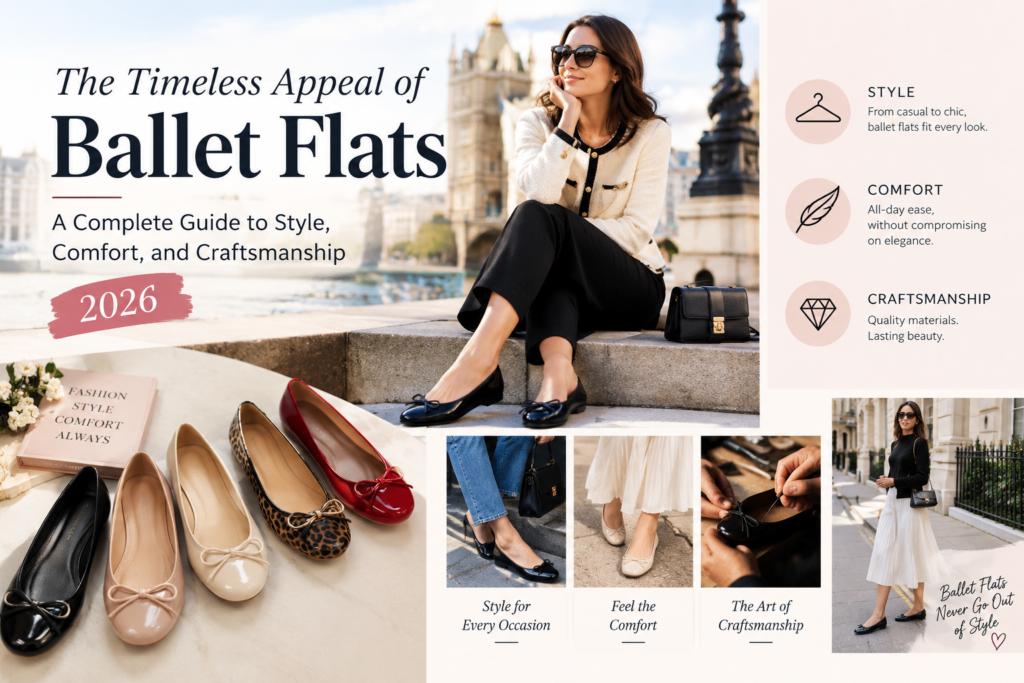
In professional settings, ballet flats offer a sweet spot between soft and smart. Worn with tailored trousers, they provide a polished appearance that reads as wearable and practical rather than overly formal, making them ideal for days when you have a lot on your to-do list and need to move quickly between meetings or errands . Schools have also embraced the ballet flat as part of uniform requirements, and many school bands require black ballet flats as part of their dress requirements for performances, which speaks to their combination of neatness, comfort, and universal appeal .
Ballet Flat Styles and Trends to Know
For anyone who has struggled with ballet flats slipping off the heel, styles with straps or buckle fastenings offer a practical solution without compromising the aesthetic. Mary Jane versions, with their single strap across the instep, provide security and a touch of vintage charm, while lace-up designs add a feminine, nostalgic quality that works particularly well with cigarette jeans and Bermuda shorts . Split-toe designs remain divisive but have gained a devoted following among those who prioritize comfort on long walking days, as the separated toe box allows for a more natural foot movement .
The choice of toe shape also significantly affects both the look and the feel of a ballet flat. Round toes are the most traditional and tend to be the most accommodating for a wide range of foot shapes. Square toes offer a more angular, modern silhouette that can elongate the leg, while almond toes provide a softer, more refined alternative to the classic round . Pointed toes are less common in ballet flats but do exist, offering a sleeker profile for those who want a more polished look. The high-vamp style, where the upper comes up higher on the foot, provides more coverage and can be more secure for wearers who find lower-cut flats difficult to keep on.
Ballet Flat Care and Longevity: A Reference Table
| Material | Cleaning Method | Storage Recommendations | Best For |
|---|---|---|---|
| Smooth Leather | Wipe with soft cloth; condition sparingly with neutral cream | Breathable dust bag; use tissue to maintain shape | Everyday wear, work, versatile styling |
| Suede or Calf Hair | Brush in one direction; use protective spray before first wear | Keep away from moisture; store in dust bag | Textured looks, cooler weather, evening wear |
| Patent Leather | Wipe with damp cloth; avoid abrasive cleaners | Store separately to prevent colour transfer | Formal occasions, polished outfits |
| Mesh or Fabric | Spot-clean with mild soap and water; never bleach | Air dry away from direct heat; stuff with tissue | Warm weather, casual styling, travel |
| Woven Leather | Wipe gently with soft dry cloth; condition occasionally | Keep flat or lightly stuffed to prevent distortion | Breathable comfort, summer wear |
| Synthetic (PVC) | Wipe with damp cloth; mild soap if needed | Store away from other shoes to prevent sticking | Affordable option, rainy days, vegan preference |
Common Problems and Practical Solutions
Even the most carefully chosen ballet flat can present challenges, and knowing how to address them makes the difference between a shoe that becomes a wardrobe staple and one that languishes unworn. The most common complaint is heel slippage, which occurs when the shoe is slightly too long or the topline is too low to grip the heel effectively. The solution is often as simple as adding a heel grip or insert, but choosing a style with an elasticized back or a strap across the instep from the outset can prevent the problem entirely . For those whose feet tend to swell throughout the day, adjustable drawstring closures offer the flexibility to tighten or loosen the fit as needed .
Another frequent issue is discomfort around the heel or back of the ankle, which can occur when the leather is stiff or when the shoe is slightly too small in that area. A small adhesive bandage can provide temporary relief, but a better long-term solution is to choose a pair with a soft, padded heel counter or to look for styles that are specifically designed with comfort in mind . Some customers report that the sole of certain ballet flats feels slippery on smooth surfaces, which can be dangerous on wet or polished floors. In these cases, applying a non-slip sole protector or choosing a style with a rubber outsole rather than leather provides much better traction .
The issue of “pavement toe,” a condition associated with wearing ballet flats to walk on hard surfaces, is worth mentioning for anyone who plans to log serious mileage in their flats. The thin sole of a traditional ballet flat offers limited cushioning against the impact of walking on concrete, which can cause thickening and warping of the toenails over time .
Frequently Asked Questions About Ballet Flats
What is the difference between ballet flats and ballet pumps?
The terms are largely interchangeable and describe the same style of shoe: a flat, closed-toe design inspired by traditional ballet slippers. Some regions and retailers favour one term over the other, but there is no meaningful distinction between them in terms of construction or function. The shoe is characterized by a very thin heel or the appearance of no heel at all, often with a ribbon-like binding or drawstring detail at the topline .
Are ballet flats comfortable for walking long distances?
Comfort depends entirely on the construction of the specific pair. Ballet flats with cushioned insoles, flexible rubber soles, and soft leather uppers can be comfortable for extended walking, and many customers report wearing them all day without discomfort . However, traditional ballet flats with thin soles and minimal padding offer limited shock absorption on hard surfaces, so alternating them with more supportive shoes is wise if you plan to walk for hours at a time .
How should ballet flats fit when you first try them on?
Many quality ballet flats are designed to fit snugly at first and will loosen and mould to your foot within the first few wears . If a pair feels uncomfortably tight across the instep or pinches the toes from the outset, sizing up may be necessary. If the shoe slips off the heel when you walk, it is too large or the topline is too low, and a style with a strap or elasticized back would be a better choice. Always pay attention to brand-specific sizing guidance, as some styles run large and others run small .
Can ballet flats be worn in cold weather?
Yes, with the right construction. Shearling-lined ballet flats with rubber treads provide warmth and traction for cooler months, and wearing them with socks has become a fashionable choice in its own right . Mesh and fabric styles are best reserved for warmer weather, while suede and leather uppers offer more protection against the elements. The key is to choose a pair with adequate grip and insulation rather than wearing a thin-soled summer flat in icy conditions.
What is the best way to clean and care for ballet flats?
Cleaning depends on the material. Leather uppers should be wiped with a soft cloth and conditioned sparingly with a neutral cream, while suede requires brushing in one direction and protective spray before the first wear. Fabric styles can be spot-cleaned with mild soap and water, but bleach should never be used. All ballet flats should be stored in a breathable dust bag or box with light tissue to maintain their shape, and they should be kept away from direct sunlight, heat, and high humidity .
Conclusion
The ballet flat has earned its place as one of the most enduring and adaptable shoes in the modern wardrobe. It carries with it a history that stretches back centuries, a design lineage that includes some of the most influential fashion figures of the twentieth century, and a practical simplicity that makes it genuinely useful in daily life. Whether you are drawn to a classic leather pair that will last for years, a mesh style for warm-weather ease, or a sporty sneakerina that bridges the gap between polish and practicality, there is a version of this shoe that fits the way you live.
The key takeaway is that not all ballet flats are created equal, and the difference between a pair that feels like a luxury and one that causes nothing but frustration lies in the details: the construction method, the quality of the materials, the fit of the topline, and the cushioning underfoot. It becomes the pair you reach for without thinking, the one that carries you through long days and short trips, and the one that proves that comfort and elegance do not have to be mutually exclusive.