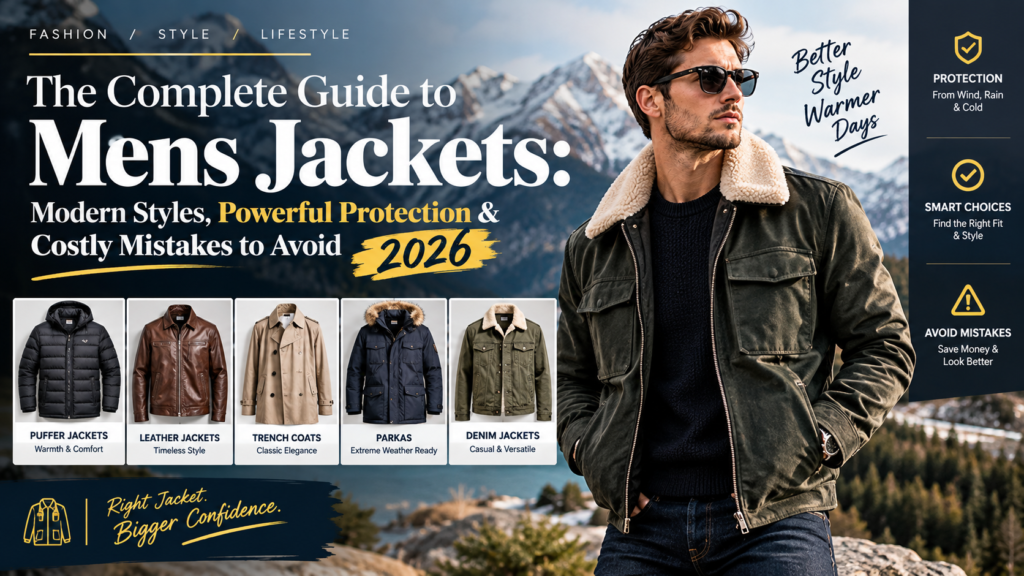

Mens jackets occupy a unique space in the wardrobe. They are simultaneously the most functional garment a man owns and the most expressive. A jacket shields you from wind, rain, and cold, yet it also announces something about how you move through the world before you say a single word. The right piece can transform a simple outfit of jeans and a T-shirt into something considered and deliberate, while the wrong one can undermine everything underneath it.
The challenge is that the category has never been broader. A man shopping for outerwear today confronts a dizzying array of options: heritage workwear, technical shells, tailored blazers, down-filled puffers, leather bombers, and everything in between. Each serves a different purpose, and each carries its own set of trade-offs in terms of warmth, weather resistance, durability, and style. Understanding those trade-offs is the difference between buying a jacket you wear twice and one that becomes a daily companion for years.
This guide cuts through the noise. It covers the full landscape of mens jackets, from the classic archetypes that never go out of style to the technical details that determine whether a piece will actually perform when the weather turns. It examines fit, fabric, insulation, care, and the cultural context that gives certain silhouettes their enduring appeal. Whether you are building a wardrobe from scratch or filling a specific gap, the goal is the same: to understand what you are buying and why it matters.
Understanding the Core Categories of Mens Jackets
The field jacket represents an entirely different lineage. Originally designed as military gear, specifically the M-65 issued to U.S. soldiers during the Vietnam War, it has been adopted by civilians as a practical, slightly rugged layer that works with almost anything . Its hallmark features—large pockets, a stand collar, and a durable cotton or nylon construction—make it ideal for transitional weather when you need protection from light rain and wind but not serious insulation.
How to Evaluate Fit and Silhouette in Mens Jackets
The silhouette of a jacket matters as much as its measurements. Leather blousons, for example, often look best when worn slightly oversized, with the body falling in a relaxed, almost slumped line rather than gripping the torso . This approach signals effortlessness and allows for layering without creating a stuffed appearance. Tailored jackets and blazers, by contrast, demand a closer fit, with the waist gently suppressed and the sleeves hitting at the wrist bone. Mid-season pieces like chore jackets and Harringtons fall somewhere in between: they should have enough room for a lightweight sweater but not so much that they look boxy . The goal is always proportional balance, where the jacket complements the body rather than fighting it.
The Science of Insulation: Down, Synthetic, and Everything Between
Synthetic insulation, typically made from polyester fibers, solves the moisture problem at the cost of weight and bulk. A synthetic jacket may be heavier and less compressible than its down counterpart, but it continues to insulate even when soaked, and it dries far more quickly . This makes it the better choice for wet, humid climates or for activities where you are likely to work up a sweat. Modern synthetics like PrimaLoft and Thinsulate have narrowed the performance gap considerably, offering impressive warmth without the bulk of older generations . For most men living in temperate climates with unpredictable weather, synthetic insulation is the more practical everyday choice.
A middle ground has emerged in the form of water-resistant down, which treats each down plume with a hydrophobic coating at the molecular level. This allows the down to resist light moisture without sacrificing its loft or warmth . It is not a license to wear a down jacket in a downpour, but it does provide a buffer against mist, light rain, and the damp cold that characterizes many winter days. The table below summarizes the key differences between insulation types to help clarify the decision.

A Practical Comparison of Jacket Insulation Types
| Insulation Type | Warmth-to-Weight | Performance When Wet | Compressibility | Cost | Best For |
|---|---|---|---|---|---|
| Down (600-900 fill) | Excellent | Poor | Excellent | High | Cold, dry conditions |
| Water-Resistant Down | Excellent | Moderate | Excellent | Very High | Damp cold, light precipitation |
| Synthetic (PrimaLoft, etc.) | Good | Excellent | Moderate | Moderate | Wet climates, active use |
| Hybrid (Down + Synthetic) | Very Good | Good | Good | High | Variable conditions |
Weatherproofing and the Technical Details That Matter
A jacket’s ability to handle weather is not just about insulation; it is also about the shell fabric and the treatments applied to it. The outer layer of a jacket determines whether wind and rain reach the insulation underneath, and the quality of that layer varies enormously. A durable water repellent finish, commonly called DWR, is applied to most technical jackets to make water bead up and roll off the surface rather than soaking in . Over time, however, this finish wears away through abrasion, dirt accumulation, and repeated washing. When water stops beading and starts darkening the fabric, it is time to restore the DWR.
Caring for Mens Jackets: Leather, Technical Fabrics, and Longevity
Technical jackets and shells require a different approach. The most common mistake is washing them with regular detergent, which leaves behind hydrophilic residues that attract water and destroy the DWR finish . Use a technical cleaner specifically designed for waterproof garments, and wash the jacket on a gentle cycle with cool water. After washing, you can either air dry or use a tumble dryer on low heat, which can actually help reactivate the DWR . For jackets that have lost their water repellency entirely, a spray-on or wash-in treatment will restore performance. This is not a permanent fix—you will need to reapply every season or two—but it is far cheaper than replacing a jacket that is otherwise perfectly functional.
Storage also plays a role in longevity. Leather jackets should be hung on sturdy, padded hangers in a cool, dry place away from direct sunlight . Technical jackets can be hung or folded, but they should be clean before going into storage for the off-season, as dirt and oils can degrade the fabric over time. Down jackets should be stored loosely rather than compressed, as long-term compression can damage the loft of the down clusters. These habits take almost no effort, but they can add years to the life of your outerwear. The alternative—buying a new jacket every two or three years because the old one has lost its shape or performance—is both more expensive and more wasteful.
Building a Wardrobe of Mens Jackets for Every Season and Occasion
The key is to start with the jacket that matches your most common weather conditions and your daily routine. If you live in a climate with mild winters and wet springs, a water-resistant synthetic jacket will serve you far better than a heavy parka. If your winters are genuinely cold and dry, a high-fill-power down jacket is worth the investment. And if you work in an environment where a blazer or sport coat is appropriate, a tailored wool jacket or a suede blouson will carry you through more situations than a technical shell ever could. The goal is not to own every type of jacket, but to own the ones that actually correspond to the life you lead.
Color and fabric choices further refine the rotation. A navy or charcoal jacket will integrate seamlessly into almost any wardrobe, while earthy tones like olive, tan, and brown offer warmth and versatility without being boring . Texture matters too: a waxed cotton field jacket, a suede blouson, a quilted nylon liner, and a smooth wool overcoat each bring a different tactile quality to an outfit. The most stylish men are not the ones who own the most jackets, but the ones who understand which jacket to reach for on a given day—and who have taken the time to ensure that each one fits properly and serves its purpose.
Frequently Asked Questions About Mens Jackets
What is the most versatile jacket for a man to own?
The most versatile jacket is the one that matches your climate and lifestyle, but if forced to choose a single archetype, the blouson—whether in the form of a bomber, Harrington, or simple zip-front design—offers the broadest range of uses. It works across multiple seasons, pairs with everything from jeans to chinos to tailored trousers, and can be dressed up or down depending on the fabric and color. A mid-weight cotton or synthetic blouson in navy, olive, or charcoal will serve you more days of the year than any other single piece . That said, versatility is only valuable if the jacket actually fits and flatters your build, so prioritize fit above all else.
How do I know if a jacket is worth the investment?
A jacket is worth the investment if you will wear it frequently, if it fits well, and if its construction and materials justify the price. Look for details like sturdy zippers, clean stitching, adequate pocketing, and a fabric that feels appropriate for its intended use. A $400 technical shell that you wear three times a week for five years is a better value than a $150 jacket that you wear twice. Leather jackets and high-quality wool coats are the best candidates for long-term investment because they improve with age and can last decades with proper care . Trend-driven pieces, by contrast, rarely justify a significant outlay because their useful life is inherently limited.
Can a mens jacket be both stylish and functional in extreme weather?
Yes, though the balance point shifts depending on how extreme the conditions are. Modern technical fabrics and insulation systems have made it possible for jackets to look sharp while still performing in serious cold and wet weather. Brands like Canada Goose and The North Face produce parkas and puffers that are genuinely expedition-capable yet sleek enough for city streets . The key is to prioritize the functional requirements first—temperature rating, waterproofing, wind resistance—and then find a design that meets those needs without unnecessary bulk or visual noise. A jacket that keeps you warm and dry will always look better than one that sacrifices performance for style, because discomfort is the least attractive quality any garment can have.
What is the difference between a jacket and a coat?
The distinction is somewhat fluid in everyday usage, but traditionally a coat is longer and more formal, extending past the waist and often to the knee or below, while a jacket is shorter, ending at the hip or waist . Coats are typically designed for warmth or formal occasions—overcoats, trenches, and parkas—while jackets lean more toward style and transitional wear. In practice, the terms overlap considerably, and many garments blur the line. The more useful distinction is between pieces intended for layering and those designed as a primary outer layer, regardless of what they are called.
How often should I clean my jacket?
The frequency depends entirely on the material. Leather jackets should be professionally cleaned rarely—once a year or less—but conditioned every few months to maintain suppleness . Technical shells should be washed with a technical cleaner whenever they become visibly dirty or when water stops beading on the surface, which is typically every few weeks to a few months depending on use .
The Final Word on Choosing Mens Jackets
The world of mens jackets rewards those who approach it with curiosity and a willingness to understand the details. A jacket is not just a layer of fabric between you and the cold; it is a piece of engineering, a reflection of cultural history, and a daily tool that either works for you or against you. The men who look consistently well-dressed in cold weather are not the ones who spend the most money or follow every trend.
If there is a single insight to carry forward, it is this: buy fewer jackets, but buy them better. A man with three excellent jackets—a versatile blouson for transitional weather, a properly insulated winter piece, and one distinctive statement layer that reflects his personal style—will always look and feel more put-together than a man with ten mediocre ones. The right jacket does not just keep you warm. It makes you feel like the version of yourself you want to be, and that is worth far more than the price on the tag.