

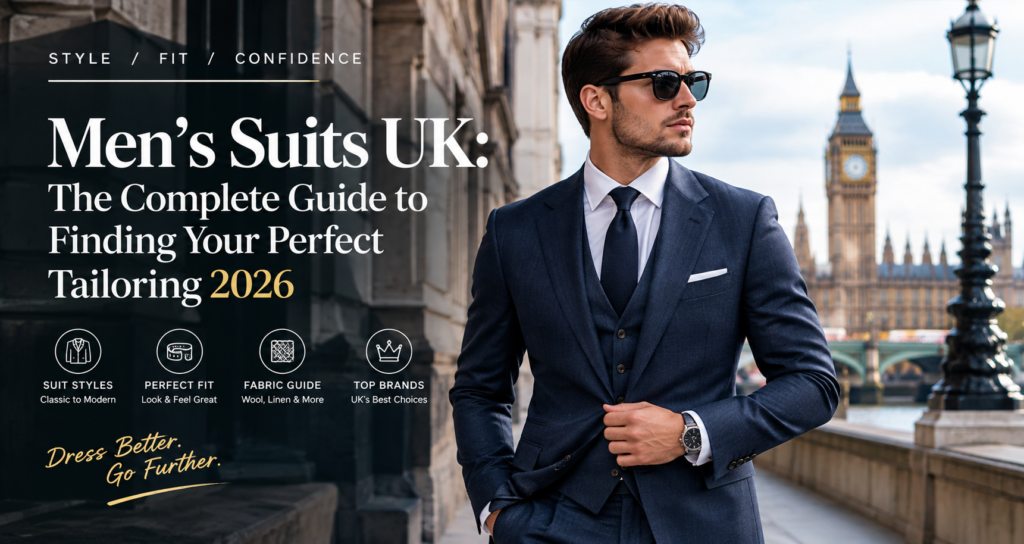
Men’s Suits UK
Buying a suit in the UK is not what it used to be. A generation ago, most men walked into a local menswear shop, tried on a navy two-piece, paid in cash, and that was that. Today, the landscape has fragmented into something far more interesting and, admittedly, more complicated. You can spend £150 at a high street chain or £6,000 on Savile Row, and both purchases can be defensible. The trick lies in understanding what you actually need, what the different routes to a well-fitting suit involve, and where the genuine value sits in a market that ranges from disposable fast fashion to hand-stitched heritage craftsmanship.
This guide exists because most men in the UK are underserved by the advice available to them. Retail assistants often lack the training to explain construction differences. Online guides tend to assume either a complete novice or a seasoned sartorialist. What follows is neither. It is a practical, experienced walk through the decisions that actually matter: fit, construction, fabric, brand tiers, and the question of whether to buy off the peg, made to measure, or bespoke. By the end, you should be able to walk into any suit retailer in the country, ask the right questions, and know within minutes whether what you are looking at represents genuine value or a clever bit of marketing.
What Actually Defines a Quality Suit
Fabric is the second pillar. The numbers you see on suit labels, such as Super 100s or Super 150s, refer to the fineness of the wool fibre. Counterintuitively, higher numbers are not always better for everyday wear. A Super 150s cloth is finer, softer, and more luxurious to touch, but it is also more delicate and will wear out faster than a Super 100s or Super 110s. For a suit you intend to wear to the office twice a week, a Super 100s to 120s worsted wool from a reputable mill such as Vitale Barberis Canonico or William Halstead is the sensible sweet spot .
Bespoke is the third route, and it is genuinely different from the other two. A bespoke tailor takes your measurements, but more importantly, they take your posture, your stance, and the way you carry yourself. They draft a unique paper pattern from scratch. They build a trial garment, called a toile or a baste, which you try on, and the tailor adjusts the fit through multiple fittings. The result is a suit that fits you and only you. In the UK, bespoke suits from reputable independent tailors typically start around £1,400 and rise steeply from there .
Understanding Fit: What Tailors Actually Look For
Trouser fit has its own set of rules. The waist should sit where you naturally bend, neither riding up nor sagging down. The seat should be comfortable without excess fabric billowing at the back. The trouser leg should break gently on the shoe, with a single break being the most versatile choice for business and formal wear. A double break can work on wider-leg trousers but tends to look sloppy on slim cuts.
Sleeve length is another common point of failure. The jacket sleeve should end where your wrist meets your hand, allowing roughly half an inch of shirt cuff to show. In Britain, the convention is slightly less shirt cuff than Italian tailoring, where an inch or more is common. The principle is that the shirt cuff provides a visual break between the jacket and the hand, and that break should be subtle but present. If no shirt cuff shows, the jacket looks borrowed. If too much shows, it looks like the jacket is too small.
A Suit for Every Occasion: Matching Cut and Cloth to Context
For weddings, the three-piece suit has become the standard choice for grooms and often for groomsmen . The waistcoat adds formality and gives you the option to remove the jacket later in the day while still looking properly dressed. Navy and mid-grey remain the most popular colours, though lighter tones such as beige, cream, and soft green have gained ground for summer and destination weddings . Fabric selection matters enormously here. A lightweight linen or cotton-blend suit will keep you comfortable at a July wedding, while a heavier flannel or tweed adds structure and warmth for autumn and winter ceremonies . The key is to match the cloth to the season and the venue, not to the latest trend on social media.
The UK Suit Market: What You Can Expect at Every Price Point
The British suit market is unusually broad, and the relationship between price and quality is not always linear. At the entry level, roughly £150 to £300, you are looking at high street chain suits, predominantly fused construction, with polyester blends or low-grade wool. These suits serve a purpose: job interviews, a first formal event, a situation where the suit will be worn a handful of times and then relegated to the back of the wardrobe. They can look sharp enough when properly altered, and there is no shame in buying one if that is what your budget allows. The mistake is expecting them to last or to develop character over time.
At the mid-range, roughly £400 to £800, you enter the territory of half-canvas construction and better cloth. Brands such as Suitsupply, BOSS, and Roy Robson operate here, offering suits that are genuinely well-made for the price . Suitsupply in particular has disrupted this tier with its combination of Italian fabrics, half-canvas construction, and a made-to-measure programme that starts around £574 . A suit at this level, worn once or twice a week, will easily last five to seven years with proper care. This is where most men who wear suits regularly should be shopping.
Above £1,000, you enter made-to-measure territory from established tailoring houses, or the lower end of bespoke. The quality difference between a £700 Suitsupply suit and a £1,500 made-to-measure commission is not primarily in the materials, though the cloth will be better. It is in the fit and the personalisation. You are paying for the time of a skilled fitter, the range of cloth choices, and the ability to specify details that make the suit distinctly yours. For a suit you will wear often, the additional cost is often justified by the wearability. A suit that fits properly is worn more often and with greater confidence than one that merely fits adequately.
| Price Tier | Construction | Typical Cloth | Best For | Expected Lifespan (regular wear) |
|---|---|---|---|---|
| £150–£300 | Fused | Poly-blend, low-grade wool | Occasional use, first suit | 1–2 years |
| £400–£800 | Half-canvas | Super 100s–120s wool | Regular office wear | 5–7 years |
| £1,000–£2,000 | Made to measure (half/full canvas) | Super 110s–130s, branded mills | Frequent wear, personalised fit | 7–10 years |
| £3,000+ | Bespoke (full canvas, hand-finished) | Premium cloths, rare fibres | Lifelong investment, significant fit needs | 10–20+ years |
How to Care for a Suit So It Lasts
A good suit, properly cared for, can last a decade or more. The problem is that most men under-maintain theirs without realising it. The most common mistake is wearing the same suit on consecutive days. Wool needs time to recover its shape after a day of wear. If you wear a suit two days in a row, the elbows and knees will bag, and the cloth will lose its resilience over time. The solution is simple: rotate your suits, and give each one at least twenty-four hours of rest between wears. If you wear suits five days a week, you need at least three in rotation, ideally four .
Storage matters too. A suit that sits in a crowded wardrobe, pressed against other garments, will crease and lose its shape. Give each suit enough space to hang freely. For seasonal storage, a breathable garment bag, not a plastic one, will protect the suit from dust and moths without trapping moisture. Cedar blocks or lavender sachets provide natural protection against moths without the chemical smell of synthetic repellents. These are small habits, but over the lifespan of a suit, they make the difference between a garment that looks tired after three years and one that still looks sharp after ten.
Why British Tailoring Still Matters
The British suit has a distinct identity. It is more structured than its Italian counterpart, with a defined shoulder and a pinched waist, a heritage that can be traced to the military tunics that influenced early British tailoring . This does not mean British suits are uncomfortable. It means they project a particular kind of formality and authority that has been valued in British professional life for over a century. The “English drape” cut, developed by Anderson & Sheppard in the early twentieth century, softened this structure with a fuller chest and a more fluid line, influencing tailoring worldwide . The tension between structure and softness, between military precision and natural drape, is what gives British tailoring its range.
This heritage is not merely nostalgic. It has practical value. The British climate, with its damp winters and unpredictable summers, has shaped the cloths that British tailors favour: tightly woven worsteds that resist rain and hold their shape, flannels that provide warmth without bulk, and tweeds that offer durability and texture. A British suit, properly made, is designed for British weather and British social codes. That is why the suit remains, despite predictions of its demise, a fixture of British professional and ceremonial life. It is not the only way to dress well. It is, for many occasions in the UK, the most appropriate way.
FAQ
What is the difference between made to measure and bespoke suits in the UK?
Made to measure starts with an existing block pattern that is adjusted to your measurements, allowing for personalisation of cloth and details but not a fully unique fit. Bespoke involves drafting a completely new paper pattern from scratch based on your measurements and posture, with multiple fittings and hand construction throughout. Bespoke can accommodate significant postural irregularities that made to measure cannot correct, which is why it costs considerably more and takes longer to complete .
How much should I expect to pay for a good men’s suit in the UK?
A reliable suit for regular wear from a mid-range brand or made-to-measure service typically starts around £400 to £800 for off the peg with alterations, and £1,000 to £1,500 for made to measure . Bespoke suits from reputable independent tailors start around £1,400 and rise to £5,000 or more from established Savile Row houses . The key is to match the price to the frequency of wear and the fit requirements, not to a prestige hierarchy.
How often should I dry clean my suit?
No more than once or twice a year for a suit worn regularly. Dry cleaning solvents strip wool of its natural oils and accelerate wear. Between cleanings, brush the suit after each wear, steam it to remove wrinkles and odours, and spot clean minor marks with a damp cloth. Proper rotation, giving each suit a day of rest between wears, will reduce the need for cleaning significantly .
Can I wear a three-piece suit to a job interview?
Yes, in most professional contexts, a three-piece suit is appropriate for an interview, particularly in conservative industries such as law, finance, and consulting. The waistcoat adds formality without being ostentatious. For creative industries or casual workplaces, a two-piece suit in navy or grey may be more suitable. The key is to match the formality of your attire to the culture of the organisation, and when in doubt, err slightly more formal than less .
What is the best colour for a first men’s suit in the UK?
Navy is the most versatile choice for a first suit. It works for business, weddings, interviews, and social occasions, and it flatters most skin tones and hair colours. Mid-grey is a close second, slightly less formal than navy but equally versatile. Charcoal is a strong choice for business settings, particularly in winter. Avoid black for a first suit unless you specifically need a dinner suit, as black is less versatile for daytime wear and can look harsh in natural light .
Conclusion
The final insight is this: the British suit market rewards knowledge. A man who understands the difference between fused and canvas, between made to measure and bespoke, between a Super 100s and a Super 150s, will make better decisions at every price point. That knowledge is not innate. It is learned, and it is worth learning. The right men’s suits UK buyers choose are the ones that fit their bodies, their lives, and their budgets, not the ones that merely carry the right label.