

The pursuit of beauty is a timeless human endeavor, a quiet ritual woven into the fabric of our daily lives. In an era dominated by high-definition cameras, filtered social media feeds, and an overwhelming array of cosmetic choices, a powerful counter-movement has emerged: the celebration of authentic, enhanced beauty. This is the heart of the natural makeup look, a style that doesn’t seek to mask or transform, but rather to reveal and refine. It’s a philosophy built on the idea that your skin, in its most healthy and balanced state, is the perfect canvas. The goal is not to look like you’re wearing a lot of makeup, but to look like the best, most radiant version of yourself.
The Art of Effortless natural makeup looks Beauty
This comprehensive guide is designed to be your trusted companion on this journey. We will move beyond superficial tips and delve into the artistry and science of the “no-makeup makeup” aesthetic. You will learn that achieving this seemingly effortless appearance is, in fact, a meticulous craft. It requires an understanding of your unique skin, a carefully curated toolkit, and a mastery of techniques that focus on subtlety and enhancement over concealment. We will explore everything from the foundational importance of skincare to the nuanced application of color, ensuring that by the end, you possess the expertise to create a look that is both polished and profoundly personal.
The modern desire for natural makeup looks is more than a passing trend; it is a reflection of a broader cultural shift towards wellness, authenticity, and self-acceptance. Consumers are becoming more savvy, scrutinizing ingredient lists and seeking products that not only perform but also nourish. They are looking for versatility and efficiency, favoring a multi-purpose cream blush that can also tint the lips over a shelf full of single-use powders. This guide embraces that ethos, focusing on strategies that are both effective and mindful.
The Philosophy and Psychology Behind the Effortless Aesthetic
At its core, the natural makeup look is a study in restraint. It’s a visual exercise in knowing what to highlight and what to leave be. This approach stands in stark contrast to more dramatic or theatrical makeup styles, which often rely on strong contouring, bold color payoffs, and the visible transformation of features. The psychological appeal of this aesthetic lies in its promise of authenticity. In a world where so much is curated and polished to perfection, the “no-makeup” makeup look offers a semblance of raw, unvarnished reality.
The philosophy extends into the very products we choose and how we apply them. Think of a watercolor artist versus an oil painter. The oil painter builds up thick, opaque layers of pigment to create a dense, textured image. The watercolorist, by contrast, uses translucent washes of color, allowing the texture and tone of the paper to show through, creating a luminous and delicate effect. The artist practicing natural makeup looks is a watercolorist. Their techniques involve sheer layers, strategic placement, and blending that mimics the natural gradients of the skin.
Furthermore, this aesthetic champions the beauty of imperfection. It moves away from the idea of a flawless, airbrushed visage and instead celebrates unique features. Freckles are not blemishes to be covered but character to be revealed. A slight flush on the cheeks is not unevenness but a sign of vitality. This mindset is liberating. It shifts the focus from “correcting” perceived flaws to “celebrating” individual characteristics. The goal is to create a cohesive and healthy-looking appearance where the makeup serves to connect and harmonize your features, rather than isolating and altering them. It’s a holistic approach to beauty, where the sum is far greater and more beautiful than its individual parts.
Building Your Canvas: The Indispensable Role of Skincare
You cannot build a beautiful, lasting structure on a weak foundation, and in the world of natural makeup looks, your skincare routine is that foundation. The most masterful makeup application in the world cannot disguise skin that is dehydrated, congested, or irritated. In fact, a heavy layer of makeup will only accentuate these issues, settling into fine lines, clinging to dry patches, and sliding off oily areas. The ultimate secret to the “no-makeup” makeup look is not a specific product, but the quality of the skin beneath it. A consistent, thoughtful skincare regimen is non-negotiable. It is the preparatory work that makes the final result appear so effortless.
A robust skincare routine begins with the fundamentals: cleansing, exfoliating, hydrating, and protecting. Cleansing should be gentle, removing impurities without stripping the skin’s natural moisture barrier. Exfoliation, whether physical or chemical (using alpha-hydroxy or beta-hydroxy acids), should be performed a few times a week to slough off dead skin cells, revealing the smoother, brighter skin underneath. This step is crucial, as it prevents makeup from looking dull or patchy. Hydration is the key to a dewy, reflective complexion. This involves not just moisturizer, but often a hydrating serum or essence layered underneath to draw moisture into the skin.
Think of your skincare routine as a targeted problem-solving mission. If your primary concern is redness, you might incorporate a serum with niacinamide or azelaic acid. If you struggle with dullness, vitamin C is your ally for brightening. If your skin is perpetually thirsty, hyaluronic acid and ceramides will become your best friends. This personalized approach ensures that you are addressing your skin’s specific needs, creating a balanced, healthy baseline. When your skin is healthy, you require less makeup to make it look good. The goal is to reach a point where you feel confident enough to step out with just a tinted moisturizer or even a touch of concealer, because your skin itself is glowing.
The connection between skincare and makeup application is symbiotic. Well-hydrated skin allows cream and liquid products to glide on smoothly and blend seamlessly, creating that coveted skin-like finish. Plump, exfoliated skin reflects light more evenly, reducing the need for heavy highlighters. By investing time and effort into your skincare, you are not just improving the health of your skin; you are fundamentally improving the performance and appearance of your makeup. It is the difference between painting on a rough, unprimed wall and a smooth, prepped one. The prepped wall will always yield a more professional, seamless, and beautiful result.
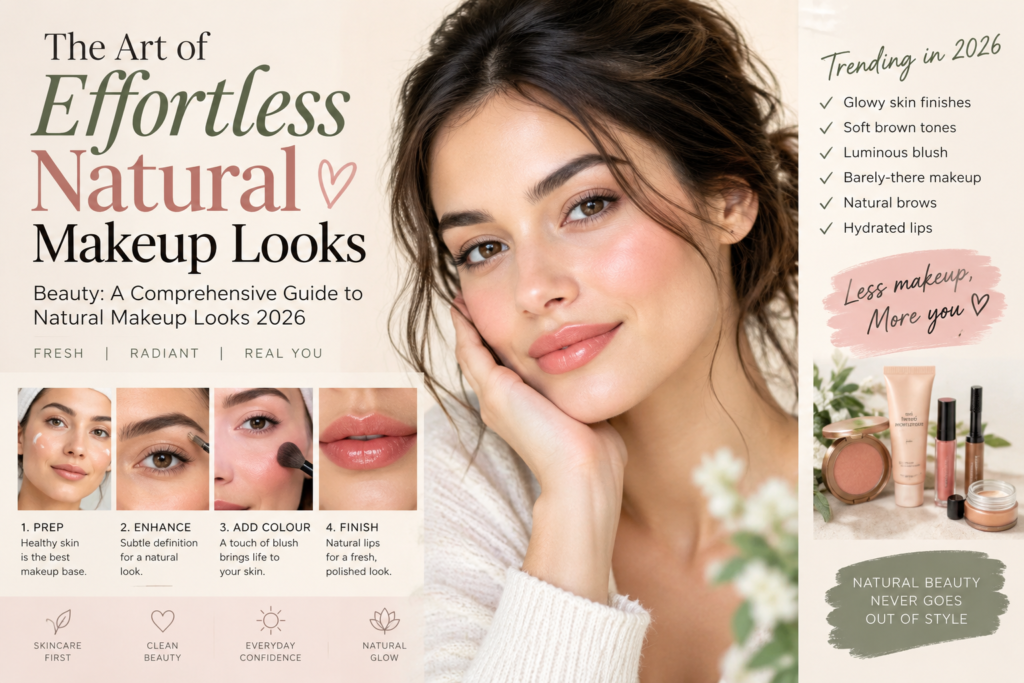
Decoding the “No-Makeup Makeup” Toolkit: Essential Products and Formulations
Creating a natural makeup look is less about having a massive collection of products and more about having the right ones. The toolkit for this aesthetic is curated for texture, blendability, and a skin-like finish. Powders, while excellent for setting and mattifying, can sometimes appear flat or cakey if not used with a very light hand. The hero products for this look are often creams and liquids, which melt into the skin, mimicking its natural texture and creating a dewy, lit-from-within glow. The selection of these products is a personal journey, but understanding the role of each category is essential for building a versatile and effective kit.
Let’s talk about bases. A full-coverage, matte foundation is rarely the right choice for an effortless look. Instead, consider a spectrum of lighter options. A tinted moisturizer or a sheer-to-medium coverage foundation provides a wash of color to even out the skin tone while still allowing your natural skin to show through. For those with clearer skin, a good concealer might be all you need, applied only to areas of concern like under the eyes or around the nose. BB creams and CC creams are also excellent options, as they combine skincare benefits with light coverage. The key is to choose a formula that is hydrating and has a radiant or natural finish.
For adding color and dimension, cream products are the unsung heroes of the natural makeup aesthetic. A cream blush, for example, can be dabbed onto the apples of the cheeks and blended out with fingers or a damp sponge, creating a seamless, flushed-from-within look that powder blushes can struggle to replicate. The same applies to bronzer and highlighter.
| Product Category | Product to Avoid for a Natural Look | Better Alternatives for a Natural Look | Why It Works |
|---|---|---|---|
| Base | Full-Coverage Matte Foundation | Tinted Moisturizer, BB/CC Cream, Sheer Foundation, Concealer | Allows natural skin texture and luminosity to show through; looks like skin, not a mask. |
| Cheeks | Highly Pigmented Powder Blush | Cream or Liquid Blush, Multi-purpose Color Sticks | Melts into the skin for a seamless, dewy flush that looks like it’s coming from within. |
| Eyes | Dense, Glittery, or High-Pigment Powders | Cream Shadow Sticks in Neutral Tones, Liquid Eyeshadows | Provides a subtle wash of color and light that enhances the eye without looking heavy. |
| Lips | Long-wear, Matte Liquid Lipsticks | Tinted Lip Balms, Sheer Lipsticks, Lip Oils, Lip Stains | Offers a healthy, hydrated look with a pop of color that feels comfortable and modern. |
| Brows | Harsh, Waxy Pomades or Pencils | Tinted Brow Gels, Fine-Tipped Pencils, Brow Powders | Creates a soft, feathered look that fills in gaps without looking drawn-on or blocky. |
The Art of Subtle Application: Techniques for a Flawless Finish
The right products are only half the battle; the true magic of natural makeup looks lies in the application. The techniques you use are what separate a painted face from a beautifully enhanced one. The guiding principle for this aesthetic is blending. Any visible line of demarcation—where your foundation ends and your neck begins, or where your blush stops and your cheek starts—is the enemy of a natural finish. The goal is to create soft, diffused gradients of color and texture that mimic the way color naturally appears on the human face.
Start with your base. Forget the idea of painting your face with foundation. Instead, think of strategically applying it only where you need it most, typically the center of the face. Use a damp makeup sponge, a dense buffing brush, or even clean fingers to press and stipple the product into the skin. The tapping and pressing motion, rather than a sweeping or wiping one, helps the product melt into the pores and texture of the skin, creating a more seamless and long-lasting finish. If you use concealer, apply it in a small “V” shape under the inner corner of the eye and tap it outwards.
When it comes to adding color, placement is everything. For a natural blush application, smile to find the apples of your cheeks, and then apply your product slightly upwards and outwards towards your temple. This lifts the face and mimics the natural flush you get from exercise or cold weather. Blend the edges until they disappear into your base. For bronzer, the goal is to add warmth and dimension, not to create a harsh contour.
The finishing touches are equally important. Instead of aggressively filling in your brows, use light, hair-like strokes to mimic natural growth. Brush the hairs up with a spoolie brush and use a tinted gel to set them in place. This creates a fuller, more textured look. For your eyelashes, wiggle the mascara wand at the base of your lashes and then sweep it up and out. If you get any mascara on your eyelid, wait for it to dry completely before gently flaking it off with a clean spoolie. This prevents smudging.
The Art of the Finishing Touch
The final steps in creating natural makeup looks are what truly elevate the result from simple to sophisticated. It’s about understanding the concept of harmony and knowing when to stop. The “less is more” philosophy should guide every decision, especially when it comes to the final touches. One of the most common mistakes people make when trying to achieve this look is over-application. They add a little more blush, then a little more bronzer, until the face looks heavy and contrived. The expert approach is to apply in sheer layers, building up intensity only where it’s absolutely needed. A single, well-blended wash of color is almost always more flattering and natural than a buildup of multiple products.
Beyond products and techniques, the final touch is an intangible one: confidence. The natural makeup look is designed to enhance, not to hide. It is a celebration of your features, and when you feel comfortable and confident in your own skin, it shows. The most beautiful makeup is the kind that makes you forget you’re wearing it. It’s the kind that makes you smile more freely, laugh more loudly, and go about your day with a quiet sense of assurance. This aesthetic is not about achieving a perfect, flawless mask; it is about revealing the vibrant, healthy, and unique individual underneath. The final brushstroke is a smile, and the most important product you can wear is self-assurance.
Seasonal Shifts: Adapting Your Natural Look Throughout the Year
A truly masterful grasp of natural makeup looks includes the ability to adapt to the changing seasons. Your skin’s needs fluctuate with the weather, and so should your makeup routine. The products and techniques that create a beautiful summer glow may feel heavy and uncomfortable in the winter, and conversely, a look designed for winter hydration might melt away in the summer humidity. Understanding these seasonal shifts allows you to maintain a fresh, effortless appearance all year round. It’s a dynamic practice that requires you to be in tune with your skin and your environment, making subtle adjustments that respect the unique challenges and opportunities each season presents.
Troubleshooting Common Challenges: Problem-Solution Guide
Even with the best guidance, you may encounter a few common pitfalls on your journey to mastering natural makeup looks. The key is not to get discouraged but to understand the root of the problem and have a solution ready. A common frustration is when a light-coverage foundation or tinted moisturizer provides no coverage at all, or when it fades away by lunchtime. This is often the result of skipping primer or applying the product to unpurged skin. A good smoothing primer can create a seamless canvas and help makeup last longer. Another issue is finding the right color match in a sheer formula.
The Enduring Appeal of Authentic Beauty
Mastering this aesthetic is a journey, not a destination. It involves a process of self-discovery, from figuring out your skin’s specific needs and finding the perfect shades to mastering the delicate art of blending. It requires a shift in mindset, from a desire to “fix” to a desire to “enhance.” Each application is an opportunity to refine your technique and deepen your understanding of what works for you. The result is not just a beautiful face, but a greater sense of self-awareness and a more profound appreciation for your own natural beauty. /
Frequently Asked Questions
What is the most important step in achieving a natural makeup look?
The single most important step is a consistent and effective skincare routine. The quality of your skin is the foundation upon which a natural makeup look is built. You cannot achieve a truly seamless, glowing, and believable finish on skin that is dry, congested, or unevenly textured. Healthy, hydrated skin reflects light more evenly, requires less coverage, and allows cream and liquid products to blend beautifully. Therefore, investing time in cleansing, exfoliating, moisturizing, and protecting your skin daily will improve the outcome of your makeup application far more than any single cosmetic product.
Can I achieve a natural makeup look if I have oily skin?
Yes, absolutely. The key for oily skin is to focus on strategic mattifying and long-wear formulas. The goal is not to dry out your skin, but to control shine in specific areas while still maintaining a natural, healthy radiance. Start with a balancing primer. Choose a foundation or skin tint that has a natural or satin finish, not a heavy matte one, which can look flat. Use a cream or gel blush and set it with a light dusting of a finely milled powder. The most crucial step is to use blotting papers throughout the day to absorb excess oil without disturbing your makeup.
How can I make my brows look natural and not drawn-on?
To create natural-looking brows, you must work with the texture and direction of your hair. Start by brushing your eyebrows upward with a spoolie brush. Use a tinted brow gel to add volume and hold the hairs in place. If you have sparse areas, use a fine-tipped brow pencil that matches your hair color. Use very light, feathery strokes to draw in individual hairs, following the natural growth pattern. Avoid harsh, solid lines. After drawing in the hairs, use the spoolie brush again to soften the pencil and blend it with your natural brows. This technique creates a fuller, more textured look that is soft and believable.
What are the best types of lip products for a no-makeup makeup look?
The best lip products for this aesthetic are those that are hydrating, sheer, and natural-looking. Tinted lip balms are an excellent choice as they provide a hint of color and a healthy sheen. Sheer, buildable lipsticks offer a bit more color payoff while still being comfortable and lightweight. Lip stains are also a great option, as they provide a long-lasting wash of color that looks like a natural flush. For a truly effortless look, dab the color onto the center of your lips and blend it outwards with your fingertip. This “blotted” effect is modern, natural, and incredibly flattering.
How do I prevent my natural makeup look from fading during the day?
To make your natural makeup look last, you need to focus on both preparation and setting. Start with a good primer that is suited to your skin type. Use thin layers of product rather than one heavy layer, as thinner layers tend to last longer. After applying your makeup, use blotting papers to absorb oil without disturbing your makeup, and carry a small amount of cream blush or a tinted balm for quick, effortless touch-ups.