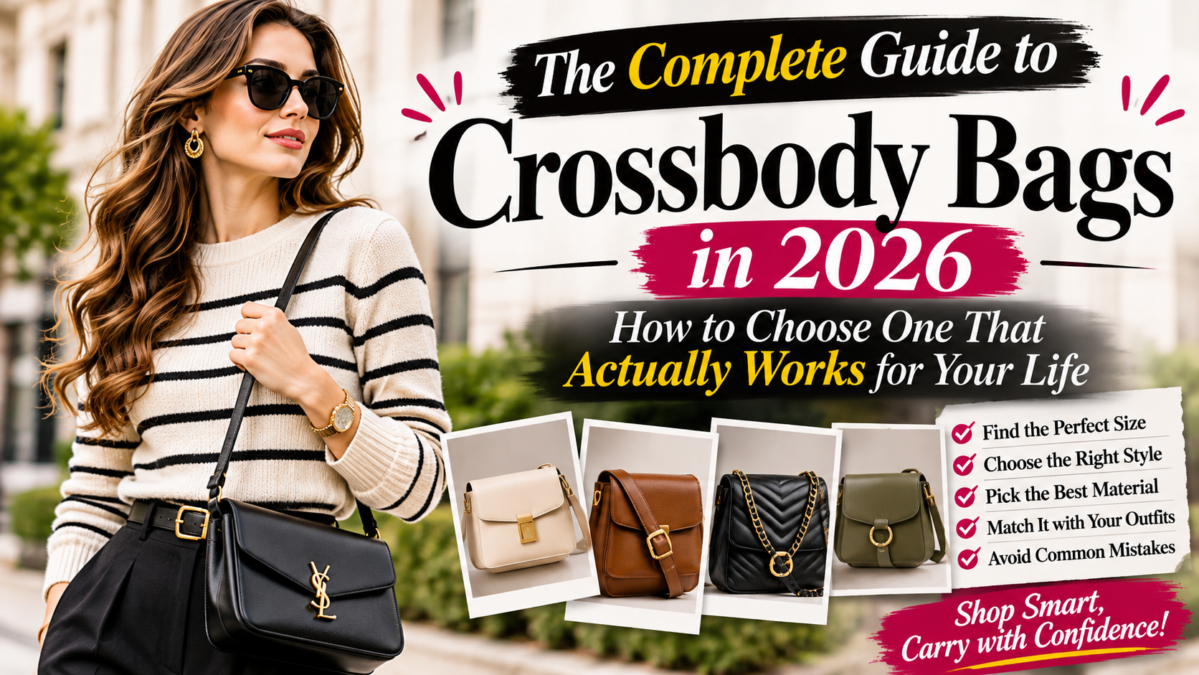

Most handbags ask you to make a choice: look polished or keep your hands free. The crossbody bags category exists because that trade-off was always a false one. A long strap worn diagonally across the body distributes weight differently than a shoulder bag, keeps your essentials within reach without occupying a hand, and sits close enough to the body that you can walk, commute, or chase a toddler without adjusting it every thirty seconds .
The problem is that the market has flooded with options, and the label “crossbody” now describes everything from a tiny phone pouch to a bag that swallows a tablet. The strap is the defining feature, not the size . Understanding how to match the bag to the purpose, the body, and the actual contents of your daily life is what separates a purchase you reach for every morning from one that lives in the closet with the tags still on.
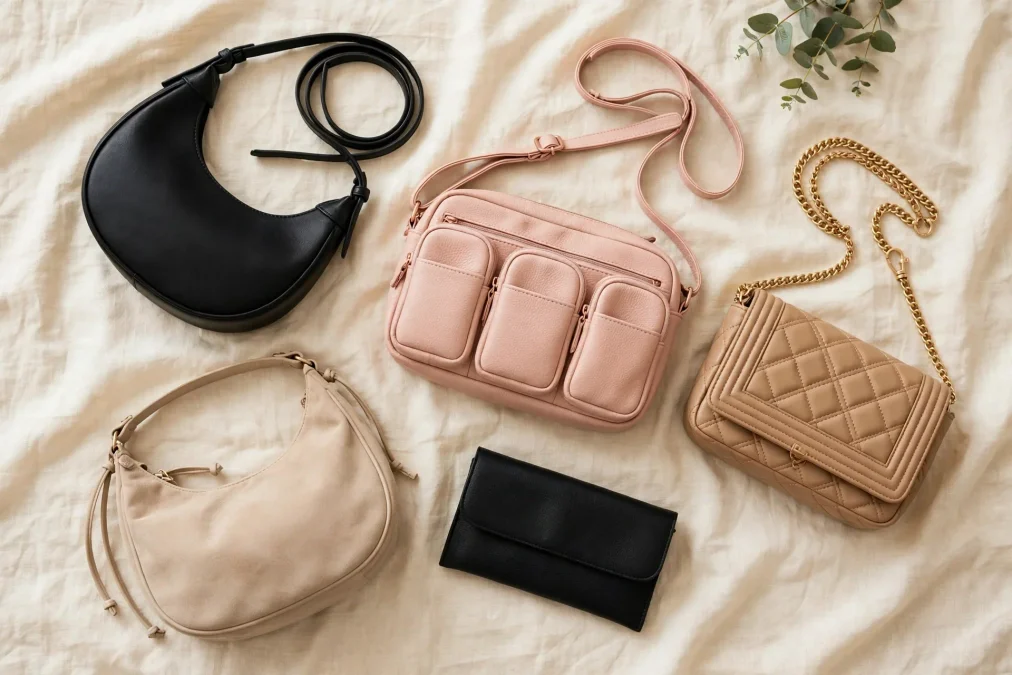
Crossbody Bags in 2026: A Category Caught Between Comeback and Retreat
The crossbody bag entered 2026 in an unusual position: simultaneously declared dead by some corners of the fashion press and celebrated as a resurgent staple by others. British Vogue ran a piece in March arguing the functional leather bag had “fallen entirely out of favour” on the street-style circuit, citing a 27 percent month-on-month drop in Lyst interest and a 79 percent decline year-over-year . Yet by June, the same season that produced that obituary, LTK recorded a 200 percent increase in crossbody searches, and stylists were recommending the format as the default choice for festival season .
The contradiction resolves once you separate runway theater from actual shopping behavior. The crossbody never disappeared from daily life; it simply stopped being the accessory that fashion editors wanted photographed. What emerged in 2026 was a more fragmented category, split between a nostalgia-driven revival of 2016-era chain-strap styles and a quieter, more practical iteration worn over one shoulder rather than across the torso .
The 2016 Revival and the Chain-Strap Comeback

Nostalgia for the mid-2010s became a defining undercurrent of 2026, and the crossbody was its most visible vehicle. Creative director and celebrity stylist Scot Louie told Refinery29 that “crossbody bags defined this era,” pointing to the Gucci Marmont and Dionysus, the Chanel Boy Bag, and the Valentino Rockstud as objects of renewed desire . The common thread among those archival pieces is the chain strap, a detail that brands across price points reintroduced throughout the year.
This revival was less about functionality than about aspiration fulfilled. As the creator behind the @y2kbags Instagram account put it, “All of us who once aspired to wear those designer pieces now actually have the means to purchase them” . Bella Hadid was photographed in a Coach crossbody worn with the long strap draped over one shoulder rather than across the body, a styling shift that brands like The Row, Toteme, and Khaite echoed in campaigns and on runways . The bag stayed; the way it was carried changed.
Practicality Wins in the Real World
Away from the shows, the crossbody’s core advantage remained difficult to argue with. Hands-free carrying, close-to-body security, and easy access made it the default for anyone navigating a commute, a festival, or a full day on foot. The high street responded accordingly: an Amazon woven style under £20 saw searches spike by 1,000 percent, the H&M crossbody bucket bag became one of the most popular styles on LTK, and Polène’s Numéro Dix continued to earn daily-wear endorsements from editors who had used it for five years without deterioration . Parker Thatch’s creative director described flap bags and crossbodies as “becoming essentials” with a “modern prep polish” that felt relaxed but intentional .
The market data supports the durable demand even as trend narratives wobble. The global crossbody bag market was valued at roughly $22.42 billion in 2025 and is projected to reach $39.85 billion by 2034, growing at a compound annual rate of 6.6 percent . That growth is not driven by runway enthusiasm; it is driven by people buying bags they intend to use.
What to Watch in the Second Half of 2026
The clearest signal from 2026 is that the crossbody is no longer a single trend but a format that adapts to whatever the season demands. On the luxury end, the investment case rests on longevity: a Glamour editor noted that her Loewe Puzzle bag, purchased eight years ago, remains in weekly rotation and has increased in value, while Mulberry’s Alexa was flagged for a resurgence before resale prices climbed . On the accessible end, the market is rewarding bags that solve specific problems, from anti-theft travel designs with RFID blocking to wallet-crossbody hybrids that eliminate the need for a separate purse .
The practical takeaway for anyone shopping in 2026 is to ignore the obituary headlines and focus on the variables that always mattered: strap adjustability, closure security, weight empty, and whether the bag’s resting position actually suits your body and your day. The crossbody’s cultural stock may rise and fall with the nostalgia cycle, but its functional logic remains stubbornly intact.

What Crossbody Bags Actually Are and Why the Strap Changes Everything
A crossbody bag is defined by its long strap that allows it to be worn diagonally across the torso, with the bag resting near the waist or hip . That single design decision creates the hands-free functionality that makes the category so practical. But it also introduces variables that other bags do not have: strap length, strap width, and the resting position of the bag on the body all determine whether the bag feels secure and comfortable or awkward and annoying.
The resting position is a personal preference, not a universal rule. A higher position, closer to the chest or natural waist, feels more secure and compact. A lower position, sitting on the hip, creates a more relaxed look but can interfere with walking or press against the hipbone when the bag is full . The bag should never swing against your leg with every step, and it should not require constant readjustment. The right length is the one that keeps the bag stable without restricting movement.
Strap width matters more than most people realize. A narrow strap looks delicate on a small bag, but a bag carrying a water bottle, sunglasses case, and a wallet will dig into the shoulder after an hour if the strap is too thin. For a crossbody that will be worn all day on foot, a wider strap spreads the load and reduces fatigue . Chain straps look dressier, but they weigh more and can rub against fine wool coats or delicate fabrics . A flat leather strap is kinder to both the shoulder and the wardrobe.
How to Match Crossbody Bags to Their Actual Purpose
The single biggest mistake in buying a crossbody is choosing based on appearance rather than function. A bag that looks perfect with a cocktail dress will fail at a farmers market, and a bag that holds everything you need for a workday will look out of place at a wedding. The most practical approach is to think in terms of use cases, not aesthetics alone.
For everyday use, the target is a bag that holds a phone, a card case or small wallet, keys, sunglasses in a slim case, and a lip product without bulging or requiring Tetris-like rearranging . A small camera bag or a compact flap bag in the eight to nine inch width range handles this load comfortably. If you carry a hard glasses case every day, or a small water bottle, step up to a medium size in the ten to eleven inch range . For travel, the same medium size works well as a personal item alongside a carry-on, keeping passport, phone, charger, and water accessible during the flight .
For evenings and formal events, the calculus shifts entirely. A mini or small crossbody in the fifteen to eighteen centimeter width range holds a phone, two cards, a key, and a lipstick, which is all a wedding or a dinner actually requires . The advantage of a convertible style with a detachable chain or leather strap is that it can transition from crossbody during the ceremony to a clutch at the table, avoiding the awkwardness of a bag competing with a centerpiece . The bag should complement the outfit, not dominate it.
The table below consolidates the size-to-purpose relationship, drawing on published dimensions and capacity guidance from retailers and stylists.
| Size Category | Approximate Width | What It Fits | Best Use Case |
|---|---|---|---|
| Mini | 15–18 cm | Phone, two cards, key, lip product | Evenings, weddings, festivals |
| Small | 20–24 cm | Phone, wallet, sunglasses, small water bottle | City days, dinner out, travel essentials |
| Medium | 25–30 cm | Adds slim notebook, snacks, makeup pouch | Daily use, commutes, weekend exploring |
| Large | 30 cm+ | Tablet, paperback, umbrella, light layer | All-day travel, sightseeing, work-light days |
The row that catches most people is the small category. A bag in the twenty to twenty-four centimeter range sounds compact, but it is genuinely roomy enough for a full day out if you pack deliberately rather than hopefully.
The Comfort and Fit Details That Reviews Rarely Mention
Weight is the specification nobody lists until it becomes a problem. A bag that feels light on the shelf can turn into a chore by mid-afternoon if the strap is thin, the hardware is heavy, or the leather is structured and stiff. The iPhone alone weighs roughly nine ounces, which is more than some lambskin pouches weigh empty . Chain straps, heavy metal hardware, and structured calfskin all add weight. Nylon, technical fabrics, and soft lambskin keep it down .
For a crossbody bag that will be worn on foot for hours, the target is roughly one pound empty. Heavier icons have their place, but that place is usually a car, a restaurant, and an office, not a full day of walking . The same logic applies to the strap attachment. A detachable strap earns its keep because it lets the bag become a clutch, an underarm bag, or a shoulder bag depending on the day, which means one purchase covers more situations . The strap should also be tested with the clothing you actually wear. A strap that catches on buttons or slides off a silky top will annoy you every time you wear it, and that annoyance compounds .
Closure security is another detail that separates a bag you trust from one you constantly check. From most to least secure, the hierarchy runs: a zip top, a turn-lock or clasp, a magnetic flap, and an open top . An open-top bag is fine for a quick errand in a low-risk environment, but it is the wrong choice for travel, crowds, or public transit. Whatever the closure, the opening should face your body when worn, and in a crowd the bag should be moved to the front .
Leather, Fabric, and the Materials That Age Well
Material choice is not just about look. It determines how the bag survives rain, scratches, daily handling, and the occasional accidental collision with a doorframe. Grained and pebbled calfskin hides scratches and copes with light rain, which is why it makes the best everyday crossbody . Smooth box calfskin looks sharper and more formal, but it shows marks readily. Some smooth leathers develop a patina over time, which is a feature rather than a flaw, but only if you like the idea of a bag that visibly ages .
Lambskin is soft and lightweight, which makes it appealing for smaller bags, but it scuffs more easily and requires more careful handling . Suede belongs to dry days and careful outfits, not to a commute that involves rain or a coffee shop with sticky counters. Nylon and coated canvas are the travel materials: light, wipeable, and forgiving of abuse . A nylon crossbody bag will never look as refined as leather, but it will survive an airport, a festival, and a sudden downpour without complaint.
The material also affects how the bag sits against the body. Soft leather and nylon drape and mold to the shape of your hip or waist. Structured leather holds its shape and projects outward, which can look more polished but also more obtrusive. For a bag that will be worn under a coat or against the body in a crowd, softer materials are less noticeable and less likely to be bumped.
The Crossbody Bags That Have Earned Their Place in the Market
Certain designs have become reference points for a reason. The Loewe Puzzle, the Chanel quilted crossbody with its sliding chain, the Celine Triomphe, and the Gucci Ophidia appear repeatedly in editorial coverage not because they are new but because they solve the problem well . A fashion editor at Glamour described using the Puzzle bag weekly for eight years, noting that it has held up and increased in value, which is an unusual outcome for a handbag . That kind of longevity is the real test of a crossbody: does it still look and function well after years of daily use?
At the accessible end, the Uniqlo Round Mini Shoulder Bag became a viral staple for its combination of a low price, water-repellent nylon, and a shape that holds more than it appears to . The H&M crossbody bucket bag and a woven Amazon style under twenty pounds have also circulated widely, largely because they mimic more expensive silhouettes at a fraction of the cost . These are not investment pieces in the traditional sense, but they demonstrate that the crossbody format does not require a luxury budget to work.
The middle ground is where most people actually shop. Brands like Polène, Coach, and Mulberry offer leather crossbodies in the two to six hundred dollar range that balance material quality with practical design. A Polène Numéro Dix, for example, has been used daily for five years by one stylist without losing its shape . The common thread among bags that earn repeat wear is not a logo or a trend. It is a strap that adjusts, a closure that secures, a size that matches the load, and a material that tolerates real life.
Frequently Asked Questions About Crossbody Bags
Where should a crossbody bag actually sit on the body?
It should sit where it feels accessible and stable without interfering with movement. Traditionally, the bag rests at the hip for easy access, but a higher position near the waist or chest feels more secure and compact, especially in crowds or on public transit . The right position depends on your height, torso proportion, and what you are carrying. The bag should not swing against your leg when you walk or press uncomfortably against the hipbone when full.
Is there an ideal strap length for crossbody bags?
No single length works for everyone. A typical adjustable range runs from roughly forty-five to sixty inches including hardware, but the correct setting depends on your height and where you want the bag to rest . The better approach is to compare the listed strap measurements against a bag you already find comfortable, then adjust from there . A strap that is too short will ride up uncomfortably; one that is too long will swing and bounce.
Can a crossbody bag work for travel and sightseeing?
Yes, and it is often the most practical choice. Worn across the body, the bag stays close and deters pickpockets in busy airports and tourist areas, and a small to medium crossbody qualifies as a personal item alongside a carry-on on most airlines . Look for a zip-top closure, a strap that adjusts to sit high and secure, and an interior pocket large enough for a passport. An open-top bag is the wrong choice for travel, no matter how good it looks .
What is the most durable material for an everyday crossbody bag?
Grained or pebbled calfskin is the most forgiving everyday leather because it hides scratches and handles light rain well . Nylon and coated canvas are the most durable overall, especially for travel and bad weather, because they are light, wipeable, and resistant to scuffs. Smooth leather and lambskin look more refined but require more care. The right choice depends on whether you prioritize polish or resilience, and whether the bag will see more office carpets or airport floors.
How do I stop a crossbody bag from hurting my shoulder?
The two biggest factors are strap width and total weight. A wider strap spreads the load and reduces pressure points, especially for bags carrying a water bottle or sunglasses case . Keep the contents appropriate to the bag size; overloading a small bag is the most common cause of discomfort . If the bag still digs in, a padded strap attachment or a different material, such as a flat leather strap instead of a chain, can make a meaningful difference.
Conclusion
The crossbody bags category earns its place in a wardrobe because it solves a problem that other handbags ignore: how to carry what you need without occupying a hand or sacrificing the ability to move freely. But the format only works when the details align. A strap that adjusts to your body, a closure that secures without fuss, a material that tolerates your actual climate, and a size that matches your actual load are what separate a bag you love from one you tolerate.
The final insight worth carrying into any purchase is this: the best crossbody is not the most photographed one or the one with the longest waitlist. It is the one whose weight, strap, and opening disappear into the background of your day. When you stop thinking about the bag and start thinking about where you are going, the crossbody bags in your collection have done their job. Choose for the life you actually live, not the one you imagine, and the bag will earn its keep for years rather than seasons.