

A braids hairstyle is far more than a passing trend or a convenient way to manage hair on a busy morning. It is a protective styling tradition with roots stretching back centuries across African cultures, a practical solution for textured hair, and a canvas for personal expression that adapts to every age, occasion, and lifestyle. Yet the gap between a fresh set that turns heads and a painful, damaged scalp often comes down to knowledge that gets glossed over in the chair.
Most people who search for information on braids want the same things: to understand the options, to know how long a style will actually last, and to avoid the breakage and thinning that can follow a bad install or a neglected takedown. This guide covers the full lifecycle of a braids hairstyle, from the consultation and hair selection through the nightly routine and the final removal, with the kind of detail that salon professionals rely on and first-timers rarely hear until it is too late.
What Makes a Braids Hairstyle a Protective Style
The term protective style gets used loosely, but it has a specific meaning in hair care. A braids hairstyle protects natural hair by tucking the ends away, reducing manipulation from daily combing and styling, and shielding strands from environmental stressors like sun exposure, wind, and friction against clothing or bedding . For people with curly, coily, or textured hair, this matters because these hair types are naturally more prone to dryness and breakage, and constant handling accelerates the problem .
The protective benefit only holds up when the installation respects the hair underneath. A braid pulled so tight that the scalp wrinkles or the hairline develops small bumps is no longer protecting anything; it is actively causing traction damage that can become permanent if repeated . Celebrity stylist Vernon François puts it plainly: protective styles should truly protect, not just look good, and scalp health, moisture, and technique are the three pillars that determine whether a style helps or harms .
The Major Types of Braids Hairstyle and What Each One Demands
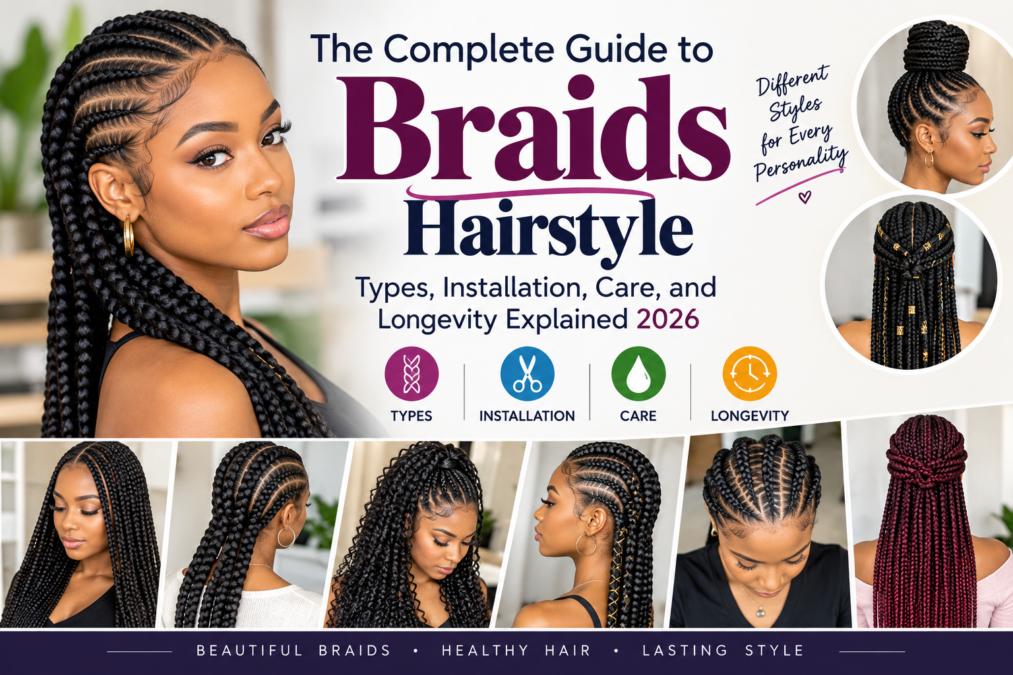
Walk into any braiding salon and the menu can feel overwhelming. Box braids, knotless braids, cornrows, Fulani braids, boho braids, micro braids, and dozens of regional and modern variations each have their own installation method, tension profile, and lifespan . Understanding the distinctions saves time, money, and scalp discomfort. Box braids use square partings and a knot at the root, making them durable but heavier at the base . Knotless braids feed extension hair in gradually without a root knot, which reduces initial tension and suits finer hair types or anyone with a sensitive scalp, though they tend to frizz at the root a bit sooner .
| Style | Typical Fresh Look Duration | Tension Level | Best Suited For |
|---|---|---|---|
| Box braids | 4–6 weeks | Moderate to high at root | Durable wear, all hair types |
| Knotless braids | 4–6 weeks | Low | Sensitive scalps, finer hair |
| Cornrows / feed-in | 2–4 weeks | Low to moderate | Active lifestyles, short-term wear |
| Fulani braids | 3–5 weeks | Moderate | Cultural styling, accent details |
| Boho / goddess braids | 3–6 weeks | Low to moderate | Fuller looks, styling versatility |
| Micro braids | 6–8 weeks maximum | High (small sections) | Long wear with diligent care |
How Long a Braids Hairstyle Actually Lasts and When to Let Go
The honest answer to how long braids last depends on which question is being asked. How long they look neat is one thing; how long they are safe to keep in is another, and the second number matters far more . Most styles look presentable for four to six weeks, with some reaching six to eight weeks at the outer limit. The American Academy of Dermatology recommendation cited by braiding professionals puts the safe ceiling at six to eight weeks before the risks of buildup, matting, and sustained tension on the roots begin to outweigh the convenience .
Your hair will usually signal the end before the calendar does. New growth that has loosened the braid at the root, crust along the parts that will not lift with gentle cleansing, itching that returns within a day of washing, and natural hair tangling at the base are all clear indicators that takedown should happen now rather than later . Pushing a style to week nine or ten does not usually cause a dramatic failure overnight
Preparing Natural Hair Before a Braids Hairstyle Appointment
The installation gets the attention, but the prep work determines how the next six weeks will go. Hair should be freshly shampooed, conditioned, and thoroughly detangled before any braider begins parting, because clean, stretched hair allows for even sections and minimizes the pulling that happens when a stylist has to fight through knots . A clarifying wash removes product residue that could otherwise contribute to scalp buildup under the braids, and a deep conditioning treatment delivers moisture before the hair is put away for weeks .
The choice between synthetic and human hair extensions deserves more thought than most people give it. Synthetic braiding hair holds shape well and is the standard for most styles, but it can sometimes irritate a sensitive scalp or dry out natural hair . Human hair extensions feel softer and behave more naturally, though they cost more and can be harder to maintain in certain braided styles . The practical middle ground many professionals recommend is matching the extension texture and color as closely as possible to the natural hair, prioritizing quality over quantity, and not over-packing each braid for the sake of thickness, since lighter braids are kinder to the edges .
The Daily and Nightly Routine That Keeps a Braids Hairstyle Looking Fresh
Braids are marketed as low-maintenance, and relative to daily styling of loose natural hair they are, but they are not no-maintenance. The nightly routine is where most of the longevity is won or lost. Cotton pillowcases absorb moisture and create friction that frizzes braids and loosens roots, so a satin or silk bonnet, scarf, or pillowcase is not a luxury but a functional necessity . Before wrapping, a light application of oil or a water-based moisturizing mist keeps the scalp from drying out and flaking, and parting the braids into a few sections before covering them prevents the tangling that happens when loose ends rub together overnight .
Tension, Traction Alopecia, and the Warning Signs Nobody Should Ignore
The warning signs are consistent across stylists and dermatologists: excessive soreness that persists beyond the first day, headaches, small pus-filled bumps along the hairline, and a scalp that looks red, wrinkled, or unusually shiny after installation . Knotless braids reduce the initial tension at the root compared to knotted box braids, but even knotless styles become a problem when worn in tight ponytails or buns that pull consistently on the same spots . The protective instinct should extend to alternating styles and giving the hairline rest periods between installations, rather than moving directly from one tight style to the next.
Taking Down a Braids Hairstyle Without Losing Length
Takedown day is where months of careful maintenance either pay off or unravel. Rushing the removal is the most common mistake. Each braid should be finger-detangled gently from the bottom up, working through any knots rather than ripping through them, and snipping out matted sections that cannot be saved instead of pulling harder . The shed hair that accumulates at the root during weeks of wear is normal, but if the braids were left in too long, that shed hair will have knitted around the new growth and takedown becomes a delicate operation rather than a quick unraveling .
After removal, the hair needs a proper reset. A clarifying wash removes the buildup that accumulated along the scalp and parts, a deep conditioning treatment restores moisture lost during the wear period, and a trim addresses any split ends that developed while the ends were tucked away. Giving the hair and scalp a genuine break between installations, ideally a week or two of loose, low-manipulation styling, allows the follicles to recover from weeks of sustained tension and gives the hairline a chance to relax before the next style . The braids hairstyle that looks best six weeks from now depends on how well the hair is treated in the days after the last one comes down.
Frequently Asked Questions About the Braids Hairstyle
How long should I leave a braids hairstyle in?
Most professionals recommend removing braids within six to eight weeks, with four to six weeks being the sweet spot for both appearance and scalp health. Styles installed flat against the scalp, like cornrows and feed-in braids, should come out sooner, typically within two to four weeks, because new growth becomes visible almost immediately and there is nowhere for it to hide . Leaving a braids hairstyle in beyond eight weeks increases the risk of matting at the root, difficult takedown, and cumulative tension damage to the hairline.
Are knotless braids better for my hair than box braids?
Knotless braids are generally gentler on the roots because the extension hair is fed in gradually rather than knotted at the base, which distributes weight more evenly and reduces the immediate pull on fragile edges . For anyone with a sensitive scalp, fine hair, or a history of tension-related thinning, knotless is often the safer choice. That said, box braids tend to hold their neat appearance slightly longer because the root knot anchors the style, and the best option depends on your hair density, lifestyle, and how diligently you maintain the style .
Can I wash my hair while wearing a braids hairstyle?
Yes, and for many people washing is necessary to keep the scalp healthy during weeks of wear. The method matters more than whether to do it. A diluted shampoo applied directly to the scalp with a nozzle bottle, gentle massage rather than scrubbing through the braids, thorough rinsing, and complete air drying prevents both buildup and mildew . Going the entire wear period without cleansing the scalp allows dead skin, sweat, and product residue to accumulate, which leads to itching, flaking, and a harder takedown .
What is the difference between boho braids and regular box braids?
Boho braids are essentially knotless or box braids with curly extension hair deliberately left loose along the length of the braid to create a softer, fuller, more textured appearance . The visual difference is significant, but so is the maintenance burden. Those exposed curls tangle, frizz, and lose definition faster than the braided sections, and boho styles with more loose hair require more frequent moisturizing and gentler handling to keep from matting . For someone who wants the boho look with less upkeep, choosing a version with fewer curly pieces is the practical compromise.
How can I tell if my braids are too tight?
If the installation causes stinging, headaches, or visible bumps along the hairline, the braids are too tight and should be loosened immediately . Discomfort in the first few hours after installation is common as the scalp adjusts, but pain that persists through the night, soreness when touching the scalp, or a red and wrinkled appearance at the edges are signs that the tension is excessive. Asking the stylist to redo the tightest sections is always the right call, because the alternative is weeks of strain on follicles that do not recover quickly.
The Braids Hairstyle as an Investment in Hair Health
A well-executed braids hairstyle is one of the few styling choices that can genuinely support hair health rather than compromise it. It reduces daily manipulation, protects ends from environmental damage, and creates a low-friction period during which natural hair can rest and retain length . But that outcome is not automatic. It depends on a consultation that prioritizes scalp comfort over a flawless first-day photo, a nightly routine that takes five minutes instead of being skipped, and the discipline to take the style down when the hair says it is time rather than when the calendar allows.
The final insight worth carrying forward is this: the best braids hairstyle is not the one that lasts the longest or looks the most elaborate on installation day. It is the one that comes down cleanly, leaves the hairline intact, and makes you want to book the next appointment because your hair feels healthier than it did before. That is the standard worth measuring every style against, and it is entirely within reach when the knowledge behind the install matches the artistry of the braids themselves.