Walk into any corporate environment, and you will notice a pattern. The people who move with confidence, who seem unbothered by the long commute and the back-to-back meetings, almost always have one thing in common. They wear the right office shoes. It sounds simple, but the reality is that most professionals underestimate how much their footwear affects their posture, energy levels, and overall productivity throughout the workday.
Think about it for a moment. You spend roughly eight to ten hours on your feet, walking between desks, standing during presentations, and navigating the occasional dash to catch a train. Your footwear takes the brunt of that impact. The wrong pair can leave you with aching heels, sore arches, and a nagging discomfort that distracts you from the work that actually matters. The right pair, on the other hand, becomes almost invisible. It supports you quietly and lets you focus on the task at hand.
This guide is designed to help you make an informed decision. Whether you are a recent graduate stepping into your first professional role, a mid-career manager looking for an upgrade, or someone who simply wants to understand what makes a great pair of workplace footwear, this article covers everything. We will explore materials, construction, fit, style considerations, and long-term maintenance. By the end, you will have a clear framework for choosing office shoes that serve you well for years.
Understanding Why Office Shoes Deserve More Attention Than You Think
Most people treat footwear as an afterthought. They buy a pair that looks acceptable, wear it until it falls apart, and repeat the cycle. But podiatrists and ergonomics specialists consistently point out that foot health is directly linked to overall musculoskeletal wellness. Poor footwear can contribute to plantar fasciitis, knee pain, lower back strain, and even poor circulation over time. When you consider that a significant portion of your waking hours is spent in work footwear, the stakes become clearer.
There is also a professional dimension to consider. Studies in social psychology have repeatedly shown that footwear influences first impressions. A polished pair of leather oxfords or a clean pair of loafers signals attention to detail. Scuffed, worn-out shoes send a different message entirely. In client-facing roles, interviews, and leadership positions, this subtle signal matters more than most people realize. The goal, then, is to find footwear that satisfies both the functional and the professional requirements without compromising on either.
The Hidden Cost of Poor Workplace Footwear
Let us talk about the real-world consequences of choosing poorly. A marketing executive in Chicago once shared a story about buying a pair of discount dress shoes before a major conference. By the second day, blisters had formed on both heels. By the third, she was limping through networking events and cutting conversations short because standing was painful. The conference was a professional success on paper, but the experience left her exhausted and distracted. She later invested in a properly fitted pair of leather derbies with cushioned insoles, and the difference was night and day.
This is not an isolated incident. Many professionals tolerate discomfort because they believe it is a normal part of dressing formally. It is not. Modern footwear manufacturing has advanced considerably, and there is no reason to accept pain as a prerequisite for professionalism. The key is understanding which features matter and how to evaluate them before you buy.
The Evolving Landscape of Professional Footwear
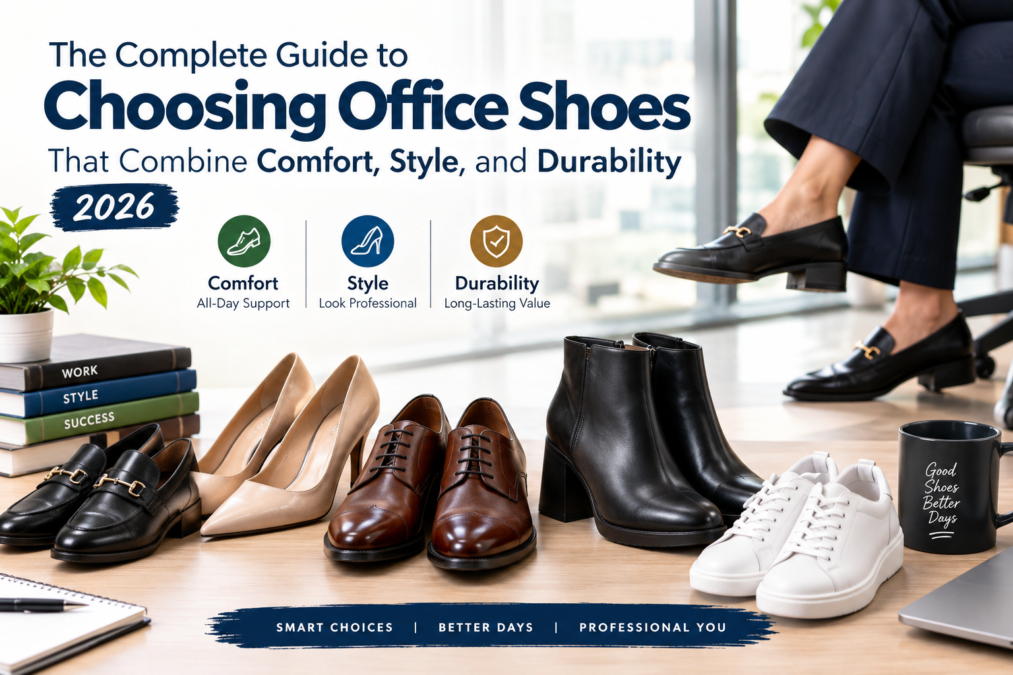
The definition of professional attire has shifted dramatically over the past decade. Tech companies, creative agencies, and even traditional law firms have relaxed their dress codes. This evolution has opened up a wider range of acceptable options. Minimalist sneakers now appear in boardrooms. Loafers have replaced lace-ups in many settings. Chelsea boots have become a staple for both men and women during cooler months.
This flexibility is good news for comfort seekers, but it also creates a new challenge. With more options comes more confusion. Which styles are truly appropriate for your specific workplace? How do you balance a casual silhouette with a polished appearance? The answer depends on context, and we will address that in detail shortly.
The Anatomy of a High-Quality Pair: Materials and Construction Explained
When you pick up a pair of office shoes, what are you actually looking at? Beyond the surface appearance, there is a complex structure of materials and construction techniques that determine how the footwear performs over time. Understanding these components gives you a significant advantage when evaluating options at different price points.
The upper material is the most visible element. Full-grain leather remains the gold standard for durability and appearance. It develops a patina over time that many professionals find attractive. Corrected-grain leather is more affordable and easier to maintain, but it lacks the same longevity. Suede offers a softer aesthetic but requires more careful maintenance. For those who prefer non-animal materials, high-quality synthetic leathers have improved considerably and now offer respectable performance.
The sole is equally important. Leather soles are traditional and breathable, but they offer limited shock absorption and can be slippery on wet surfaces. Rubber soles provide better traction and cushioning. Combination soles pair a leather midsole with a rubber outsole, offering a balance of tradition and practicality. EVA (ethylene-vinyl acetate) and polyurethane soles are common in more comfort-oriented designs. Each has trade-offs, and the right choice depends on your daily routine and environment.
The Role of Linings and Insoles
The interior of the footwear is where comfort is often won or lost. Leather linings are breathable and moisture-wicking, which helps regulate temperature and reduce odor. Textile linings are lighter and often softer but may not last as long. The insole is the layer directly beneath your foot, and it plays a critical role in arch support and cushioning. Removable insoles are a major advantage because they allow you to replace them with custom orthotics if needed.
Memory foam insoles have become popular in recent years. They offer immediate comfort, but some experts caution that they can compress over time and lose their supportive qualities. A more durable approach involves cork or latex foam, which retains its shape better under repeated pressure. When evaluating a pair, press your thumb into the insole. If it springs back quickly and feels firm rather than mushy, it is likely to provide better long-term support.
Construction Techniques That Affect Longevity
Goodyear welt construction is a traditional method where the upper is stitched to the sole, creating a durable bond that can be repaired by a cobbler. Blake stitching is a lighter, more flexible alternative that is common in Italian footwear. Cemented construction, where the sole is glued to the upper, is the most common method in mass-market products. It is not inherently bad, but it is less repairable.
For professionals who want footwear that lasts for years, Goodyear welted options are worth the investment. They can be resoled multiple times, extending the life of the upper almost indefinitely. This is not just a matter of economics; it is also a more sustainable approach to consumption. A well-made pair that lasts a decade is far better for the environment than three or four cheaper pairs that fall apart in a few years.
| Feature | Budget Range | Mid Range | Premium Range |
|---|---|---|---|
| Upper Material | Corrected-grain leather or synthetic | Full-grain leather | Full-grain or exotic leather |
| Sole | Cemented rubber or EVA | Combination or Blake stitched | Goodyear welted leather or rubber |
| Insole | Glued foam | Removable foam or cork | Leather-covered cork or memory foam |
| Lining | Synthetic textile | Leather or breathable textile | Full leather |
| Expected Lifespan | 6–12 months | 2–3 years | 5–10+ years |
| Resoleable | No | Sometimes | Yes |
Finding the Perfect Fit: A Step-by-Step Framework
Fit is the single most important factor in footwear comfort. A beautifully made pair that does not fit properly will cause more problems than a modest pair that fits like a glove. Unfortunately, many people do not know their true size. They rely on a measurement taken years ago or assume that all brands size identically. In reality, sizing varies significantly between manufacturers and even between different models from the same brand.
The first step is to measure your feet properly. Do this at the end of the day when your feet are at their largest. Stand on a piece of paper, trace the outline, and measure from the heel to the longest toe. Repeat for both feet, as it is common for one foot to be slightly larger than the other. Use the larger measurement when selecting a size. It is also worth noting that foot shape changes over time, so remeasure every year or two.
When trying on footwear, pay attention to three zones: the heel, the arch, and the toe box. The heel should be snug without slipping. A slight amount of movement is normal, but if your heel lifts significantly when you walk, the fit is too loose. The arch should feel supported, not pressed. The toe box should allow your toes to wiggle freely. If you feel pressure on the sides of your toes, the width is too narrow. Many quality brands offer multiple widths, and taking advantage of this can make a significant difference.
The Importance of Trying Before You Buy
Online shopping is convenient, but footwear is one category where in-person trials still matter. Different models from the same brand can fit differently due to variations in lasts (the foot-shaped form used in manufacturing). Even the same model can change fit between production runs. If you must buy online, choose retailers with generous return policies and be prepared to order multiple sizes.
When trying on a pair in a store, wear the socks you plan to use at work. This seems obvious, but many people try on dress shoes with thin socks and then wear thicker ones later, only to find the fit has changed. Walk around for at least five minutes. Pay attention to any pressure points. A small discomfort in the store will become a significant problem after eight hours of wear.
Breaking In Versus Breaking Down
There is a difference between footwear that needs a short break-in period and footwear that is simply the wrong shape for your foot. Quality leather will soften and mold to your foot over time, but it should not cause pain during the process. If you feel sharp pressure or persistent rubbing, the fit is wrong. Do not assume that suffering through a break-in period will eventually lead to comfort. In many cases, it leads to chronic irritation and wasted money.
A useful test is to check for pressure points by pressing gently on the upper material above and around your toes. If you can feel the leather pressing against your foot, the fit is too tight. Another test is to remove the insole and stand on it. If your foot spills over the edges, the footwear is too narrow. These simple checks can save you from a painful mistake.
Style Considerations: Matching Footwear to Your Workplace Culture
Choosing the right style is about more than personal preference. It is about reading the room and understanding the unwritten rules of your professional environment. A pair of chunky sneakers might be perfectly acceptable at a startup, but they would raise eyebrows at a private equity firm. Conversely, a highly polished pair of wingtips might feel out of place in a casual creative studio.
The first step is to observe. Look at what senior colleagues and leadership wear. Look at what clients expect. Look at the overall aesthetic of your industry. Finance, law, and consulting tend to favor traditional styles. Technology, media, and design tend to be more relaxed. Healthcare and education fall somewhere in between, with a focus on practicality and comfort.
Classic Styles and Their Appropriate Contexts
Oxfords are the most formal option, characterized by closed lacing and a sleek silhouette. They pair well with suits and business formal attire. Derbies are slightly less formal, with open lacing that allows for a more relaxed fit. They work well with business casual and smart casual outfits. Loafers are slip-on styles that range from casual to formal depending on the design. Penny loafers and horsebit loafers are versatile and appropriate for most office settings.
For women, ballet flats, pumps, and low-heeled mary janes are traditional choices. However, the modern workplace has expanded to include brogues, oxfords, and even minimalist sneakers. The key is to match the formality of the footwear to the formality of your outfit and the expectations of your workplace. When in doubt, err on the side of slightly more formal. It is easier to dress down a formal pair than to dress up a casual one.
Color and Material Choices
Black is the most formal and versatile color. It pairs with almost everything and works in virtually any professional context. Brown, particularly dark brown or oxblood, is slightly less formal but offers more warmth and character. Tan and lighter browns are more casual and work best in creative or relaxed environments. Navy and grey are less common but can be excellent choices for those who want something slightly different without stepping outside the bounds of professionalism.
Material choice should align with your climate and daily routine. Leather is the most durable and professional option, but it requires care. Suede is softer and more textured but is vulnerable to rain and stains. Patent leather is highly formal and best reserved for special occasions. Synthetic materials are more affordable and easier to clean, but they may not breathe as well as natural materials.
Comfort Features That Make a Real Difference
Comfort is not a luxury. It is a necessity. When your feet hurt, everything else suffers. Your focus drops. Your mood sours. Your posture changes. Over time, the cumulative effect of daily discomfort can lead to serious health issues. Fortunately, modern footwear design has made significant strides in comfort technology, and there are many options that combine professional appearance with genuine all-day support.
Cushioning is the most obvious comfort feature. Look for midsoles that absorb impact and insoles that provide a soft but supportive surface. However, more cushioning is not always better. Too much softness can lead to instability and fatigue. The goal is a balance between shock absorption and support. Firm cushioning that returns energy with each step is generally better than soft cushioning that compresses under weight.
Arch support is another critical factor. A well-designed footbed will have a contoured shape that follows the natural curve of your arch. This helps distribute weight evenly and reduces strain on the plantar fascia. If you have flat feet or high arches, you may need additional support. Removable insoles allow you to add custom orthotics or aftermarket supports without compromising the fit of the footwear.
Breathability and Moisture Management
Feet sweat. There is no way around it. The average foot produces about a cup of sweat per day, and enclosed footwear traps that moisture against the skin. This creates an environment where bacteria thrive, leading to odor and potential fungal issues. Breathable materials and proper ventilation are essential for foot health.
Leather is naturally breathable, especially full-grain leather with minimal surface treatment. Textile uppers are even more breathable but may not offer the same durability or professional appearance. Perforated designs, such as brogues with decorative punching, provide additional airflow. Moisture-wicking linings and socks can also help. If you are prone to sweaty feet, consider rotating your footwear to allow each pair to dry completely between wears.
Weight and Flexibility
Heavy footwear can be tiring, especially if you walk a lot during the day. Lighter materials and construction methods can reduce fatigue. However, weight is not the only factor. Flexibility is also important. A stiff sole that does not bend with your foot can cause discomfort and restrict natural movement. Test flexibility by holding the heel and pressing the toe upward. The footwear should bend at the ball of the foot, not in the middle of the arch.
That said, some stiffness is necessary for support and durability. Dress footwear with leather soles tends to be stiffer than casual options, but it should still flex enough to allow a natural walking gait. If a pair feels rigid and unyielding, it may not be the right choice for a job that requires constant movement.
Problem-Solution Scenarios: Real-World Challenges and How to Solve Them
Even with careful planning, challenges arise. Maybe you have wide feet and struggle to find stylish options. Maybe your workplace is business formal, but you have a long commute. Maybe you need footwear that transitions from desk to dinner. These are common problems, and each has a practical solution.
For those with wide feet, look for brands that offer multiple widths. Many quality manufacturers produce wide and extra-wide options that do not compromise on style. If width options are limited, consider styles with soft leather uppers that can stretch slightly over time. Lace-up styles are more adjustable than slip-ons. Avoid pointed toes, which squeeze the forefoot, and opt for round or slightly squared toe shapes.
For long commutes, consider a two-pair strategy. Wear comfortable walking footwear for the commute and change into your office shoes at your desk. This is common practice in cities like New York, London, and Tokyo, where walking distances are significant. Alternatively, choose styles that are designed for comfort, such as hybrid dress sneakers or loafers with cushioned soles. These can handle both the commute and the office environment.
Transitioning from Day to Evening
Some professionals need footwear that works from morning meetings to evening events. The challenge is finding a style that is formal enough for the office but comfortable enough for a social setting. Loafers are excellent for this purpose. They are easy to slip on and off, they look polished, and many modern designs include comfort features. Chelsea boots are another versatile option, particularly in cooler months.
Dark colors and minimal detailing make it easier to transition. A pair of black leather loafers with a low heel can work with trousers and a blazer during the day and with jeans and a nice shirt in the evening. Avoid styles that are too casual, like sneakers, or too formal, like patent leather oxfords. The goal is a middle ground that adapts to different contexts.
Weather and Seasonal Challenges
Rain, snow, and extreme heat each present unique challenges. Leather is not naturally waterproof, but it can be treated with protective sprays and polishes. Rubber overshoes can protect your footwear during wet commutes and be removed once you arrive. Suede is vulnerable to water damage and should be avoided in wet conditions unless treated with a specialized protector.
In hot weather, breathability becomes even more critical. Lighter colors reflect heat, and perforated designs allow airflow. In cold weather, insulation and traction become priorities. Rubber soles with good tread patterns provide grip on slippery surfaces. Leather linings provide warmth without overheating. It is worth having at least two pairs of office shoes suited to different seasons so you are prepared for whatever the weather brings.
Maintenance and Care: Extending the Life of Your Investment
Quality footwear is an investment, and like any investment, it requires care to retain its value. Regular maintenance not only keeps your shoes looking polished but also extends their lifespan significantly. The basics are simple: clean, condition, and protect.
Cleaning should be done regularly, especially if you wear your footwear daily. Wipe down leather with a soft cloth to remove dust and dirt. Use a horsehair brush to remove debris from the welts and stitching. For deeper cleaning, use a leather cleaner formulated for the specific type of leather. Avoid harsh chemicals that can strip natural oils. For suede, use a specialized suede brush and eraser. Never use water on suede, as it can cause stains and damage the nap.
Conditioning is the next step. Leather is skin, and like skin, it dries out and cracks without moisture. A good leather conditioner replenishes natural oils and keeps the material supple. Apply a small amount with a soft cloth, work it into the leather, and let it absorb. Buff off any excess. Do this every few weeks, depending on how often you wear the footwear and the conditions you expose it to.
The Importance of Shoe Trees
Shoe trees are one of the most effective and underused tools for footwear maintenance. Cedar shoe trees absorb moisture from the inside of the footwear, preventing odor and helping the leather retain its shape. They also help smooth out wrinkles in the vamp (the top part of the footwear) that develop from walking. Insert shoe trees immediately after removing your footwear and leave them in until the next wear.
If you do not have shoe trees, at least stuff the toes with newspaper or paper towels to absorb moisture and maintain shape. Avoid leaving footwear in direct sunlight or near heat sources, as this can cause leather to dry out and crack. Rotate your pairs so each one has at least a day to dry out between wears. This simple practice can double the lifespan of your footwear.
Polishing and Protection
Polishing is not just about appearance; it also provides a protective layer that repels water and dirt. Use a polish that matches the color of your leather. Apply it in small circular motions with a soft cloth or brush. Let it dry, then buff with a clean cloth to bring out the shine. Wax-based polishes offer more protection and a higher shine, while cream polishes are better for nourishing the leather.
Protective sprays are available for both leather and suede. These create a barrier against water and stains. Reapply according to the manufacturer’s instructions, usually every few weeks or after cleaning. Store your footwear in a cool, dry place, ideally in dust bags to protect them from dust and scratches.
Frequently Asked Questions About Office Shoes
How Often Should I Replace My Office Shoes?
The lifespan depends on the quality of the footwear, how often you wear it, and how well you maintain it. A well-made pair worn three to four times a week and cared for properly can last several years. Cheaper pairs may need replacement every six to twelve months. Signs that it is time to replace include worn-out soles, persistent odor that cannot be eliminated, cracked leather, and loss of structural support. If your feet hurt after wearing a pair that used to feel comfortable, it may be time for an upgrade.
Are Expensive Office Shoes Worth the Investment?
In many cases, yes. Higher-priced footwear often uses better materials, superior construction methods, and more ergonomic designs. These factors translate to better comfort, longer lifespan, and often better appearance. However, price is not the only indicator of quality. Some mid-range brands offer excellent value. The key is to evaluate materials, construction, and fit rather than relying solely on the price tag. A well-chosen mid-range pair can outperform a poorly chosen expensive pair.
Can I Wear Sneakers as Office Shoes?
It depends on your workplace culture. In many modern offices, minimalist leather sneakers are acceptable and even fashionable. In traditional environments, sneakers are not appropriate for client meetings or formal occasions. If you choose to wear sneakers, opt for clean, simple designs in neutral colors. Avoid athletic styles with bright logos or technical details. When in doubt, observe what others in your workplace wear and match the general level of formality.
What Is the Best Way to Break In New Office Shoes?
Wear them for short periods at first, gradually increasing the duration. Start with a few hours at home or on a short commute. Wear them with the socks you plan to use for work. If you feel pressure points, use a shoe stretcher or apply a small amount of leather conditioner to soften the material. Avoid wearing them for a full day until they feel comfortable. Never force a break-in period if the footwear causes pain, as this can lead to injury.
How Many Pairs of Office Shoes Should I Own?
A practical rotation includes at least two to three pairs. This allows each pair to dry out between wears, extending their lifespan. A basic rotation might include a formal pair for important meetings, a versatile pair for everyday wear, and a comfortable pair for long days or commutes. If your workplace is casual, you might substitute one formal pair for a stylish casual option. Having variety also makes it easier to match different outfits and seasons.
Conclusion: Building a Footwear Strategy That Works for You
Choosing the right office shoes is not about finding a single perfect pair. It is about building a strategy that accounts for your daily routine, your workplace culture, your comfort needs, and your budget. The best approach combines careful fit evaluation, attention to materials and construction, and a willingness to invest in quality. When you get it right, the payoff is significant. You feel better, you look more polished, and you move through your day with greater confidence and less discomfort.
Remember that fit is the foundation. No amount of style or brand prestige can compensate for footwear that does not fit properly. Take the time to measure your feet, try on multiple options, and pay attention to how each pair feels during the first few minutes of wear. Those initial sensations are a reliable predictor of long-term comfort.
Finally, think of office shoes as part of your professional toolkit. Just as you invest in a good laptop or a well-tailored suit, investing in quality footwear is an investment in your performance and your well-being. The right pair will support you through long days, important meetings, and everything in between. Start with one well-chosen pair, build from there, and enjoy the difference that proper footwear makes in your daily working life.