

Losing your hair is not just a cosmetic concern. For millions of men and women, it affects confidence, self-image, and how they navigate the world. The good news is that a hair transplant offers a permanent, natural-looking solution for many people dealing with androgenetic alopecia or other forms of permanent hair loss. The procedure has evolved dramatically over the past two decades, moving from pluggy, obvious results to refined techniques that are virtually undetectable when performed by a skilled surgeon.
This guide takes a deep, evidence-based look at everything you need to know before considering a transplant. We will cover the biology of hair loss, the differences between FUE and FUT, realistic costs, the recovery timeline, and how to identify a qualified surgeon. Whether you are in the early stages of research or close to booking a consultation, this information will help you ask better questions and make a decision grounded in facts rather than marketing promises.
The science behind hair transplantation rests on a simple but powerful principle: hair follicles from certain areas of the scalp are genetically resistant to the hormones that cause pattern baldness. When these follicles are relocated to thinning or bald areas, they retain that resistance and continue to grow for a lifetime . Understanding this principle is the foundation for everything else.
Understanding Hair Loss and Why Transplants Work
Androgenetic alopecia, the medical term for pattern hair loss, affects roughly half of men by age fifty and a significant proportion of women as well. The condition is driven by a combination of genetics and hormones, specifically dihydrotestosterone, or DHT. DHT binds to receptors in susceptible hair follicles and gradually miniaturizes them, causing hairs to become thinner, shorter, and eventually stop growing altogether .
The key insight that makes transplantation possible is that not all hair follicles are equally sensitive to DHT. Follicles located in the occipital and temporal regions, the back and sides of the scalp, are genetically programmed to resist DHT. This resistance appears to be linked to differences in androgen receptor expression in those areas . When a surgeon moves these resistant follicles to the top or front of the scalp, they continue producing healthy terminal hairs.
This is why a hair transplant is considered a permanent solution for the transplanted follicles themselves. The hair that grows from relocated grafts will continue to grow for decades, just as it would have in its original location . What can change over time is the surrounding native hair. If you continue losing your original hair due to ongoing pattern baldness, the overall appearance may shift, which is why long-term planning and medical therapy are often part of the conversation.
FUE vs FUT: Choosing the Right Technique
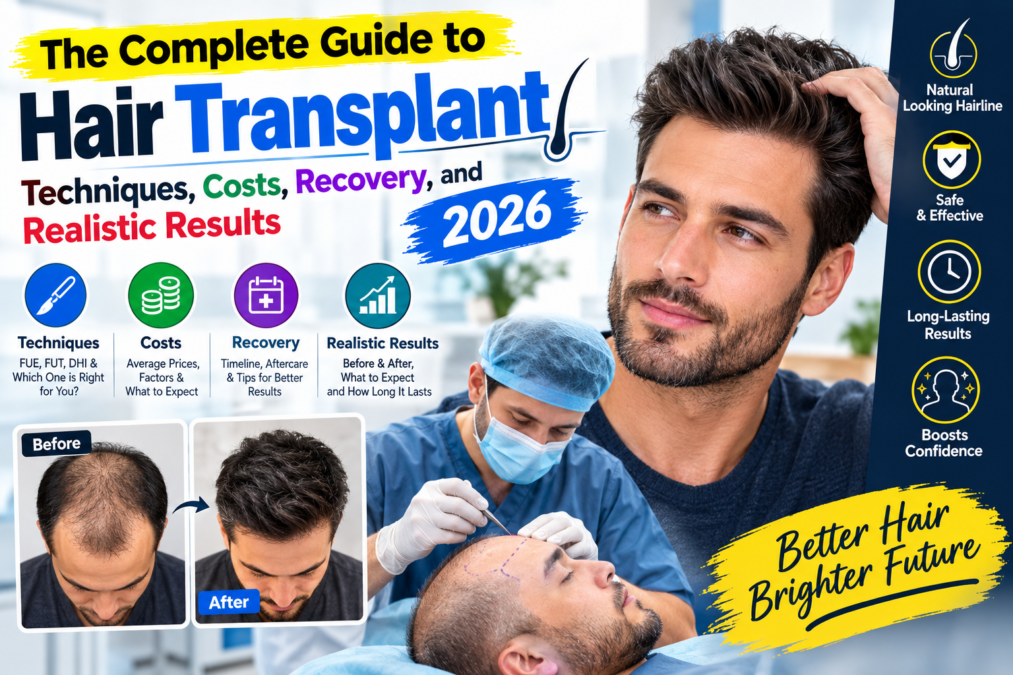
The two primary techniques used in modern hair restoration are Follicular Unit Excision, commonly known as FUE, and Follicular Unit Transplantation, or FUT. Understanding the differences between them is essential because the choice affects scarring, recovery, graft yield, and cost. FUE involves removing individual follicular units one at a time using a small punch device, leaving tiny dot-like marks scattered across the donor area . FUT removes a single strip of tissue from the back of the scalp, which is then dissected under a microscope into individual grafts .
| Factor | FUE | FUT |
|---|---|---|
| Donor Harvest Method | Individual follicular units removed with punch device | Single strip of tissue removed and dissected |
| Scarring | Tiny dot scars | Single linear scar |
| Hairstyle Flexibility | Suitable for very short styles | Best with hair 1–2 cm or longer |
| Graft Yield Per Session | Moderate to high; larger sessions may need multiple visits | Can achieve higher yields in one session |
| Typical Cost Per Graft | $5 to $10 | $2 to $6 |
| Recovery (Desk Work) | 2–5 days | 5–7 days |
The Role of Medical Therapy Before and After Surgery
A hair transplant does not stop the underlying process of pattern baldness. It redistributes hair from one area to another, but it cannot protect the native hair that remains susceptible to DHT. This is why most reputable surgeons recommend medical therapy as part of a comprehensive treatment plan. Medications like finasteride and minoxidil have been shown to slow or halt the progression of androgenetic alopecia, and they can help preserve the surrounding hair that frames the transplanted area .
For younger patients especially, starting medical therapy before considering surgery is often the wisest approach. A twenty-five-year-old with early signs of thinning may benefit more from a year of medication than from an immediate transplant, because stabilizing the hair loss first allows for better long-term planning . Medical therapy can also improve the quality of the donor area by reducing miniaturization, which may increase the number of usable grafts.
After surgery, continuing medical therapy helps maintain the overall result. The transplanted follicles will grow regardless, but the native hair around them can continue to thin if left untreated. Patients who use medication consistently often see better long-term satisfaction because the contrast between transplanted and non-transplanted zones remains less noticeable over time .
Realistic Results and the Growth Timeline
One of the most important things to understand about a hair transplant is that results are not immediate. The journey from surgery to final outcome takes a full year or longer, and the early stages can be psychologically challenging if expectations are not properly set. In the first two to eight weeks after surgery, the transplanted hairs will shed. This is normal and expected, but it can be alarming for patients who are not prepared for it .
New growth typically begins around month three to four. These initial hairs are often fine and thin, and patients may worry that the transplant has failed. However, this is simply the beginning of the maturation process. By month six to nine, the improvement becomes clearly visible, and the density continues to increase. Most patients see the majority of their final result by twelve months, with some continued refinement up to eighteen months, particularly in the crown area .
Realistic expectations matter enormously. A hair transplant cannot restore the density you had at eighteen. It is a redistribution of finite donor resources, and the goal is usually improvement rather than perfection. Patients with advanced hair loss may need multiple sessions to achieve satisfactory coverage, and even then, the result may be better described as “thinning hair that looks intentional” rather than a full head of hair . Understanding this before surgery prevents disappointment later.
Cost Factors and What Affects the Price
The cost of a hair transplant varies widely based on technique, geography, graft count, and the reputation of the clinic. In the United States, FUE typically ranges from $5 to $10 per graft, while FUT is often $2 to $6 per graft . Since most procedures involve between 1,000 and 5,000 grafts, the total can range from a few thousand dollars to well over fifteen thousand . International clinics in countries like Turkey, Mexico, and Thailand often offer lower prices, but it is essential to verify credentials and safety standards before choosing a provider based solely on cost.
Several factors influence the final price. The number of grafts required depends on the size of the bald area and the density desired. The complexity of the case matters too; a patient who has had previous transplants or who has a tight scalp may require more surgical time and expertise. Surgeon experience is another major variable. A highly regarded surgeon with years of specialized practice will charge more than a general practitioner offering transplants as a side service, and that premium is often justified by better results and lower complication rates.
Financing options are increasingly available. Many clinics offer payment plans with monthly installments, and some third-party medical financing companies specialize in cosmetic procedures . It is worth asking about these options during the consultation, as cost should not be the sole barrier to a procedure that can have a significant impact on quality of life.
Recovery and Aftercare: What to Expect
The recovery process after a hair transplant is more manageable than many people expect, but it does require adherence to post-operative instructions. In the first few days, the scalp will be tender and may ooze slightly. Patients are typically advised to sleep with their head elevated to reduce swelling, and to avoid strenuous activity for at least a week. The donor area, whether it was harvested via FUE or FUT, will require gentle care during the initial healing phase .
Scabbing and crusting in the recipient area is normal and should not be picked at. Most clinics provide specific washing instructions, often beginning with a gentle rinse the day after surgery and progressing to more thorough washing within a week. By the end of the first week to ten days, the scabs will have largely fallen away, and the scalp will look less irritated. Redness in the recipient area can persist for several weeks, but it is usually mild and fades gradually.
Longer-term aftercare includes protecting the scalp from sun exposure, avoiding harsh chemicals or dyes on the transplanted hair for at least a few weeks, and continuing any prescribed medical therapy. Follow-up appointments are important for monitoring healing and addressing any concerns. Patients who follow their surgeon’s instructions closely tend to have smoother recoveries and better outcomes.
How to Choose a Qualified Surgeon
The single most important decision in the entire process is choosing the right surgeon. Hair restoration is a surgical procedure, and the skill and judgment of the person performing it determine the outcome far more than the technique or the technology used. Unfortunately, the field attracts practitioners with varying levels of training, and some clinics prioritize volume over quality. The International Society of Hair Restoration Surgery recommends confirming that a qualified surgeon performs and supervises the surgical steps, not unlicensed technicians .
A thorough consultation should include a scalp examination, a discussion of your diagnosis and expectations, and a clear explanation of who will perform each part of the procedure. Ask about the surgeon’s training, experience, and complication rates. Request to see before-and-after photographs of patients with similar hair loss patterns and characteristics. A trustworthy surgeon will be transparent about the limitations of what can be achieved and will not pressure you into scheduling surgery on the spot.
Red flags include clinics that promise unrealistic results, offer suspiciously low prices without explaining the trade-offs, or refuse to provide detailed information about the surgical team. The best surgeons are also often the busiest, so be prepared for a wait. A consultation that feels thorough and unhurried is a good sign that the practice prioritizes quality over speed.
Safety, Risks, and Complications
Hair transplant surgery is generally safe when performed by qualified professionals in accredited facilities, but no surgical procedure is entirely without risk. A comprehensive review published in the Journal of Craniofacial Surgery found that common complications include pain, infection, folliculitis, and edema, with minor infection rates ranging from 1.4 to 2.0 percent and folliculitis from 1.1 to 12.1 percent . These issues are typically self-limited and responsive to treatment.
More serious complications are rare but possible. Necrosis, or tissue death, occurred in only 0.03 percent of cases in one analysis. Risk factors for complications include smoking, poorly controlled diabetes, and certain surgical factors such as dense graft packing or excessive graft depth . Patients can reduce their risk by optimizing their health before surgery, following post-operative instructions carefully, and choosing a surgeon who prioritizes safety over speed.
It is also important to recognize that a hair transplant does not address the underlying medical condition causing hair loss. If you have an untreated thyroid disorder, iron deficiency, or other systemic issue contributing to thinning, surgery alone may not produce the desired result. A thorough pre-operative evaluation should rule out reversible causes of hair loss before surgical planning begins .
Frequently Asked Questions
How long does a hair transplant last?
In most cases, a hair transplant lasts for life because the transplanted follicles come from donor areas that are genetically resistant to DHT and continue producing hair indefinitely . The transplanted hair retains its original characteristics, including color, texture, and growth rate. However, the appearance can change over time as the surrounding native hair continues to thin from ongoing pattern baldness. This is why medical therapy is often recommended alongside surgery to protect the remaining hair.
Is a hair transplant painful?
Most patients report that the procedure itself is not painful because local anesthesia is used to numb the scalp. The injection of anesthesia can be uncomfortable, but it is brief. After surgery, the scalp is typically tender and may feel sore for several days, and over-the-counter pain medication is usually sufficient for management . Some patients experience mild swelling around the forehead and eyes, which resolves within a few days. Overall, the discomfort is generally less than patients expect.
What is the best age for a hair transplant?
There is no single ideal age, but the right time depends more on the stability of hair loss than on chronological age . Patients under twenty-five are often advised to wait because their hair loss pattern is still evolving, making long-term planning difficult. The period between thirty and forty is often favorable because hair loss has stabilized and the donor area remains in good condition. Excellent results are achievable at any age, including over fifty, provided overall health and donor quality are adequate .
Can women get hair transplants?
Yes, women can be excellent candidates for hair transplant, but they require a more cautious workup than men. Female hair loss is often diffuse rather than patterned, and diffuse thinning may affect the donor area, making surgery less predictable . A thorough evaluation should rule out medical causes such as thyroid disease, iron deficiency, and medication effects before surgery is considered. Women with stable, localized hair loss and a preserved donor area often achieve very satisfying results.
How much does a hair transplant cost?
Cost varies widely by technique, graft count, and geography. In the United States, FUE typically ranges from $5 to $10 per graft, while FUT ranges from $2 to $6 per graft . With most procedures requiring 1,000 to 5,000 grafts, total costs can range from a few thousand to over fifteen thousand dollars . International clinics may offer lower prices, but patients should verify surgeon credentials and safety standards before choosing a provider based on cost alone.
Conclusion
A hair transplant is a significant investment of time, money, and emotional energy, but for the right candidate, it can be genuinely transformative. The procedure has advanced enormously in recent decades, and modern techniques can produce results that look completely natural when performed by a skilled surgeon. The key is approaching it with realistic expectations, a clear understanding of the process, and a commitment to long-term maintenance.
The final insight is this: a successful hair transplant is not just a surgical event. It is a partnership between patient and surgeon that begins with honest evaluation and continues with ongoing care. The best outcomes come from patients who understand their own hair loss pattern, choose their surgeon carefully, and follow through with medical therapy and aftercare. When all of these elements align, the result is not just more hair. It is a restoration of confidence that lasts for decades..



What The Hell
whats problem
Nothing personal, just surprised to see that. If you have a problem with my reaction, that’s your choice.