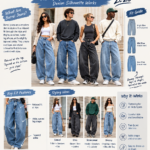
The appeal of baggy jeans goes beyond simple trend cycles. They offer freedom of movement, they work across seasons, and they flatter a wider range of body types than many people realize. The key is understanding that “baggy” is not a single fit but a spectrum, ranging from slightly relaxed to dramatically oversized, and that the right pair depends entirely on your proportions, your personal style, and how you intend to wear them. This guide breaks down everything you need to know, from the historical roots of the silhouette to the specific measurements that determine whether a pair will flatter or overwhelm.
What Defines Baggy Jeans and How They Differ from Other Fits
Baggy jeans are characterized by a loose, relaxed fit that provides significant volume through the hip, thigh, and leg, often with a mid-to-low rise and little to no tapering at the ankle. Unlike slim or skinny jeans, which hug the body closely, baggy denim creates its own silhouette, draping away from the body rather than following its contours. This extra fabric allows for unrestricted movement, makes layering easier in colder months, and creates a distinctly casual, streetwear-oriented aesthetic.
The distinction between baggy jeans and other relaxed fits can be subtle but matters when shopping. Straight-leg jeans, for example, maintain a consistent width from hip to hem, offering a clean, neutral line. Wide-leg jeans also have a consistent width but are wider overall and often sit higher on the waist. Baggy jeans, by contrast, typically feature a looser fit through the seat and thigh that may taper slightly toward the ankle, creating a more relaxed, slouchy look . The specific cut can vary significantly between brands, which is why understanding your measurements and the construction details matters more than relying on a generic size label.
The terms used to describe these styles can also be confusing. In the United Kingdom, they were historically known as “baggies,” a term that has largely faded in favor of “wide-leg jeans” or simply “baggy jeans” . Some retailers use “loose fit” interchangeably with baggy, while others reserve “baggy” for more extreme volumes. The safest approach is to look at actual garment measurements, particularly rise, thigh width, and leg opening, rather than relying solely on the name of the fit.
The Cultural History and Evolution of the Baggy Silhouette
The story of baggy jeans is deeply intertwined with cultural identity, resistance, and the evolution of streetwear. Loose-fitting trousers have appeared throughout history for practical and symbolic reasons, from the galligaskins of the sixteenth century to the zoot suits worn by Black and Latino communities in the 1930s and 1940s as a form of cultural pride and defiance . But the specific phenomenon of baggy denim as we know it today took shape in the late twentieth century, emerging from multiple overlapping subcultures.
In the late 1980s and early 1990s, baggy jeans became a defining element of hip-hop fashion. MC Hammer’s “Hammer pants” brought an exaggerated, harem-inspired silhouette into the mainstream, while artists like Tupac and Aaliyah made loose denim a staple of their visual identity . Simultaneously, skateboarders embraced baggy jeans for their durability and freedom of movement, and the style became associated with skate culture’s anti-establishment ethos. The look spread through music videos, skate videos, and eventually into shopping malls and high street stores, as brands recognized the commercial potential of the silhouette .
The history of baggy jeans also carries a more complex narrative. Research from the Victoria and Albert Museum notes that the trend of wearing low-slung, baggy jeans is thought to have originated in the American prison system, where inmates were prohibited from wearing belts. The style was later adopted within the Black community and became associated with hip-hop culture and Black masculinity, with the visible display of branded underwear serving as a marker of social status . This history adds layers of meaning to a garment that, on the surface, appears to be simply about comfort and casual style.

Understanding the Different Types of Baggy Jeans
Not all baggy jeans are created equal, and the specific sub-genre you choose dramatically affects how the garment looks and feels. The classic baggy fit is loose from hip to ankle with minimal tapering and often a mid-to-low rise. This is the most versatile option, working well for everyday wear and offering a blank canvas for styling. Balloon or bubble jeans take the volume further, adding extra fabric through the hips and thighs before tapering at the ankle to create a rounded, sculptural shape .
Boyfriend jeans represent a slightly different approach, offering a relaxed, straight-cut silhouette that is often low-rise or mid-rise and feels borrowed-from-the-boys in the best possible way. Slouchy wide-leg styles sit lower on the hips and hang loosely without tapering, creating a dramatic, flowing line. Carpenter and utility baggy jeans draw from workwear traditions, featuring cargo pockets, reinforced seams, and structured detailing that adds visual interest to the relaxed fit . Barrel-leg denim, a more recent addition to the category, narrows at the ankle after ballooning through the leg, creating a shape that is both interesting and surprisingly wearable .
The choice between these styles comes down to personal preference and body proportions. A petite wearer might find that balloon jeans overwhelm their frame, while a taller person might feel that classic baggy jeans do not provide enough volume. The key is understanding the relationship between the garment’s proportions and your own, and choosing a silhouette that creates the kind of visual balance you want.
How to Choose the Right Baggy Jeans for Your Body Type
The idea that baggy jeans only work on tall, slim frames is a persistent myth that does not hold up to scrutiny. The relaxed silhouette can be flattering on virtually any body type, provided the fit is chosen and styled with intention. For petite women, high-waisted or cropped baggy styles are often the best choice, as they avoid swamping the frame and create a clear waistline that gives the eye a reference point. Tucking in a top or adding a belt further defines the silhouette and prevents the outfit from looking shapeless .
Curvy or pear-shaped wearers benefit from structured fabrics with a defined waistband. The key is to create shape at the waist while allowing the legs to remain relaxed, which balances the proportions and prevents the denim from clinging uncomfortably to the hips and thighs. Apple-shaped bodies often work well with mid-rise baggy jeans that feature an elastic or flexible waistband, providing comfort without sacrificing style. Tall or lean frames can wear almost any baggy style effortlessly, though adding a belt or pairing the jeans with a fitted top can prevent the look from feeling too undefined .
The critical factor across all body types is the rise. A rise that sits comfortably on your natural waist or slightly below it will feel secure and flattering, while a rise that is too low can create gaping at the back and a constant need for adjustment. The waistband should grip without digging in, and the fabric should drape rather than pull. Trying on multiple sizes is essential, as baggy jeans often run large and the difference between a comfortable fit and a sloppy one can come down to a single inch.
Baggy Jeans Sizing and Measurement Guide
Understanding the measurements that define a pair of baggy jeans helps you shop more effectively and avoid the frustration of returns. The table below outlines the key dimensions to consider, with typical ranges across different sizes and styles.
| Measurement | What It Means | Typical Range (Baggy Fit) | Why It Matters |
|---|---|---|---|
| Rise | Distance from crotch seam to top of waistband | 10–13 inches (mid to high rise) | Determines where the jeans sit on your torso and how they feel when sitting |
| Inseam | Distance from crotch seam to hem | 29–33 inches (varies by height) | Affects whether the jeans stack at the ankle or pool on the floor |
| Thigh Width | Circumference of the leg at the fullest point | 24–28 inches | Creates the signature volume; too narrow defeats the baggy purpose |
| Leg Opening | Width of the hem at the ankle | 8–12 inches | Determines whether the jeans taper or remain wide through the leg |
| Waist | Circumference at the top of the waistband | Varies by size (26–38+) | Must be comfortable without requiring constant adjustment |
Baggy jeans from different brands can vary significantly in their actual measurements even when labeled with the same size. A size 32 from one brand might have a 32-inch waist and a 10-inch leg opening, while the same size from another brand could have a 34-inch waist and a 12-inch leg opening. This is why checking the specific product measurements, rather than relying on the size label alone, is essential. Many retailers provide detailed measurement charts that include rise, inseam, thigh, and hem dimensions, and taking the time to compare these against a pair of jeans you already own and love is the most reliable way to find a good fit.
Styling Baggy Jeans for Men: Proportion and Balance
The golden rule of styling baggy jeans is proportion play. When the bottom half of an outfit is voluminous, the top half needs to provide some contrast to prevent the overall look from feeling shapeless. For men, this often means pairing loose-fitting jeans with a structured t-shirt or a fresh button-down shirt . A regular or slightly boxy tee works well, as does a well-fitted crewneck sweater or a tucked-in shirt that defines the waist. The goal is not to match the volume of the jeans but to create a deliberate contrast that makes the outfit look intentional rather than accidental.
Footwear plays a significant role in how baggy jeans read. Chunky sneakers add weight at the bottom, which balances the volume of the denim and creates a cohesive streetwear look. Boots are another reliable option, working with almost any pair of baggy jeans and adding a rugged edge. Slimmer shoes, like thin loafers or minimal sneakers, can disappear under the fabric and make the jeans look heavier than intended . A simple white sneaker is almost always a safe choice, offering a clean, neutral finish that lets the denim do the talking.
Layering adds depth and interest to baggy jeans outfits. An overshirt, lightweight jacket, or hoodie worn over a tee creates structure on top while maintaining the relaxed vibe below. Sticking to solid colors like black, olive, navy, or stone makes the outfit easy to pull together and lets the fit of the jeans remain the focal point . Accessories like a belt, a simple cap, or a crossbody bag can add personality without overwhelming the look.
Styling Baggy Jeans for Women: Defining the Waist
For women, the most reliable styling formula for baggy jeans is to pair them with a fitted or cropped top. This creates a clear waistline that anchors the silhouette and prevents the outfit from looking like a shapeless sack . A cropped tee, a fitted tank, or a tucked-in blouse all work well, and the contrast between the close-fitting top and the loose denim creates a visually pleasing balance. For cooler weather, layering with a cardigan, a zip hoodie, or a structured jacket maintains the proportion while adding warmth.
Those who prefer a fully relaxed aesthetic can embrace the “big pants, big shirt” approach, pairing baggy jeans with an oversized tee or crewneck. This look requires confidence and a consistent color palette to feel intentional rather than haphazard. Neutral tones or coordinated shades help pull the outfit together, and accessories like a belt or a structured bag can add definition without disrupting the relaxed vibe . The key is to commit to the volume rather than mixing signals.
Footwear choices for women follow similar principles to men’s styling. Platform shoes or chunky boots add height and edge, while sneakers keep things casual and sporty. Heels or heeled boots can create an interesting contrast, elongating the leg line and adding a touch of polish to an otherwise relaxed outfit . The most important consideration is that the shoe has enough presence to hold its own against the volume of the denim. Delicate sandals or thin flats can get lost under wide hems, making the outfit feel bottom-heavy.
Baggy Jeans for Different Body Types and Heights
The relationship between height and baggy jeans is one of the most frequently misunderstood aspects of the fit. The concern is legitimate: a pair of jeans designed for a taller frame can overwhelm a shorter wearer, creating the impression that the garment is wearing the person rather than the other way around. The solution lies in paying attention to rise, crotch depth, and leg line. High-waisted baggy jeans with a standard crotch depth create a vertical, elongating line that works well for petite frames, while low-rise styles with dropped crotches can visually shorten the legs and chop the silhouette at the hip .
For taller wearers, the challenge is often the opposite: finding baggy jeans that provide enough volume and length without looking disproportionate. Extra-long inseams are available from some retailers, and the stacking that occurs when baggy jeans pool at the ankle is a deliberate styling choice that many people embrace. Tall frames can carry off dramatic volumes, including balloon and barrel-leg styles, with an ease that shorter wearers may find more challenging.
The fabric composition of the jeans also affects how they drape and whether they flatter. Pure cotton denim provides structure and holds its shape, which is ideal for creating a defined silhouette. Denim with a small percentage of elastane, typically two percent or less, adds comfort and movement without compromising the integrity of the fit . Jeans with too much stretch can lose their shape over time and cling in unwanted places, undermining the relaxed aesthetic that makes baggy denim appealing in the first place.
Common Problems with Baggy Jeans and How to Solve Them
Even the most carefully chosen baggy jeans can present challenges, and knowing how to address them extends the life of the garment and improves the wearing experience. One of the most common issues is the waist gap, which occurs when the jeans fit well through the hips and thighs but leave a gap at the back of the waist. This is particularly common for people with a smaller waist relative to their hip measurement. A belt is the simplest solution, but for a more tailored fix, a tailor can take in the waistband without altering the overall baggy fit.
Another frequent complaint is hem dragging, which happens when the inseam is too long and the fabric pools excessively on the floor. While some stacking is intentional with baggy jeans, excessive dragging can cause the hems to fray, pick up dirt, and create a tripping hazard. Cuffing the hem is a temporary fix, but having the jeans professionally hemmed to the desired length is a more permanent solution. Cropped baggy styles, which end above the ankle, avoid this problem entirely and are a good option for anyone who prefers a cleaner line .
Fabric quality is a less visible but equally important consideration. Cheap baggy jeans made from thin, low-quality denim can lose their shape after a few washes, developing sagging knees and a stretched-out seat. Investing in jeans made from heavier-weight denim, typically twelve ounces or more, ensures that the garment maintains its structure and continues to look intentional rather than sloppy over time. Proper care, including washing in cold water and avoiding high heat in the dryer, also helps preserve the fit and finish of baggy denim.
Caring for Your Baggy Jeans to Maintain Fit and Shape
The way you care for baggy jeans has a direct impact on how long they maintain their shape and how good they look. Denim is a durable fabric, but it is not indestructible, and the relaxed fit of baggy jeans means there is more fabric to lose shape or develop unwanted creases. Washing jeans inside out in cold water protects the color and reduces the stress on the fibers. Turning them inside out also prevents the outer surface from rubbing against other garments in the wash, which can cause fading and pilling.
Avoiding the dryer is one of the most effective ways to preserve the fit of baggy jeans. High heat can shrink the cotton fibers and distort the shape of the garment, particularly around the waist and knees. Hanging the jeans to dry, ideally in a shaded area away from direct sunlight, allows them to dry naturally without exposure to the heat that causes shrinkage. If the jeans feel stiff after air drying, a few minutes in a low-heat dryer with a damp towel can soften them without causing damage.
Storing baggy jeans properly also helps them maintain their shape. Hanging them by the waistband on a sturdy hanger or folding them neatly on a shelf prevents the creases and distortion that can occur when jeans are stuffed into a crowded drawer. Rotating between multiple pairs of jeans gives each pair time to recover from the stress of wearing, extending the life of the fabric and the fit. These small habits add up to a significant difference in how long a pair of baggy jeans remains comfortable and flattering.
Frequently Asked Questions About Baggy Jeans
Are baggy jeans suitable for short people?
Baggy jeans can absolutely work for shorter frames, but the fit needs to be chosen with care. The most flattering options for petite wearers are high-waisted styles with a standard crotch depth and a leg line that remains relatively straight rather than tapering dramatically. Cropped baggy jeans that end above the ankle are also a good choice, as they avoid the pooling and dragging that can make the legs look shorter. Pairing baggy jeans with a fitted or cropped top defines the waist and creates a clear vertical line that elongates the silhouette .
What shoes look best with baggy jeans?
Chunky sneakers, boots, and platform shoes are the most reliable choices for styling baggy jeans. These footwear options have enough visual weight to balance the volume of the denim and prevent the outfit from looking bottom-heavy. Slim or delicate shoes can disappear under wide hems and make the jeans look heavier than intended. A classic white sneaker is a versatile option that works with almost any baggy style, while boots add a rugged edge that suits the relaxed aesthetic .
How should baggy jeans fit at the waist?
Baggy jeans should fit comfortably at the waist without requiring constant adjustment. The waistband should grip the body securely but not dig in, and there should be no significant gaping at the back. A common approach is to size down if you want a more fitted look at the waist, or to wear your true size for a more relaxed, borrowed-from-the-boys vibe . A belt can help bridge the gap between the baggy fit through the legs and a waistband that needs a little extra security.
Can baggy jeans be worn to formal or semi-formal occasions?
Baggy jeans are inherently casual, but they can be dressed up to a degree with the right styling. A clean, dark-wash pair in a structured denim can work for a smart-casual dress code when paired with a fitted button-down shirt, a blazer, and polished boots or loafers. The key is to keep the rest of the outfit sharp and intentional, avoiding graphic tees, distressed denim, or overly casual footwear. For truly formal occasions, however, baggy jeans are not the appropriate choice, as the relaxed fit and denim material do not meet the standards of formal dress.
How can I tell if baggy jeans are good quality?
Quality baggy jeans are made from heavier-weight denim, typically twelve ounces or more, which gives them structure and helps them hold their shape over time. Look for details like reinforced stitching at stress points, sturdy hardware such as metal zippers and buttons, and a clean finish inside the garment. The fabric should feel substantial without being stiff, and the denim should have a slight rigidity that softens with wear rather than a flimsy, stretchy feel. Checking the specific measurements, including rise and leg opening, and reading reviews from other customers can also help you gauge whether a particular pair is worth the investment.
Conclusion
Baggy jeans have earned their place as a enduring wardrobe staple, not just a passing trend. Their appeal lies in a combination of comfort, versatility, and the effortless attitude they bring to an outfit. The key to wearing them well is understanding that “baggy” is not a one-size-fits-all concept. The specific cut, rise, fabric weight, and styling choices all influence whether a pair looks intentional and flattering or simply oversized. By paying attention to proportion, choosing the right measurements for your body, and styling with balance in mind, anyone can incorporate this relaxed silhouette into their rotation with confidence.
The broader lesson from the resurgence of baggy denim is that fashion ultimately rewards comfort and self-expression over rigid rules. The silhouette that works for you is the one that feels good to wear and reflects your personal style, whether that means a classic mid-rise baggy fit, a dramatic wide-leg, or a structured carpenter style. The best pair of baggy jeans is not the one that follows the trend most closely, but the one you reach for again and again because it fits your life as well as it fits your body.