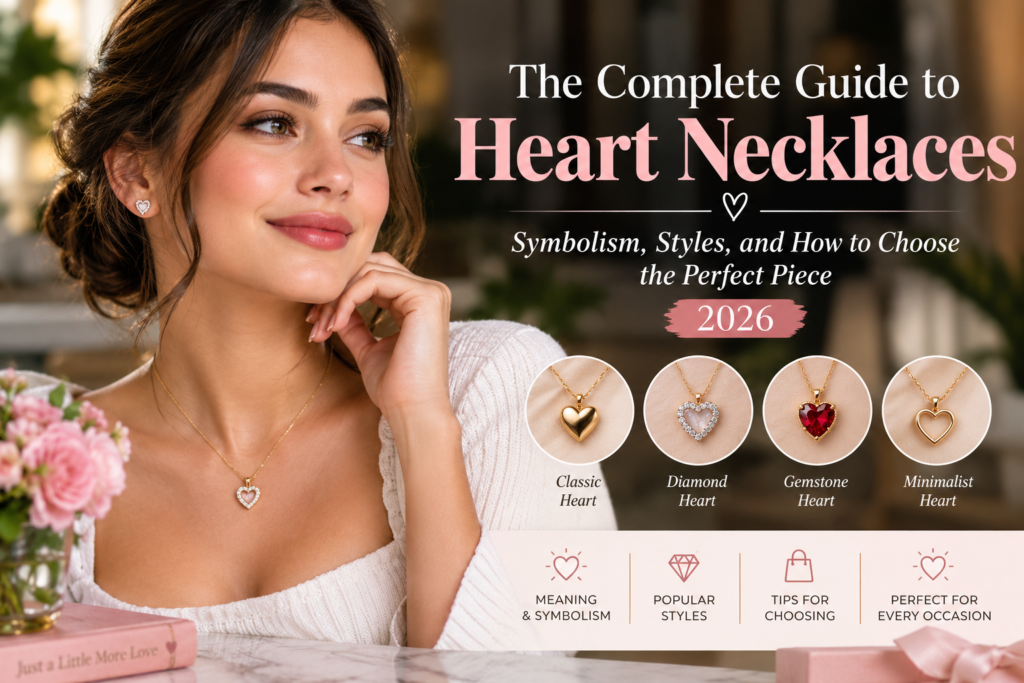

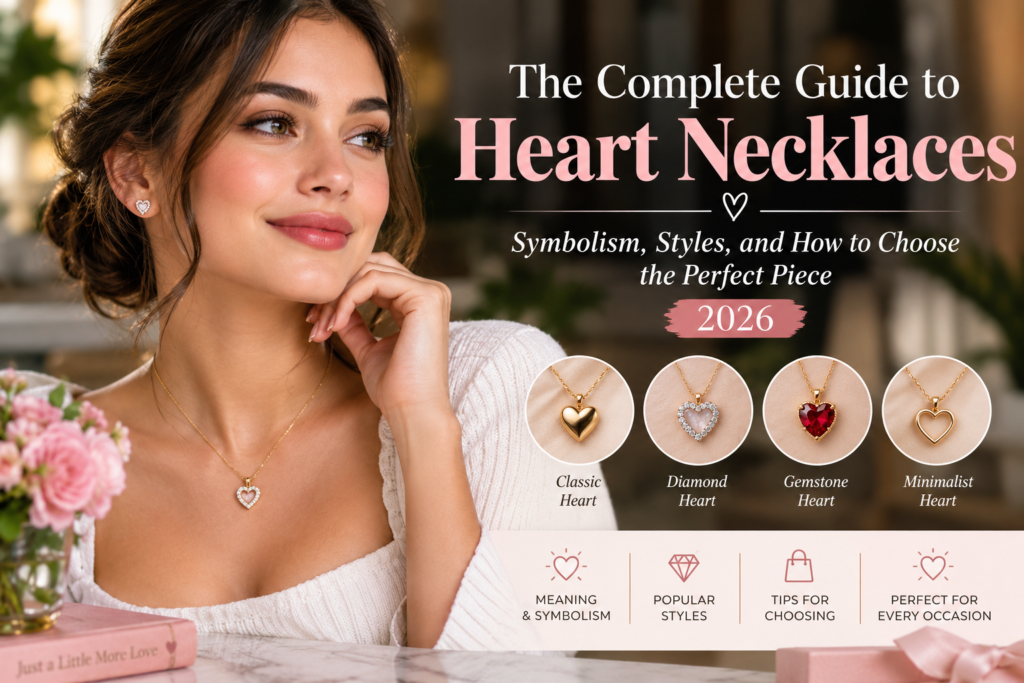
A heart necklace is one of the most enduring and emotionally resonant pieces of jewelry a person can own. The heart necklace carries meaning that transcends mere adornment, serving as a tangible expression of love, memory, and personal connection. Whether it is a gift exchanged between partners, a keepsake passed down through generations, or a self-purchase that marks a meaningful milestone, the heart pendant occupies a unique space in the world of fine and fashion jewelry. Its appeal spans cultures, age groups, and style sensibilities, which explains why it has never truly gone out of fashion despite centuries of changing trends.
This guide explores the heart necklace in depth, covering its historical roots, the materials and craftsmanship that define quality, the psychological and cultural significance of the motif, and the practical considerations that help buyers choose a piece they will treasure for years. Drawing on insights from gemological standards, jewelry design traditions, and real-world wear scenarios, this resource is designed to answer the questions that actually matter when you are deciding which heart necklace deserves a place in your collection.
The Historical and Cultural Roots of the Heart Motif
The heart symbol as we recognize it today did not always represent romantic love. Historians trace the familiar rounded shape to ancient civilizations, where it appeared in art and artifacts with meanings that ranged from fertility to spiritual devotion. The association with romantic affection began to solidify during the Middle Ages, when courtly love traditions and illuminated manuscripts popularized the heart as a metaphor for emotional attachment. By the Renaissance, the heart had become firmly established in European art and jewelry as a symbol of love, fidelity, and longing.
The transition from symbolic motif to wearable jewelry followed naturally. Royal courts across Europe exchanged heart-shaped tokens as pledges of affection, and by the Victorian era, heart jewelry had become a mainstream expression of sentiment. Queen Victoria herself popularized several jewelry trends, and her influence helped cement the heart pendant as a staple of romantic gifting. This historical lineage matters because it explains why the heart necklace carries a weight of meaning that newer motifs simply do not possess. When you wear one, you are participating in a tradition that stretches back centuries.
Why the Heart Necklace Remains a Timeless Choice
Few jewelry motifs have demonstrated the staying power of the heart. Trends come and go, but the heart pendant continues to appear season after season, reinterpreted by each generation without ever losing its core identity. This durability stems from the fact that the heart speaks a universal emotional language. Unlike abstract geometric shapes or trend-driven motifs, the heart communicates affection instantly and unambiguously, which makes it suitable for an extraordinarily wide range of occasions and relationships.
The versatility of the heart necklace also contributes to its longevity. A delicate single-heart pendant on a fine chain reads as understated and elegant, suitable for everyday wear and professional settings. A bold, embellished heart statement piece transforms into a conversation starter for evening events. The same motif can be rendered in yellow gold, white gold, rose gold, platinum, sterling silver, or a spectrum of gemstones, allowing it to adapt to virtually any personal style. This adaptability is why jewelers continue to invest in heart collections year after year, and why buyers return to the motif at every stage of life.
Materials and Metal Choices Explained
The metal you choose for a heart necklace affects its appearance, durability, price, and suitability for daily wear. Yellow gold remains the most traditional and warm option, offering a classic richness that flatters most skin tones. It is an alloy of pure gold mixed with metals such as copper and zinc, and its karat rating indicates gold content. Eighteen-karat gold contains seventy-five percent pure gold, while fourteen-karat contains just under sixty percent, making it more durable and more affordable. White gold offers a cooler, more contemporary look but requires rhodium plating to achieve its bright silver tone, and that plating wears away over time and needs periodic refreshing.
Rose gold has enjoyed a sustained surge in popularity, particularly for romantic pieces like the heart necklace, because its blush tone feels both modern and sentimental. The color comes from a higher copper content in the alloy, which also makes rose gold slightly more durable than yellow or white gold of the same karat. Platinum is the most premium option, prized for its density, natural white luster, and exceptional durability, though its higher price reflects these advantages. Sterling silver provides an accessible entry point into fine jewelry, with a bright appearance and a much lower cost, but it tarnishes over time and requires more frequent polishing to maintain its shine.
A Comparison of Metals for Heart Necklaces
| Metal | Appearance | Durability | Maintenance Needs | Relative Cost | Best Suited For |
|---|---|---|---|---|---|
| Yellow Gold | Warm, classic, rich | High, especially 14k and 18k | Occasional polishing | Moderate to high | Traditional tastes, everyday wear, warm skin tones |
| White Gold | Cool, bright, contemporary | High, but rhodium plating wears | Periodic rhodium re-plating | Moderate to high | Modern styles, cool skin tones, diamond accents |
| Rose Gold | Blush, romantic, modern | Very high due to copper content | Minimal, occasional polishing | Moderate to high | Romantic gifts, trendy everyday pieces |
| Platinum | Naturally white, dense luster | Exceptional | Minimal, occasional polishing | High | Heirloom pieces, sensitive skin, long-term investment |
| Sterling Silver | Bright, silvery, versatile | Moderate, prone to scratches | Frequent polishing to prevent tarnish | Low | Budget-conscious buyers, fashion-forward pieces |
Gemstones and Accents That Elevate a Heart Pendant
The centerpiece of many heart necklaces is not the metal but the stone set within or alongside the heart shape. Diamonds remain the most popular choice for their brilliance, hardness, and cultural association with enduring love. A heart pendant set with a cluster of small diamonds can create a dazzling effect at a moderate price point, while a single large diamond at the center of a heart design represents a significant investment. The four Cs of diamond quality, cut, color, clarity, and carat weight, apply directly to heart pendants, and the cut quality has the greatest impact on how much the stone sparkles.
Colored gemstones offer an alternative route to personalization. Sapphires, available in blue, pink, yellow, and other hues, provide exceptional hardness and durability second only to diamond, making them well suited to daily wear. Rubies bring a deep red that reinforces the romantic symbolism of the heart. Emeralds offer a striking green contrast but require more careful handling due to their relative brittleness. Birthstones add another layer of meaning, allowing a heart necklace to commemorate a specific month or person. Pearl accents, either as a central stone or as a border around the heart, lend a vintage, soft quality that suits bridal and formal contexts particularly well.
How to Choose the Right Chain and Length
The chain may seem like a secondary consideration, but it dramatically affects how a heart necklace sits and how flattering it appears. Box chains offer a clean, modern line that keeps the focus on the pendant. Cable chains provide a classic, unassuming look and tend to be more affordable. Rolo chains feature rounded links that add subtle texture without competing with the heart. Figaro and curb chains bring a slightly bolder presence that works well with larger pendants. The chain’s thickness should be proportional to the pendant; an overly thin chain on a heavy heart can look unbalanced and may even be structurally risky.
Length is equally important because it determines where the heart rests on the body. A choker-length chain of fourteen to sixteen inches places the pendant at the base of the throat, creating a delicate, focused look that suits high necklines and formal attire. A princess length of eighteen inches is the most common and versatile choice, resting just below the collarbone where it flatters nearly every neckline. Matinee lengths of twenty to twenty-four inches allow the heart to sit on the upper chest, which works beautifully with V-necks and button-down shirts. Opera and rope lengths of twenty-eight inches and beyond create a dramatic, layered effect, often worn doubled or paired with additional chains.
Problem and Solution: Avoiding Common Heart Necklace Purchasing Mistakes
One of the most frequent problems buyers encounter is choosing a heart necklace that looks beautiful in photographs but proves impractical in daily life. Very delicate chains, for example, can tangle constantly or break under minimal stress, especially if the pendant is disproportionately heavy. The solution is to consider the intended use before purchase. For everyday wear, a slightly thicker chain and a pendant with a secure, well-constructed bail are worth prioritizing over the most ethereal, fine-chain design. A jeweler can often swap a chain for a more robust option if the pendant itself is the main attraction.
Another common issue is unclear or misleading stone descriptions. Terms like “diamond accent” or “genuine gemstone” can mean different things depending on the seller, and buyers sometimes discover after purchase that their stones are treated, lab-created, or significantly lower in quality than expected. The solution is to request full disclosure in writing before completing a purchase. Reputable jewelers will provide information about stone type, treatment, carat weight, and clarity. When buying online, look for listings that specify these details explicitly rather than relying on vague marketing language, and confirm the return policy in case the piece does not meet expectations.
The Emotional and Psychological Significance of Wearing a Heart Necklace
Jewelry functions as more than decoration; it serves as a form of emotional anchoring. Psychologists who study adornment note that meaningful pieces of jewelry can provide a sense of continuity and comfort, particularly during periods of transition or stress. A heart necklace given by a partner, a parent, or a close friend becomes a tangible reminder of that relationship, something that can be touched or glanced at during the day as a small act of reassurance. This is why heart pendants are so often chosen for significant occasions such as anniversaries, births, graduations, and memorials.
The self-purchase of a heart necklace carries its own significance. Buying one for yourself can mark a moment of self-compassion, a celebration of personal achievement, or a reminder to prioritize your own wellbeing. The gesture shifts the symbolism from receiving love to affirming it internally, which many wearers describe as empowering. In this sense, the heart necklace functions as a wearable affirmation, a private statement that does not require an audience to be meaningful.
Occasions That Call for a Heart Necklace
The heart necklace is unusually adaptable across gift-giving occasions, which is part of why it remains a perennial bestseller in jewelry retail. Valentine’s Day is the most obvious association, and heart pendants consistently rank among the most gifted items during that season. Anniversaries offer another natural fit, with the heart representing enduring commitment. Birth of a child is a particularly poignant occasion, as a heart necklace can be engraved with the baby’s name, birthstone, or birth date, transforming it into a lasting memento of a life-changing moment.
Beyond romantic and family contexts, heart necklaces serve admirably for graduations, birthdays, and achievements. A heart pendant given to a young person marking a milestone carries a message of pride and encouragement that feels personal without being overly sentimental. Memorial jewelry has also embraced the heart motif; lockets and pendants designed to hold a small portion of ashes or a lock of hair allow the wearer to keep a connection to someone lost. This breadth of use cases explains why jewelers rarely retire heart designs and why the motif continues to attract new generations of wearers.
Customization and Personalization Options
Engraving transforms a heart necklace from a beautiful object into a deeply personal one. Common options include initials, names, significant dates, short messages, and coordinates of meaningful locations. The available space on the back of a pendant or along the inner curve of a heart shape determines how much text can be accommodated, so it is worth discussing engraving possibilities with the jeweler before finalizing a design. Laser engraving allows for fine detail and small text, while hand engraving offers a traditional, slightly irregular character that many buyers find more charming.
Beyond engraving, customization can extend to the choice of stone, metal combination, chain style, and pendant size. Some jewelers offer semi-custom services where you select a setting and then choose the stone separately, allowing for greater control over budget and appearance. Birthstone heart necklaces are a popular customization route, particularly for mothers who wish to represent multiple children by combining several birthstones in a single pendant. The key is to work with a jeweler who can explain the trade-offs of each option clearly, so that the final piece reflects both your taste and your practical needs.
Caring for Your Heart Necklace
Proper care preserves both the appearance and the structural integrity of a heart necklace. Gold and platinum pieces benefit from regular cleaning with warm water, mild dish soap, and a soft-bristled brush, followed by thorough drying with a lint-free cloth. Silver requires more frequent attention because it tarnishes, and a silver polishing cloth or a gentle silver cleaner can restore its shine. Gemstone settings should be checked periodically for loose stones, particularly if the necklace is worn daily; a jeweler can tighten prongs and inspect the bail and chain connections during a routine cleaning visit.
Storage matters as much as cleaning. Keeping a heart necklace in a soft pouch or a lined jewelry box prevents scratches and reduces the risk of tangling with other pieces. Chains should be fastened before storage or laid flat to avoid kinks. Removing the necklace before swimming, showering, exercising, or applying lotions and perfumes protects both the metal and any gemstones from chemical exposure and physical stress. These simple habits can extend the life of a quality piece by many years.
What to Look for in a Quality Heart Necklace
Evaluating quality requires attention to details that are easy to overlook in the excitement of a purchase. The symmetry of the heart shape is a fundamental indicator of craftsmanship; a well-made pendant will have even curves and a balanced silhouette. The bail, the loop through which the chain passes, should be securely attached and smoothly finished, with no rough edges that could wear the chain. Clasps should feel solid and operate smoothly, as a faulty clasp is one of the most common causes of lost jewelry.
Hallmarks and stamps provide verifiable information about metal content. In the United States, gold jewelry is typically stamped with a karat mark such as 14K or 18K, and platinum is marked with PLAT or a purity number. These marks are a sign of compliance with legal standards, and their presence or absence can indicate the legitimacy of a seller. When purchasing a heart necklace with diamonds or colored stones, requesting a grading report from a recognized laboratory adds an additional layer of assurance about the stone’s characteristics and value.
FAQ
What does a heart necklace symbolize?
A heart necklace traditionally symbolizes love, affection, and emotional connection, but its meaning extends well beyond romance. It can represent friendship, family bonds, self-love, remembrance of a loved one, or a personal milestone. Because the heart is a universal symbol, the specific meaning is largely determined by the context in which the necklace is given or worn. Many people wear a heart necklace as a private reminder of someone important rather than as a public statement.
Is a heart necklace appropriate for everyday wear?
Yes, a heart necklace can absolutely be worn every day, provided the piece is constructed for regular use. A pendant with a secure bail, a durable chain of adequate thickness, and metals such as fourteen-karat gold or platinum will withstand daily wear well. Very delicate chains and soft stones require more caution. Choosing a modest pendant size and a chain length that does not catch on clothing will make daily wear more comfortable and reduce the risk of damage.
How much should I expect to pay for a quality heart necklace?
Prices vary enormously depending on metal, stone content, and brand. Sterling silver heart necklaces with no gemstones can be found for under one hundred dollars, while a fourteen-karat gold pendant with a small diamond might range from several hundred to over a thousand dollars. Platinum and high-carat gold pieces with significant diamonds can reach five figures. The most reliable approach is to set a budget first, then prioritize the factors that matter most to you, whether that is metal quality, stone size, or brand reputation.
Can a heart necklace be resized or adjusted?
Most heart necklaces can be adjusted by changing the chain length or adding an extender, which is a relatively simple and inexpensive alteration. Resizing the pendant itself is generally not possible because the heart shape is fixed. If the necklace includes a stone, a jeweler may be able to reset it into a different mounting, though this is a more involved process. Discussing adjustment options before purchase helps avoid disappointment later.
What is the best heart necklace for a first jewelry gift?
For a first jewelry gift, a modest heart necklace in sterling silver or fourteen-karat gold with a simple design tends to be the most versatile and well-received choice. A classic single-heart pendant on an eighteen-inch chain works across ages and styles, and it can be engraved to add personal meaning without significantly increasing the cost. Avoiding overly trendy or heavily embellished designs reduces the risk that the recipient will feel the piece does not suit her taste.
Conclusion
The heart necklace endures because it does something few other pieces of jewelry can: it makes emotion visible. From its origins in medieval symbolism to its current status as a staple of both fine and fashion jewelry, the heart pendant has remained relevant by adapting to each era while preserving its essential meaning. Choosing one thoughtfully, with attention to metal, stone, chain, and craftsmanship, ensures that the piece becomes not just an accessory but a lasting part of your personal story.
The most valuable insight to take away is that the best heart necklace is the one that fits both your aesthetic and your life. A beautifully made piece that sits unworn in a box serves no one, while a modest, well-chosen pendant worn regularly will accumulate meaning over time. Prioritize fit, durability, and honest materials over fleeting trends, and the heart necklace you choose today may well become the piece you reach for every morning for decades to come.