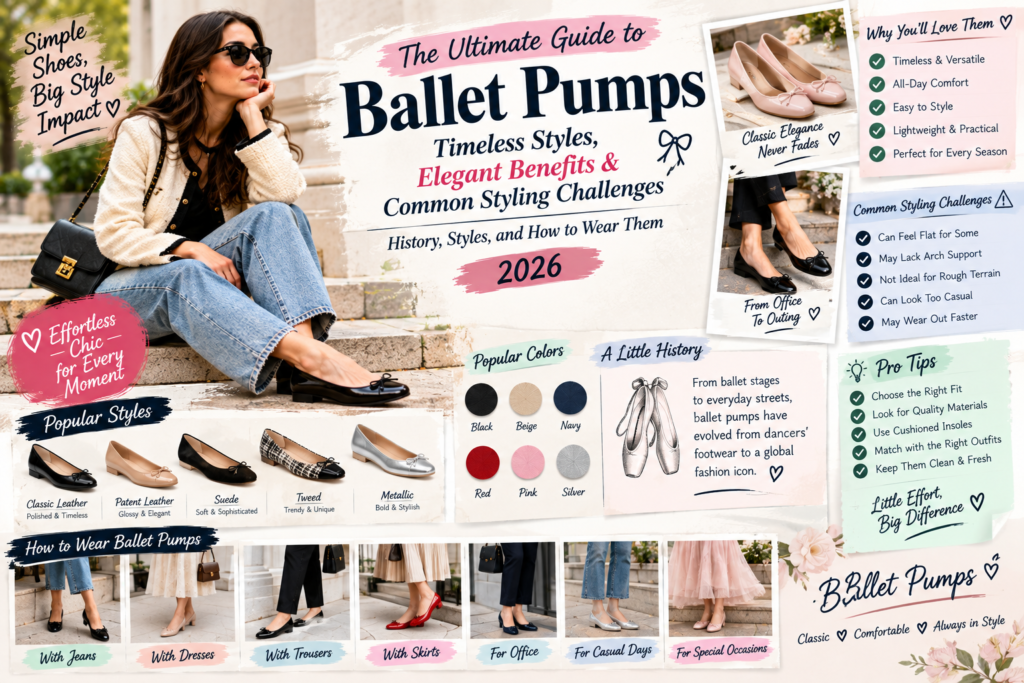

Ballet pumps have returned to the forefront of fashion with a force that few footwear trends can match. Once dismissed as dated or overly prim, these delicate slip-on shoes have been reimagined by designers, embraced by celebrities, and adopted by everyday wearers who value both comfort and elegance. Whether you are drawn to their dance-inspired heritage, their effortless practicality, or their remarkable ability to elevate any outfit, understanding what makes this shoe style tick will help you choose a pair that genuinely works for your wardrobe.
This guide explores every dimension of the modern ballet pump, from its fascinating origins in eighteenth-century performance to the innovative materials and silhouettes defining today’s market. Drawing on fashion industry insights and practical wear testing, it covers the design features that matter most, the styling possibilities across seasons, and the considerations that separate a pair you will wear constantly from one that sits untouched in the closet.
What Are Ballet Pumps and Where Did They Come From
Ballet pumps, also known as ballet flats or ballerinas, are low-cut shoes with thin soles and rounded or almond-shaped toes, directly inspired by the footwear worn by ballet dancers. The defining characteristics include a flat or very low heel, a slip-on design, and a silhouette that prioritizes flexibility and lightness over structure. These shoes originated in the world of dance, where performers needed footwear that allowed for intricate movement while maintaining a sleek, unobtrusive profile.
The Key Design Elements That Define Modern Ballet Pumps
The sole construction of a ballet pump is deliberately minimal, typically measuring no more than an inch in thickness. This thin profile is what gives the shoe its characteristic lightness and flexibility, allowing it to move naturally with the foot. Traditional versions feature leather or rubber soles, while contemporary iterations may incorporate synthetic materials for enhanced durability or grip. The absence of significant arch support is a known trade-off, and podiatrists sometimes advise wearing ballet pumps sparingly on hard surfaces due to the lack of shock absorption. For those who prioritize comfort, modern brands have introduced cushioned footbeds and anatomical arch support that address these concerns without compromising the shoe’s elegant silhouette.
A Comparison of Ballet Pump Styles and Their Characteristics
| Style | Defining Features | Best For | Fit Considerations |
|---|---|---|---|
| Classic Ballerina | Round or almond toe, minimal detailing, thin sole | Everyday wear, professional settings, minimalist wardrobes | Generally true to size; leather may stretch slightly |
| Mary Jane Ballet | Instep strap with buckle or Velcro closure | Retro-inspired outfits, those needing extra security | Strap can accommodate slightly higher insteps |
| Ruched Ballerina | Gathered elastic opening, soft upper | Wider feet, comfort-focused wearers | Elastic stretches to fit various foot widths |
| Slingback Ballet | Strap around the heel, open back | Warm weather, those who prefer breathable styles | Heel strap prevents slipping but may rub initially |
| Glove Ballet | High vamp, sleek fit, minimalist aesthetic | Quiet luxury looks, all-day wear | Snug fit; may require sizing up |
| Mesh Ballet | Transparent or semi-sheer upper | Summer styling, fashion-forward outfits | Breathable but offers minimal structure |
The Cultural Revival of Ballet Pumps in Fashion
Ballet pumps have experienced a remarkable resurgence in recent years, transitioning from a shoe that was considered somewhat dated to one of the most sought-after styles in contemporary fashion. Vogue named ballet flats the shoe of 2025, and the trend has continued to accelerate into 2026 with interpretations ranging from minimalist glove-like leather designs to embellished statement pieces. The revival is partly attributable to the broader “balletcore” aesthetic that drew inspiration from dance wear, and partly to a cultural shift toward comfort and practicality in fashion after years of towering heels and chunky soles.
Designers across the spectrum have contributed to this revival. Chanel’s two-tone ballerinas, which originated as slingbacks designed by Coco Chanel in 1957 before Karl Lagerfeld transformed them into traditional flats in 1984, remain among the most iconic and copied styles. Miu Miu’s satin versions with elasticated straps and prim bows became a particular favorite among fashion insiders. Repetto, the French brand that has been making ballet-inspired footwear since the 1940s, continues to produce the Cendrillon flat that Brigitte Bardot made famous, alongside newer models like the 3cm-heeled Camille that has gained significant traction. More recent entrants like Alaïa’s mesh and crystal Mary Janes and Toteme’s minimalist slip flats demonstrate that the category continues to evolve.
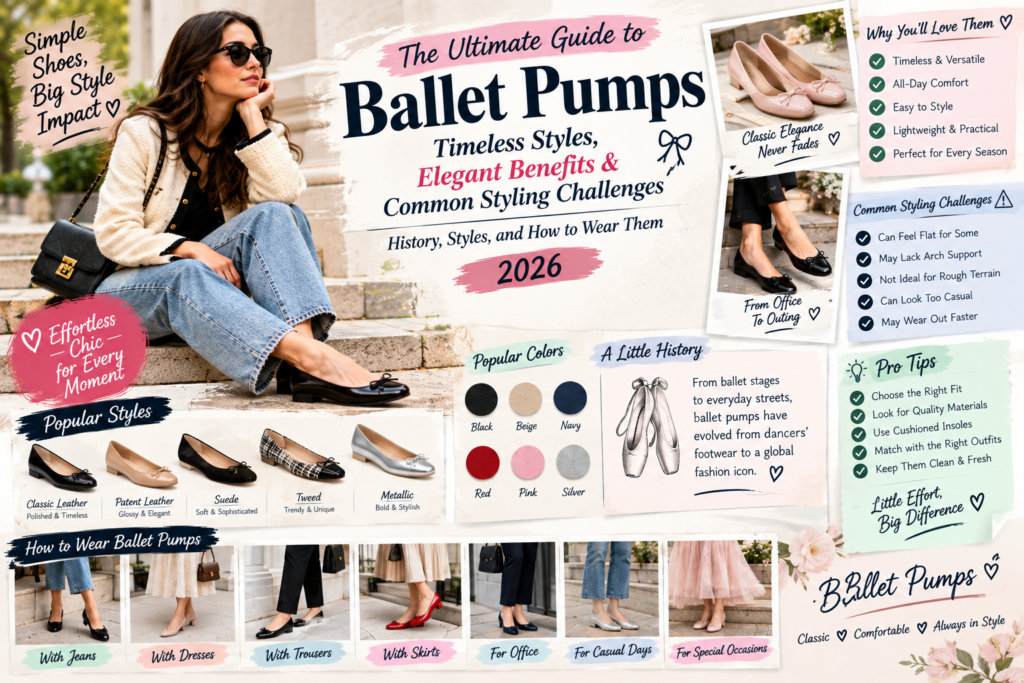
How to Style Ballet Pumps for Different Occasions
The versatility of ballet pumps is arguably their greatest strength. For professional settings, pairing a classic leather ballet flat with tailored trousers or a midi skirt creates a polished, understated look that respects dress codes without sacrificing comfort. Stylists frequently recommend choosing a leather or suede pair in a neutral color for the office, as these materials convey a level of refinement that synthetic alternatives may lack. A button-down shirt and wide-leg trousers, worn with simple ballet pumps, achieves a relaxed yet professional aesthetic that works across a range of workplaces.
For casual everyday wear, ballet pumps pair beautifully with denim in virtually any cut. Straight-leg or barrel-leg jeans that end just above the ankle create a clean line that allows the shoe to be fully visible. A simple knit sweater or a fitted t-shirt keeps the outfit grounded. When the weather is warm, ballet pumps work equally well with slip skirts, linen trousers, and summer dresses. The key to successful styling lies in paying attention to proportions: because ballet pumps are visually light, they pair most harmoniously with hemlines that leave the ankle area visible or with trousers that do not pool excessively over the shoe.
Problem and Solution: Finding Ballet Pumps That Fit Properly
One of the most common frustrations with ballet pumps is achieving a secure, comfortable fit without heel slippage. Because the shoe is designed to be slip-on, it lacks the adjustability of laced or buckled footwear, and fit issues can be difficult to resolve after purchase. The solution lies in understanding that fit varies significantly between brands and styles. Pretty Ballerinas, for example, recommends going up a full size for pointed-toe styles, half a size for round-toe designs, and trying one’s usual size for square-toe versions. This level of specificity reflects the reality that toe shape dramatically affects how a ballet pump fits.
Another frequent problem is the break-in period, particularly with stiff leather or patent finishes. The thin sole and minimal upper structure mean that pressure points can develop quickly, and the lack of cushioning can make extended wear uncomfortable. A practical approach is to wear new ballet pumps for short periods at first, gradually increasing the duration as the leather softens. Applying a leather conditioning cream before the first wear can accelerate the softening process. For those who anticipate wearing their ballet pumps for long hours, choosing a style with a cushioned insole or anatomical arch support, such as those offered by brands like Sarah Flint, can make a meaningful difference in comfort.
Materials and Construction: What Separates Quality from Compromise
The materials and construction methods used in ballet pumps vary enormously across price points, and these differences have real implications for durability, comfort, and value. At the entry level, many ballet pumps use synthetic uppers and cemented construction, where the sole is glued to the upper. These shoes can look the part and may be appropriate for occasional wear, but they typically lack breathability and cannot be repaired when the sole wears down. For those experimenting with the style or needing a short-term option, they serve a purpose, but they are not an investment.
At the higher end, traditional construction techniques make a noticeable difference. Leather uppers from quality tanneries develop a patina over time and mold to the wearer’s foot, creating a custom fit that synthetic materials cannot replicate. Repetto’s ballet flats, for example, are still made using techniques refined over more than seven decades, with supple leathers and flexible soles that honor the shoe’s dance heritage. Glove ballet pumps from brands like Toteme and The Row represent the quiet luxury approach, using exceptionally soft leathers and minimalist designs that prioritize fit and finish over ornamentation. For those seeking the highest level of construction, Goodyear-welted ballet pumps, though rare, allow for resoling and can last for many years with proper care.
Caring for Your Ballet Pumps
Proper care extends the life of any quality footwear, and ballet pumps are no exception. Leather uppers should be cleaned regularly with a soft, dry cloth to remove surface dust and dirt, and conditioned periodically to prevent drying and cracking. A neutral wax-based shoe cream can revive the color and provide a protective layer, applied with a soft cloth and buffed after drying. For suede, a suede brush and protective spray are the primary tools, helping to maintain the nap and guard against water damage. Patent leather requires a different approach, typically involving a damp cloth for cleaning and avoiding harsh chemicals that can dull the finish.
The thin soles of ballet pumps are particularly vulnerable to wear, especially if worn frequently on hard pavement. Rotating your ballet pumps with other shoes and allowing them to dry completely between wears are simple habits that significantly extend their lifespan. For leather-soled versions, avoiding prolonged exposure to wet conditions is important, as water can damage the sole and weaken the adhesive or stitching. Storing ballet pumps in dust bags when not in use prevents dust accumulation and protects delicate finishes from scratches.
FAQ
What is the difference between ballet pumps and ballet flats?
Ballet pumps and ballet flats are essentially the same style of shoe, and the terms are used interchangeably in most contexts. Both refer to low-cut, flat-soled shoes with rounded toes inspired by ballet slippers. The term “pumps” is more commonly used in British English, while “flats” is the preferred term in American English. Some sources suggest that “ballet pumps” may carry slightly more emphasis on the pump-style construction, but in practice, the distinction is negligible and both terms describe the same footwear category.
Are ballet pumps comfortable for all-day wear?
Comfort depends heavily on the specific construction and materials of the pair. A well-made ballet pump with a cushioned footbed, breathable lining, and soft leather upper can be comfortable for extended wear, particularly if it fits properly. However, the thin sole and minimal arch support of traditional ballet pumps can cause discomfort during long periods on hard surfaces. Podiatrists have noted that wearing ballet flats on pavement for extended periods may contribute to conditions like turf toe due to the lack of shock absorption. Choosing styles with added arch support or cushioned insoles, or limiting wear to softer surfaces, can mitigate these concerns.
How do I prevent ballet pumps from slipping off my heels?
Heel slippage is a common issue with ballet pumps because they lack the adjustability of laced or buckled shoes. The solution begins with getting the size right: a pump that slips off is often too large or shaped incorrectly for your foot. When trying on ballet pumps, walk on a hard surface rather than carpet to assess how the shoe moves with your foot. If your heel lifts significantly with each step, sizing down or choosing a different brand may be necessary. For pumps that fit well but still slip slightly, adhesive heel grips or cushioned inserts can provide additional security.
Can ballet pumps be worn with socks?
Yes, wearing ballet pumps with socks has become a prominent styling trend, particularly during cooler months. The combination allows wearers to stay warm while maintaining the elegance of the shoe. Neutral socks in cashmere or wool work well with cropped denim or tailored trousers, while bolder color choices or knee-high styles can create a more statement-making look. For a classic ballerina aesthetic, sheer or opaque tights worn with ballet pumps create a polished, dance-inspired effect. The key is to ensure the sock or tight color harmonizes with the overall outfit rather than creating unintended visual distraction.
How should I care for leather ballet pumps?
Leather ballet pumps should be cleaned regularly with a soft, dry cloth to remove dust and dirt. To maintain the leather’s suppleness and color, apply a small amount of neutral wax-based shoe cream and buff with a soft cloth after it dries. Avoid direct contact with substances containing alcohol, oils, or abrasives, and keep the shoes away from prolonged sunlight and heat. If the pumps become wet, allow them to dry naturally in a cool, well-ventilated place rather than using direct heat, which can cause the leather to crack. Storing them in dust bags when not in use protects them from dust and scratches.
Conclusion
Ballet pumps occupy a unique position in modern footwear: they are simultaneously practical and elegant, rooted in dance history yet endlessly adaptable to contemporary style. The style has proven its staying power by evolving through countless interpretations, from the classic Cendrillon flat that Brigitte Bardot made famous to the minimalist glove pumps that define quiet luxury today. For anyone building a versatile wardrobe, a well-chosen pair of ballet pumps can become one of the most frequently worn shoes you own, bridging the gap between casual and polished in a way that few other styles manage.
The most important insight to carry forward is that the right ballet pump is the one that fits your feet and your life. A pair with beautiful materials means little if the heel slips with every step, and a pair with the perfect aesthetic will go unworn if it causes pain after an hour. Prioritize fit during the selection process, choose materials that suit your climate and maintenance preferences, and consider the toe shape and construction that best match how you will actually wear them. When those practical foundations are in place, the ballet pump becomes not just a fashion choice but a genuinely useful and enjoyable part of your daily rotation.